

Is Nano Ceramic Tint Legal in California? Yes, nano ceramic tint can be legal in California, but the word “ceramic” does not decide whether a tint installation follows state law. California rules focus on where the film is installed, how much visible light passes through the glass and film, and whether the installation fits an exception in state law.
This is where many Bakersfield, CA drivers get confused.
Nano ceramic describes the technology used in the window film. Tint percentage describes how much visible light passes through it. Those are two separate things.
A dark nano ceramic film can still be too dark for a restricted window. A lighter ceramic film may give you strong solar performance while keeping the glass much brighter.
If you are comparing vehicle window tint in Bakersfield, CA, start by separating film type from tint darkness.
Table of Contents
- Is Nano Ceramic Tint Legal in California?
- Nano Ceramic Tint vs Tint Darkness
- What Does VLT Mean?
- California Front Side Window Tint Rules
- California Windshield Tint Rules
- California Rear Side Window Tint Rules
- California Rear Window Tint Rules
- Does Ceramic Tint Get Special Legal Treatment?
- Can Light Nano Ceramic Tint Still Reject Heat?
- Rayno Nano Carbon Ceramic Film Choices
- Film VLT vs Finished Window VLT
- What About Medical Tint Exceptions?
- Why Bakersfield Drivers Compare Ceramic Tint
- How to Choose Nano Ceramic Tint in California
- Nano Ceramic Tint in Bakersfield, CA
- Frequently Asked Questions
- Sources
Is Nano Ceramic Tint Legal in California?
Is Nano Ceramic Tint Legal in California? It can be.
California does not have one set of darkness rules for ceramic film and another set for dyed or carbon film.
The California Highway Patrol explains that aftermarket tint on the windshield and front driver and passenger side windows is restricted, subject to limited exceptions.
California Vehicle Code Section 26708 also treats windows behind the driver differently from the front side windows.
That means the same nano ceramic film can be allowed on one part of a vehicle and not allowed on another.
Picture a ceramic film rated at 20% VLT.
That film may be used on a rear passenger window where California allows darker tint.
Putting the same 20% film on the front driver-side window is a different legal issue.
The ceramic technology did not change.
The window location did.
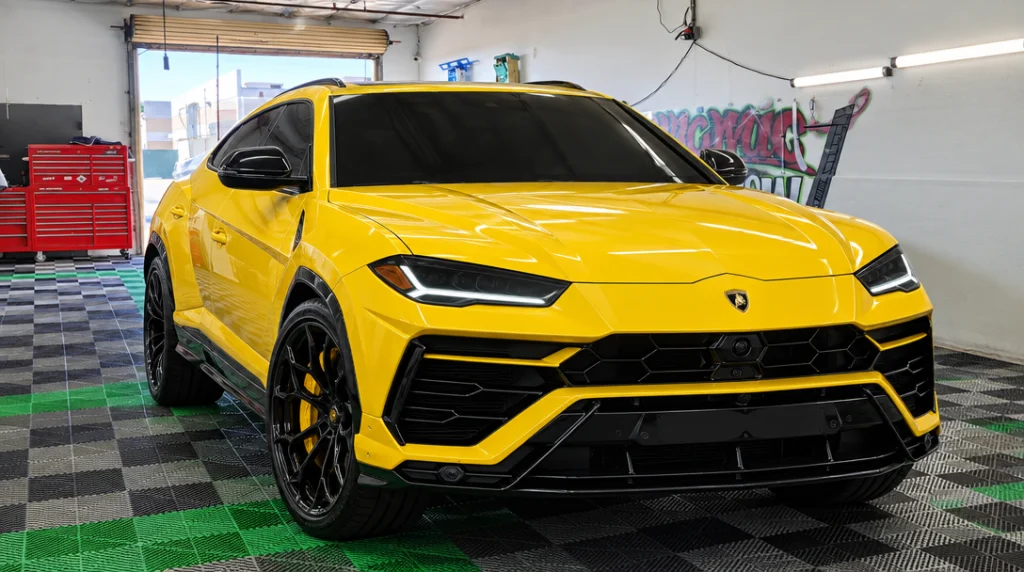
That is the main point to remember when asking whether nano ceramic tint is legal in California.
Nano Ceramic Tint vs Tint Darkness
Nano ceramic tint refers to film construction.
Tint darkness refers to Visible Light Transmission, usually shortened to VLT.
Rayno describes its Phantom Series as Nano Carbon Ceramic automotive window film. The same film family comes in several darkness levels.
Rayno Phantom S5 currently includes:
- 5% VLT
- 15% VLT
- 20% VLT
- 30% VLT
- 35% VLT
- 40% VLT
- 50% VLT
Each percentage describes how much visible light passes through the film.
A 5% film is very dark.
A 50% film is much lighter.
Both can use ceramic technology.
This is why the answer to Is Nano Ceramic Tint Legal in California? cannot come from the words “nano ceramic.”
You also need to know:
- Which window is being tinted
- The film VLT
- The factory glass VLT
- The completed window VLT
- Whether clear material is required
- Whether certification or medical paperwork applies
You can read more about these measurements in our window tint specs guide covering VLT, TSER, and IR rejection.
What Does VLT Mean?
VLT tells you how much visible light passes through a window film or completed window.
A higher VLT means more light gets through.
A lower VLT means darker glass.
| VLT | General Appearance |
|---|---|
| 5% | Very dark |
| 15% | Dark |
| 20% | Dark |
| 35% | Medium |
| 50% | Light |
| 70% | Very light |
| 88%+ | Close to clear |
A 20% nano ceramic film is still dark even if the film has strong heat-rejection numbers.
A 50% ceramic film remains lighter even if it uses similar technology.
Film construction can change solar performance.
It does not change what the VLT number means.
California Front Side Window Tint Rules
California places tight limits on aftermarket material installed on the front side windows beside the driver and front passenger.
The California Highway Patrol FAQ states that aftermarket tinting on these front side windows is generally restricted.
California Vehicle Code Section 26708 contains an exception for certain clear, colorless, transparent material.
Under the current statute, qualifying material must meet conditions that include:
- At least 88% VLT for the material itself
- Clear and colorless construction
- Transparency that preserves driver visibility
- Material made to increase protection from UVA exposure
- A completed glass-and-film combination that meets the applicable 70% federal glazing requirement
- Certification from the installer or manufacturer kept in the vehicle
You can review the current wording in California Vehicle Code Section 26708.
Does 70% Nano Ceramic Tint Meet the Front Window Rule?
Do not assume that it does.
This is a common misunderstanding.
A film advertised as 70% VLT is not the same thing as a completed window that meets a 70% light-transmission requirement.
California’s front-side clear-material exception says the material itself must have at least 88% VLT.
The completed glass and material must also meet the applicable 70% requirement.
That means buying a film labeled “70%” does not automatically make the installation legal on the front side windows.
The original glass already blocks some visible light.
Once film is added, the finished VLT can be lower.
California Windshield Tint Rules
The windshield has its own restrictions.
California does not allow drivers to cover the entire windshield with dark ceramic tint simply because the film rejects heat.
California Vehicle Code Section 26708 permits certain transparent material along the upper portion of the windshield when the installation meets the placement and visibility rules in the statute.
Separate medical provisions can apply to certain clear, colorless material.
The phrase “nano ceramic” does not override those rules.
A ceramic film may have strong solar-control figures and still be unsuitable for a full windshield installation under California law.
If you want film on your windshield, ask about:
- The exact product
- Film VLT
- Film color
- Installation location
- California windshield rules
- Whether a medical provision applies
Do not rely only on the fact that the film looks light.
California Rear Side Window Tint Rules
California gives drivers more flexibility on side windows behind the driver.
Vehicle Code Section 26708 provides an exception for side windows located behind the driver.
This is why many California cars, trucks, and SUVs have darker tint on their rear passenger windows.
A Bakersfield driver may choose rear ceramic film for:
- Privacy
- Solar heat rejection
- UV rejection
- Glare reduction
- Appearance
- Matching factory privacy glass
A darker nano ceramic film may be suitable for rear side glass even when that same shade would not work for a front side window.
Again, the film type is not what changes the rule.
The location of the glass does.
California Rear Window Tint Rules
California also permits tint on the rear window under certain conditions.
The California Highway Patrol states that vehicles with tinted rear windows need outside rearview mirrors on both sides.
Those mirrors need to give the driver the required view behind the vehicle.
This allows drivers to use darker rear glass while still maintaining rearward visibility through the side mirrors.
If you want dark nano ceramic film on the rear glass, check that your vehicle has qualifying mirrors on both sides.
Does Ceramic Tint Get Special Legal Treatment?
No.
Nano ceramic tint does not get a separate darkness exemption because of the material used inside the film.
Consider two films:
Film A
- Nano ceramic
- 20% VLT
Film B
- Another film construction
- 20% VLT
Both are rated at 20% VLT.
The ceramic film may have different published figures for:
- Infrared rejection
- TSER
- UV rejection
- Color stability
Those performance differences do not make 20% ceramic film legally count as a lighter VLT.
A 20% film remains a 20% film for visible light transmission.
That is why you should compare darkness and film technology separately.
Can Light Nano Ceramic Tint Still Reject Heat?
Yes.
Drivers often assume they need the darkest tint possible to get better heat performance.
That is not always true.
Visible darkness and solar performance are measured separately.
When comparing nano ceramic tint, look at:
- VLT
- TSER
- IR rejection
- UV rejection
VLT
VLT measures visible light passing through the film.
TSER
TSER means Total Solar Energy Rejected.
It gives a broader measurement of solar energy rejected by the glass and film under the manufacturer’s testing.
IR Rejection
IR rejection measures infrared energy rejected within the manufacturer’s stated test range.
UV Rejection
UV rejection measures how much ultraviolet radiation the film rejects.
A lighter ceramic film can have stronger solar-control numbers than a darker film from another product line.
That can matter for Bakersfield, CA drivers who want heat control without very dark glass.
Rayno Nano Carbon Ceramic Film Choices
Dynamic Window Tint carries Rayno Window Film for automotive tint installations.
Rayno’s Phantom Series uses Nano Carbon Ceramic technology.
Rayno publishes different film choices with different VLT and solar-control numbers.
Rayno Phantom S5
Examples from the S5 lineup include:
| Film | VLT | TSER | IR Rejection | UV Rejection |
|---|---|---|---|---|
| S5-05 | 5% | 66% | 72% | 99.9% |
| S5-20 | 20% | 51% | 53% | 99.9% |
| S5-35 | 35% | 51% | 53% | 99.9% |
| S5-50 | 50% | 41% | 56% | 99.9% |
These figures show why darkness alone does not tell you everything about heat performance.
S5-20 is much darker than S5-50.
Rayno still lists S5-50 with slightly higher IR rejection than S5-20.
Rayno Phantom S7 and S9
Rayno also offers Phantom S7 and S9 films.
Compare their published 50% VLT options:
| Film | VLT | TSER | IR Rejection |
|---|---|---|---|
| S5-50 | 50% | 41% | 56% |
| S7-50 | 50% | 47% | 74% |
| S9-50 | 50% | 53% | 92% |
All three are listed at 50% VLT.
Their published solar-control figures differ.
This is useful for Bakersfield drivers because going darker is not the only way to compare heat rejection.
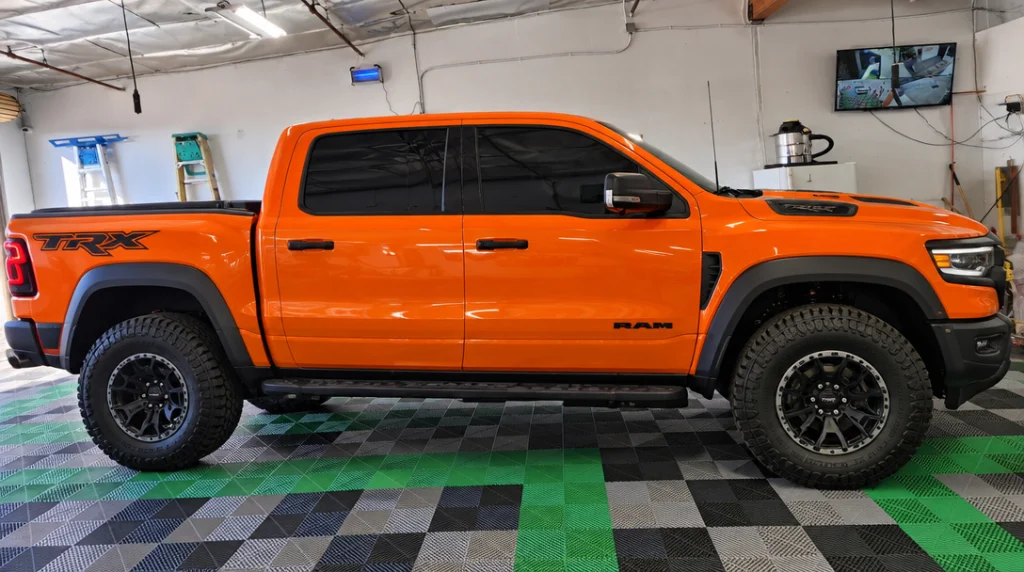
You can review the current Rayno Phantom Series specifications.
Film VLT vs Finished Window VLT
The VLT printed on the film is not always the same as the finished VLT of the window.
Your vehicle glass already has its own light transmission.
When you add film, the glass and film work together.
A simple way to estimate the result is:
Glass VLT × Film VLT = Approximate Combined VLT
Suppose the original glass has 80% VLT.
You install 50% VLT film.
The rough calculation is:
0.80 × 0.50 = 0.40
That would give an estimated combined VLT of about 40%.
This is only an example.
A tint meter should be used when the completed VLT matters.
This is also why a 70% film does not automatically create a 70% completed window.
The glass itself already reduces some visible light.
What About Medical Tint Exceptions?
California Vehicle Code Section 26708 includes medical provisions for certain people who need protection from sunlight.
The law contains provisions for certain sun-screening devices and certain clear, colorless, transparent materials when qualifying medical documentation is provided.
The exact requirements depend on the type of material and exception.
A medical condition does not mean any darkness of nano ceramic tint can automatically be applied to every window.
Drivers using a medical provision should check the current statute and keep the required documentation in the vehicle.
Do not rely on a general statement that “medical tint is legal.”
The type of material and documentation still matter.
Why Bakersfield Drivers Compare Ceramic Tint
Bakersfield, CA drivers spend a lot of time dealing with strong sunlight and hot vehicle interiors.
That makes nano ceramic tint appealing even to people who do not want dark windows.
A driver may look at ceramic film for:
- Solar heat rejection
- UV rejection
- Glare reduction
- A lighter outward view
- Rear-passenger privacy
- Color stability
- Vehicle appearance
Someone who drives mostly during daylight may focus on solar performance.
A driver who spends a lot of time on dark rural roads may care more about visible light.
A truck or SUV owner may want to match the appearance of factory rear privacy glass.
Another driver may want strong heat rejection without making the vehicle look heavily tinted.
All of those people can compare ceramic film.
The legal choice still depends on the window location and VLT.
How to Choose Nano Ceramic Tint in California
Choosing nano ceramic tint should start with how you use your vehicle.
Start With the Windows
Decide which windows you want tinted.
Front side windows, rear side windows, rear glass, and the windshield do not all follow the same rules.
Decide What You Want From the Film
Ask yourself what matters most:
- Heat rejection
- Privacy
- UV rejection
- Glare
- Appearance
- Night visibility
This helps narrow down film and shade choices.
Compare the Actual Film Specs
Do not stop at the words “nano ceramic.”
Look at the manufacturer’s published:
- VLT
- TSER
- IR rejection
- UV rejection
Two ceramic films at similar darkness levels may have very different solar-control figures.
Account for Factory Glass
Your original automotive glass already has a VLT.
Film added to that glass will lower the finished VLT.
If legality depends on a light-transmission reading, the completed window matters.
Check California Rules Before Installation
California law can change.
Check current CHP guidance and the current Vehicle Code before choosing a front-window or windshield application.
Ask About the Exact Product
Tell your installer which windows you want tinted.
Ask for the film line, VLT, and published solar-control numbers.
A good comparison should tell you more than whether a film is “ceramic.”
Nano Ceramic Tint in Bakersfield, CA
So, Is Nano Ceramic Tint Legal in California?
Yes, nano ceramic tint can be legal when the window location, film, completed VLT, and installation follow California rules.
Ceramic technology tells you how the film is made.
It does not tell you whether the shade is legal on a certain window.
A 5% ceramic film remains very dark.
A 50% ceramic film allows much more visible light through.
A qualifying clear front-side material falls under a different part of California law than dark rear privacy film.
Dynamic Window Tint installs Rayno Window Film at:
4609 New Horizon Blvd Suite #10
Bakersfield, CA 93313
The shop serves Bakersfield, CA and drivers from nearby Kern County communities.
You can learn more about vehicle window tint, read about ceramic tint in Bakersfield, or compare window tint specifications.
Call (661) 634-5585 to discuss your vehicle, the windows you want tinted, and available Rayno film choices.
You can also visit the Dynamic Window Tint contact page to schedule an appointment.
Frequently Asked Questions
1. Is nano ceramic tint legal in California?
Yes, nano ceramic tint can be legal in California when it is installed on a window and at a VLT allowed by state law. Ceramic film technology does not create its own legal exemption. Front side windows and windshields have tighter restrictions than windows behind the driver.
2. Is ceramic tint legal on California front side windows?
California generally restricts aftermarket tint on the front driver and passenger side windows. Vehicle Code Section 26708 contains an exception for qualifying clear, colorless, transparent material. The material must have at least 88% VLT, and the finished glazing must meet the applicable 70% light-transmission requirement along with the other conditions in the law.
3. Is nano ceramic tint darker than regular tint?
Not automatically. Nano ceramic describes film construction. VLT describes darkness. Ceramic film can be sold in very dark and much lighter shades. A 20% ceramic film is darker than a 50% ceramic film.
4. Does lighter ceramic tint still reject heat?
It can. Darkness and solar performance are different measurements. Check TSER and IR rejection for the exact film. Rayno’s Phantom lineup shows that films at similar VLT levels can have different solar-control numbers.
5. Can I use dark nano ceramic tint on rear windows in California?
California allows tint on side windows located behind the driver. Rear-window tint is also permitted when the vehicle has qualifying outside mirrors on both sides. Other requirements may apply, so check the current law before installation.
6. Does 70% ceramic film automatically make my front windows legal?
No. California’s qualifying front-side clear-material exception requires the material itself to have at least 88% VLT. The completed glazing must also meet the applicable 70% light-transmission requirement. A film labeled 70% does not automatically satisfy that rule.
7. Where can I get nano ceramic tint in Bakersfield, CA?
Dynamic Window Tint installs Rayno automotive window film at 4609 New Horizon Blvd Suite #10, Bakersfield, CA 93313. Call (661) 634-5585 or visit the contact page to compare ceramic film, VLT, TSER, IR rejection, and shade choices.
Sources
California Highway Patrol FAQ
Publisher: California Highway Patrol
Publication Date: Not listed
Information referenced: California restrictions involving aftermarket windshield and front side window tint, exceptions, and rear-window requirements.
California Vehicle Code Section 26708
Publisher: California Legislative Information
Publication Date: Current California statutory text
Information referenced: Front side window requirements, 88% material VLT, completed glazing requirements, rear side windows, rear glass, windshield restrictions, certification, and medical provisions.
Federal Motor Vehicle Safety Standard No. 205
Publisher: National Highway Traffic Safety Administration regulation reproduced by Cornell Legal Information Institute
Publication Date: Current federal regulation
Information referenced: Federal motor vehicle glazing requirements referenced by California law.
Rayno Phantom Series Automotive Window Film
Publisher: Rayno Film
Publication Date: Not listed
Information referenced: Nano Carbon Ceramic construction, S5, S7, and S9 VLT choices, TSER, IR rejection, UV rejection, and film specifications.
Ceramic vs. Carbon Window Tint
Publisher: Rayno Film
Publication Date: November 2, 2026
Information referenced: Ceramic film construction, VLT, heat performance, and distinctions between darkness and film technology.
Window Tint Specs Explained: VLT, TSER & IR Rejection
Publisher: Dynamic Window Tint
Publication Date: Not listed
Information referenced: VLT, TSER, IR rejection, Rayno film measurements, and Bakersfield tint considerations.
Window Tint in Bakersfield, CA
Publisher: Dynamic Window Tint
Publication Date: Not listed
Information referenced: Rayno automotive window film, Bakersfield shop location, vehicle tint services, and warranty-backed installations.
