

70% window tint is one of the lightest tint shades drivers usually compare. Instead of giving your car the dark appearance associated with 20%, 15%, or 5% tint, a 70% VLT film can look close to untreated glass. Its purpose is usually less about privacy and more about keeping a bright view while adding film features such as UV rejection, solar control, or a mild reduction in glare.
For Bakersfield, CA drivers, that combination can be appealing. You may want window film because of the sun and heat without wanting your vehicle to look heavily tinted.
There is one point California drivers need to understand right away.
A film labeled 70% VLT is not automatically legal on California front side windows or the windshield. California has its own rules for aftermarket material on those areas, and the legal requirements are more restrictive than simply choosing a film with “70%” printed on the box.
If you are comparing vehicle window tint in Bakersfield, CA, learn what 70% VLT means first. Then compare appearance, heat control, UV rejection, visibility, and California rules separately.
Table of Contents
- What Does 70% Window Tint Mean?
- What Does 70% Window Tint Look Like?
- 70% Window Tint vs Clear Glass
- 70% Window Tint vs 50%, 35%, and 20% Tint
- Can 70% Window Tint Still Reject Heat?
- Rayno 70% Window Film Specs
- Why Light Tint Can Make Sense in Bakersfield
- Is 70% Window Tint Good for Privacy?
- How 70% Tint Looks at Night
- Does 70% Film Mean the Finished Window Is 70% VLT?
- Is 70% Window Tint Legal in California?
- When 70% Window Tint Makes Sense
- When a Darker Tint May Make More Sense
- Choosing Light Window Tint in Bakersfield, CA
- Frequently Asked Questions
- Sources
What Does 70% Window Tint Mean?
The percentage refers to Visible Light Transmission, commonly shortened to VLT.
VLT tells you how much visible light passes through the film.
A 70% VLT film allows about 70% of visible light to pass through the film under its stated test conditions.
That means it is a light film.
The percentage scale can feel backward when you first shop for tint.
A higher VLT means lighter film.
A lower VLT means darker film.
Here is a quick comparison:
| VLT | General Appearance |
|---|---|
| 70% | Very light, close to clear |
| 50% | Light but visibly shaded |
| 35% | Noticeably tinted |
| 20% | Dark |
| 5% | Very dark |
This is why 70% window tint should not be described as “70% dark.”
It is closer to the opposite.
It lets most visible light through.
Rayno explains VLT in its window film terminology guide. The lower the VLT number, the darker the film appears.
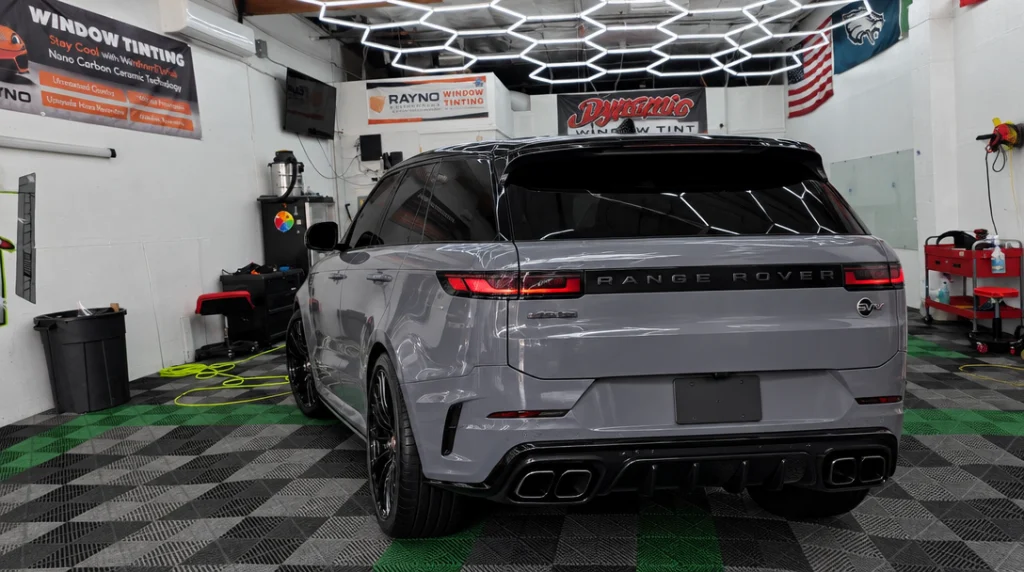
You can also read our guide to window tint specs including VLT, TSER, and IR rejection if you want to compare film measurements before choosing a shade.
What Does 70% Window Tint Look Like?
70% window tint usually looks lightly shaded rather than dark.
From outside the vehicle, you may notice a mild tint when comparing the window directly with untreated glass.
Without that side-by-side comparison, many people may not immediately notice the film.
What you see can change based on:
- The vehicle’s original glass
- Film color
- Interior color
- Sun angle
- Reflections
- Cloud cover
- Time of day
- Whether nearby windows are darker
- Your viewing angle
A black vehicle interior can sometimes make light tint look darker from outside.
Bright sky reflections can do the same thing.
From inside the vehicle, 70% tint usually keeps the view bright.
You are not looking through the same darkened window you would get with a 20% or 5% film.
That makes 70% window tint attractive to drivers who want a film that does not dramatically change the outward view.
Does 70% Tint Look Clear?
It can look close to clear.
“Close to clear” is a better description than “invisible.”
Film can still have a slight hue or shaded appearance.
Rayno’s Platinum Air 7090, one example of a 70% VLT film, is listed with a blue color.
The vehicle’s original glass can have its own green, blue, gray, or bronze hue too.
Put the two together and the finished result can look different from a sample card.
If appearance matters to you, ask to see the film against actual automotive glass before scheduling installation.
70% Window Tint vs Clear Glass
The difference between bare automotive glass and 70% window tint can be subtle.
Bare automotive glass is not necessarily 100% VLT.
Vehicle glass already absorbs and reflects some visible light.
Once film is applied, you are combining the light transmission of the original glass with the film.
From outside, 70% film may create:
- A faint shaded appearance
- A slight color change
- A little more reflection depending on the film
- Less of a completely open-glass look
From inside, it usually remains bright.
What this means is that drivers looking for dramatic styling may find 70% too light.
Drivers who want a restrained appearance may like it for the same reason.
70% Window Tint vs 50%, 35%, and 20% Tint
Let’s break it down by appearance.
70% Window Tint
A 70% film is light.
People and objects inside the car remain easy to see in many lighting conditions.
The car usually keeps a close-to-factory appearance.
50% Window Tint
A 50% film is more noticeable.
It is still considered a lighter shade, but the glass usually looks more visibly tinted than 70%.
35% Window Tint
At 35%, the tint becomes much easier to see.
The vehicle has a stronger tinted appearance, and occupants receive more visual screening from outside.
20% Window Tint
A 20% film looks dark.
Privacy becomes a larger part of the decision.
The difference between 20% and 70% is easy to notice.
5% Window Tint
A 5% film allows very little visible light through.
It creates the dark appearance many people associate with limousine-style tint.
The right shade depends on what you want from the glass and where the film can legally be installed.
Can 70% Window Tint Still Reject Heat?
Yes, depending on the film.
Visible darkness and solar performance are not the same measurement.
This is one of the biggest misunderstandings about light tint.
A film can allow a lot of visible light through while still being designed to reject other parts of solar energy.
That is why two films with the same VLT can perform differently.
When comparing 70% window tint, look beyond the shade percentage.
Ask about:
- TSER
- Infrared rejection
- UV rejection
- Visible light reflection
- Film construction
- Warranty
TSER stands for Total Solar Energy Rejected.
Rayno describes TSER as the percentage of total solar energy rejected by the film.
IR rejection refers to infrared energy rejected under the manufacturer’s stated test conditions.
UV rejection measures the film’s ability to reject ultraviolet radiation.
The real question is not whether a 70% film is dark.
The question is what the exact film does with solar energy while allowing 70% of visible light through.
Rayno 70% Window Film Specs
Rayno currently offers Platinum Air 7090 as a light film with a listed 70% VLT.
Rayno publishes the following specifications for Air7090:
| Specification | Rayno Air7090 |
|---|---|
| VLT | 70% |
| UV Rejection | 99% |
| TSER | 42% |
| Visible Light Reflection | 7.3% |
| SHGC | 0.58 |
| Color | Blue |
Rayno also describes Air7090 as a lighter film designed for automotive glass.
You can review the current specifications on Rayno’s Platinum Air 7090 page.
These numbers show why 70% window tint should not be judged by appearance alone.
A film can look light while still having published UV and solar-control performance.
Availability can change, so ask Dynamic Window Tint which Rayno light-film options are currently offered for your vehicle.
Why Light Tint Can Make Sense in Bakersfield
Bakersfield, CA is a place where drivers often care about solar performance.
The region experiences long stretches of hot, sunny weather.
That creates a common problem.
Some drivers want help reducing the solar energy coming through automotive glass, but they do not want every window to look very dark.
This is where 70% window tint gets attention.
A light film may appeal to someone who:
- Drives during daylight for much of the week
- Parks outdoors
- Wants to keep a factory-like appearance
- Does not want strong visual darkness
- Wants a bright outward view
- Is comparing UV rejection
- Is comparing solar-control specifications
A light film does not mean the car will stay cool after sitting in direct Bakersfield sun for hours.
No window film can make that promise.
The roof, dashboard, seats, body panels, windshield, surrounding air, and other glass surfaces can all contribute to cabin temperature.
Film can reduce part of the solar energy passing through treated glass.
For a Bakersfield commuter, that can still be worth comparing.
Is 70% Window Tint Good for Privacy?
Not really.
If privacy is your main reason for tinting your windows, 70% window tint is probably too light.
People outside the vehicle can usually see into the cabin under normal conditions.
Reflections may hide some interior details at certain angles.
A dark vehicle interior can also make the cabin look less visible from outside.
Neither should be confused with true privacy.
Lighting can change quickly.
A vehicle that looks difficult to see into during bright afternoon sun may look open once it moves into shade.
At night, interior lighting can make the cabin even easier to see.
If privacy matters more than keeping the glass light, ask your installer about darker options for windows where darker film is permitted.
How 70% Tint Looks at Night
One reason drivers consider 70% tint is outward visibility.
Because a 70% film lets most visible light through, the view is brighter than it would be through 50%, 35%, or 20% film, assuming comparable glass and film conditions.
That can appeal to drivers who:
- Commute before sunrise
- Work evening shifts
- Travel on rural Kern County roads
- Frequently drive between Bakersfield, CA and nearby communities
- Prefer a lighter view through the glass
That does not mean film has zero effect on the view.
Any reduction in visible light is still a reduction.
Film color, glass tint, haze, installation quality, lighting, and your own vision can affect how the finished window looks.
If night visibility matters to you, tell the installer before choosing a shade.
Does 70% Film Mean the Finished Window Is 70% VLT?
No.
This is a common mistake.
The 70% number usually describes the film itself.
Your automotive glass already has its own VLT.
Once 70% window tint is placed on that glass, the finished window can measure below 70%.
A rough way to understand the relationship is:
Original Glass VLT × Film VLT = Estimated Combined VLT
Suppose the untreated glass measures 80% VLT.
A 70% VLT film would produce an estimated combined transmission of:
0.80 × 0.70 = 0.56
That equals about 56% combined VLT.
This example is for understanding the math, not a prediction of your vehicle’s exact reading.
The actual completed window should be measured with a tint meter when the legal VLT matters.
Here is why this matters in California.
A film label and a completed-window reading are not the same thing.
Never assume a “70% film” produces a legal 70% completed window.
Is 70% Window Tint Legal in California?
This section deserves careful attention.
A 70% aftermarket film is not automatically legal on California front side windows.
Current California Vehicle Code Section 26708 allows certain clear, colorless, transparent material on the front side windows immediately beside the driver and front passenger when several conditions are met.
Among those conditions:
- The material itself must have a minimum VLT of 88%
- The completed glazing with the material installed must meet the federal 70% light-transmission requirement
- The material must be designed to reduce ultraviolet A exposure
- Required certification must be kept in the vehicle
You can review California Highway Patrol’s window tint guidance.
The statutory language is available in California Vehicle Code Section 26708.
This creates an easy source of confusion.
People hear “California requires 70%” and assume a 70% aftermarket film must be legal.
That is not what the front-side exception says.
The film itself must meet the 88% VLT requirement for that exception, while the completed glass and material must still meet the applicable 70% glazing requirement.
What About the Windshield?
California places tighter restrictions on material applied to the windshield.
California law allows a transparent upper windshield strip when its placement and other conditions meet the statute.
Other windshield-film situations can involve separate restrictions and exceptions.
Do not assume a 70% windshield installation is legal because the film looks nearly clear.
Ask about the exact window location and current California rules before installation.
What About Rear Side Windows?
California rules are different for windows behind the driver.
California Highway Patrol states that rear-window tint is permitted when the vehicle has outside rearview mirrors on both sides.
The rules depend on the location of the window.
Bottom line, choose tint by both film performance and legal placement.
When 70% Window Tint Makes Sense
70% window tint can make sense when you want a light appearance and are considering film for a location where that product can legally and safely be installed.
You Want a Nearly Stock Appearance
Some drivers do not want dark windows.
They like the appearance of the vehicle’s original glass and want to keep something close to it.
A light film can do that better than 20% or 35% tint.
You Care More About Solar Specs Than Privacy
A light film can have published UV, IR, and TSER performance.
If those figures matter more than hiding the interior, compare the exact film specifications.
You Drive at Night Often
A higher VLT allows more visible light through than a darker tint.
Drivers who frequently travel after dark may prefer that brighter view.
You Already Have Dark Rear Privacy Glass
Many trucks and SUVs have dark factory privacy glass behind the front seats.
A driver may not want to make every piece of glass darker.
A lighter film in suitable locations can keep a less dramatic appearance.
You Want a Film That Does Not Draw Much Attention
Some drivers want film performance without a dark-window style.
70% window tint can be subtle enough that people may not immediately notice it.
When a Darker Tint May Make More Sense
A light film is not right for every driver.
You may prefer a darker film when your goal is:
- More privacy
- A darker vehicle appearance
- Stronger visible glare reduction
- Matching dark factory rear glass
- Making the rear passenger area less visible
Where darker film is legally allowed, you can compare 50%, 35%, 20%, 15%, or 5% options.
Remember that darkness alone does not tell you how the film handles heat.
A lighter ceramic film can have stronger published IR performance than a darker film from another series.
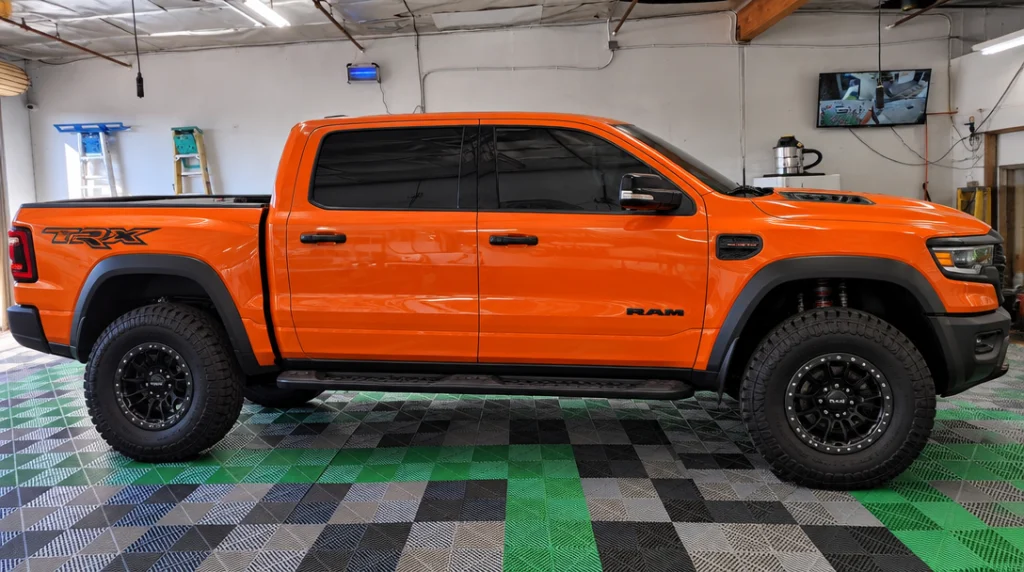
Our ceramic tint in Bakersfield guide explains why VLT, IR rejection, and TSER should be compared separately.
Choosing Light Window Tint in Bakersfield, CA
Choosing 70% window tint should start with your reason for tinting the vehicle.
Ask yourself:
- Do I want heat control?
- Do I want UV rejection?
- Do I want privacy?
- Do I want a darker appearance?
- Do I drive often at night?
- Which windows do I want tinted?
- What is the VLT of my original glass?
- What does California allow on those windows?
If privacy is the goal, 70% will probably feel too light.
If keeping a bright view matters more, it may be worth comparing with other light-film choices.
If heat is your concern, ask about TSER and IR rejection.
If California legality is your concern, do not rely on the shade label.
Ask about the completed glass and the specific window where the film will be installed.
Dynamic Window Tint installs Rayno Window Film at:
4609 New Horizon Blvd Suite #10
Bakersfield, CA 93313
The shop serves Bakersfield, CA and nearby Kern County communities.
Call (661) 634-5585 to discuss your vehicle and light tint choices.
You can also visit the Dynamic Window Tint contact page to schedule an appointment.
Tell the shop your:
- Vehicle year
- Make
- Model
- Windows you want tinted
- Current tint, if any
- Main reason for wanting film
- Preferred appearance
- Night-driving habits
The installer can compare available Rayno films and explain which choices fit your vehicle and the installation location.
Frequently Asked Questions
1. What does 70% window tint look like?
70% window tint looks very light. It usually gives automotive glass a faint shaded appearance rather than the dark look associated with 20%, 15%, or 5% film. The finished appearance depends on the original glass, film color, vehicle interior, reflections, and lighting.
2. Is 70% window tint basically clear?
It can look close to clear, but it is not the same as bare glass. A 70% VLT film allows about 70% of visible light through the film. Depending on the product, you may notice a slight color or shaded effect.
3. Does 70% window tint block heat?
It can reject part of the solar energy entering through treated glass, but the exact performance depends on the film. Do not use VLT alone to judge heat control. Compare TSER and infrared rejection for the exact product.
4. Does 70% window tint provide privacy?
Not much. A 70% film is light enough that occupants and objects inside a vehicle can usually remain visible. If privacy is your main goal, a darker shade may make more sense on windows where darker tint is permitted.
5. Is 70% window tint legal on California front side windows?
A 70% aftermarket film does not automatically meet California’s front-side window exception. Current California Vehicle Code Section 26708 states that qualifying clear, colorless, transparent material on the front side windows must have at least 88% VLT, and the completed glazing must meet the applicable 70% federal light-transmission requirement.
6. Will a 70% film make my finished window 70% VLT?
Usually not. The original automotive glass already reduces some visible light. Film and glass work together, so the finished VLT can be lower than the film’s printed 70% rating. A tint meter can check the completed window.
7. Where can I compare light window tint in Bakersfield, CA?
Dynamic Window Tint installs Rayno automotive window film at 4609 New Horizon Blvd Suite #10, Bakersfield, CA 93313. Call (661) 634-5585 or visit the contact page to compare light tint, ceramic film, VLT, TSER, IR rejection, and available shade choices.
Sources
Platinum Air 7090
Publisher: Rayno Film
Publication Date: Not listed
Information referenced: Air7090 VLT, UV rejection, TSER, Visible Light Reflection, SHGC, color, and automotive applications.
Window Film Terminology
Publisher: Rayno Film
Publication Date: Not listed
Information referenced: VLT, IR rejection, TSER, UV rejection, and how tint percentages are interpreted.
California Highway Patrol FAQ
Publisher: California Highway Patrol
Publication Date: Not listed
Information referenced: California restrictions on aftermarket windshield and front side window material and rear-window requirements.
California Vehicle Code Section 26708
Publisher: California Legislative Information
Publication Date: Current statutory text
Information referenced: Front-side window material requirements, VLT requirements, windshield restrictions, and certification rules.
Federal Motor Vehicle Safety Standard No. 205, Glazing Materials
Publisher: National Highway Traffic Safety Administration regulation reproduced by Cornell Legal Information Institute
Publication Date: Current federal regulation
Information referenced: Federal motor vehicle glazing standards.
Window Tint Specs Explained: VLT, TSER & IR Rejection
Publisher: Dynamic Window Tint
Publication Date: Not listed
Information referenced: VLT comparison, Rayno film measurements, Bakersfield tint considerations, and differences between darkness and solar performance.
Window Tint in Bakersfield, CA
Publisher: Dynamic Window Tint
Publication Date: Not listed
Information referenced: Rayno automotive window film, Bakersfield shop location, warranty-backed service, and local vehicle tint services.
