

Window tinting in Tehachapi, CA can help drivers deal with bright mountain sun, glare through side windows, UV exposure, and solar heat inside a vehicle. Tehachapi sits at roughly 4,000 feet in elevation, so driving conditions differ from those on the lower San Joaquin Valley floor. Open mountain roads, changing road direction, clear skies, and bright afternoon sun can put sunlight directly in a driver’s field of view at different points during a trip.
For people traveling between Tehachapi, CA and Bakersfield, CA, those conditions can become even more noticeable as roads climb, descend, curve, and change direction. A properly selected automotive film can soften incoming visible light while also addressing UV and solar energy.
The film you choose matters. Darkness alone does not tell you how a window film will handle heat or UV. Drivers shopping for window tinting in Tehachapi, CA should compare visible light transmission, infrared rejection, total solar energy rejection, UV rejection, outward visibility, and California tint rules.
Dynamic Window Tint installs Rayno Window Film at its Bakersfield, CA shop. The team provides certified installation and warranty-backed products and services for cars, trucks, SUVs, and other vehicles.
Table of Contents
- Why Window Tinting in Tehachapi, CA Fits Mountain Driving
- How Tehachapi Elevation Affects Sun Exposure
- Why Glare Can Become a Problem on Mountain Roads
- How Window Tint Helps Cut Glare
- VLT and Glare Control
- Ceramic Window Tint for Tehachapi, CA Drivers
- Heat Rejection Versus Tint Darkness
- UV Exposure at Higher Elevations
- Choosing Tint for Highway 58 Driving
- Front Side Windows and Windshield Glare
- Rear Window Tint for Trucks and SUVs
- California Window Tint Rules
- Why Film Clarity Matters in the Mountains
- Window Tint Installation Near Tehachapi, CA
- Other Vehicle Services for Mountain Drivers
- Schedule Window Tinting Near Tehachapi, CA
- Frequently Asked Questions
- Sources
Why Window Tinting in Tehachapi, CA Fits Mountain Driving
Window tinting in Tehachapi, CA is about more than giving a car darker glass.
Mountain driving can expose you to sunlight from changing angles. A road may face the sun for several minutes, bend around a ridge, move into shade, and then open into direct sunlight again.
Your eyes need to adjust as lighting conditions change.
Tinted side glass can reduce some of the visible light entering the cabin, which may make bright sunlight less harsh. Film can also help with solar heat and UV exposure depending on the product selected.
Drivers may choose tint because they want:
- Less glare through side glass
- Reduced brightness during daytime trips
- Better solar heat rejection
- UV rejection
- More privacy
- A cleaner exterior appearance
- Less direct sunlight on passengers
- A more comfortable cabin during long drives
Here is why film selection deserves some thought.
A very dark film may cut more visible light, but it can also make outward viewing harder after dark. A lighter ceramic film may provide stronger solar performance than someone expects while letting more visible light through.
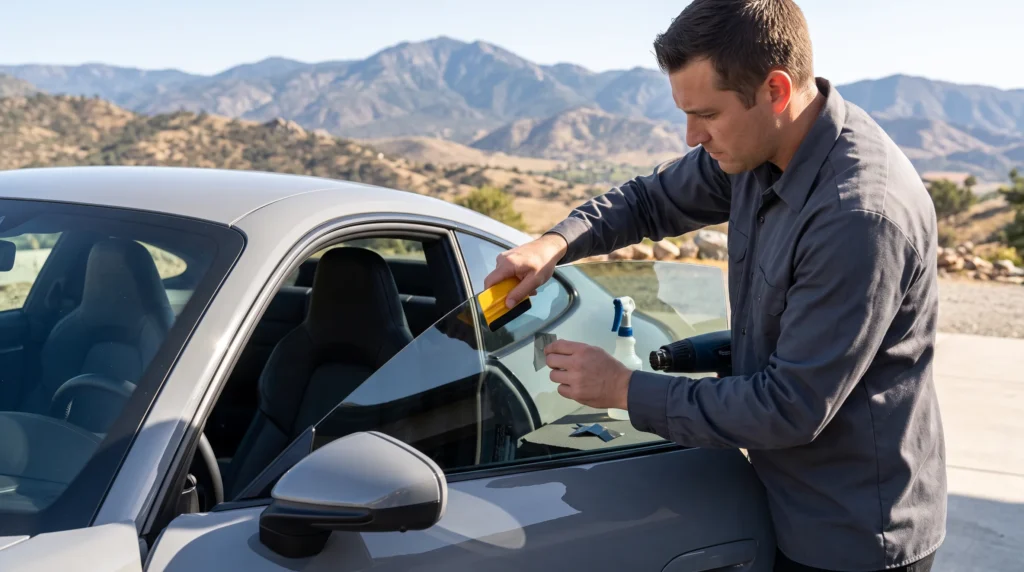
The right choice should fit when, where, and how you drive.
How Tehachapi Elevation Affects Sun Exposure
Tehachapi, CA is a mountain community rather than a Valley-floor city.
The National Weather Service places its Tehachapi point forecast near 4,000 feet above sea level. Elevation matters when talking about sunlight because the amount of atmosphere above you changes as elevation rises.
The U.S. Environmental Protection Agency states that UV intensity increases with elevation because there is less atmosphere available to absorb UV radiation.
That does not mean every sunny day in Tehachapi has the same UV level. Clouds, season, time of day, ozone, and other conditions also affect UV intensity.
It does mean elevation belongs in the conversation when choosing window tinting in Tehachapi, CA.
Vehicle owners often spend far more time thinking about temperature than UV. Yet solar exposure can matter even on a day that feels cooler than Bakersfield, CA.
Mountain air may feel mild while sunlight through the glass remains bright.
What this means is that cabin temperature is not the only reason to consider film.
Why Glare Can Become a Problem on Mountain Roads
Glare happens when bright light makes it harder to see comfortably.
Inside a vehicle, glare may come directly from the sun or from light reflected from another surface.
Mountain roads can create changing viewing angles because the road rises, falls, bends, and passes around hillsides. The sun may appear near the edge of the windshield on one stretch and through a side window a few minutes later.
That can be tiring during a longer trip.
People driving from Tehachapi, CA toward Bakersfield, CA may also experience very different sun angles depending on the time of day.
Morning and late-afternoon trips deserve special thought because the sun can sit lower in the sky.
Window tinting in Tehachapi, CA can reduce the amount of visible light entering through treated side and rear glass. The amount depends on the shade and glass combination.
How Window Tint Helps Cut Glare
Automotive tint reduces visible light transmission through treated glass.
That is where the term VLT comes in.
VLT stands for Visible Light Transmission. It describes the percentage of visible light that passes through the film.
A film with a higher VLT allows more visible light through.
A film with a lower VLT lets less visible light through and normally appears darker.
If glare control is one of your goals, VLT deserves attention.
The catch is that the darkest possible film is not automatically the right choice.
Drivers in Tehachapi, CA may travel through mountain areas after sunset, before sunrise, or on roads with little surrounding light. Film that feels comfortable at noon may feel very different at night.
Good tint selection balances daytime glare control with the visibility you want after dark.
VLT and Glare Control
Think of VLT as one part of the tint-selection process.
If two films have different VLT figures, the darker film normally transmits less visible light.
That can help soften bright daylight.
Yet your vehicle glass affects the finished result too.
Factory automotive glass is not always perfectly clear. Some vehicles also have privacy glass behind the front doors.
When film is applied to existing glass, the final amount of visible light passing through the window depends on both pieces.
That is one reason drivers looking for window tinting in Tehachapi, CA should have their vehicle inspected rather than buying film based only on a sample card.
A shop can look at:
- Existing factory glass
- Privacy glass
- Old tint
- Window position
- Vehicle type
- Desired appearance
- Daytime driving
- Nighttime driving
From there, you can compare film choices with a clearer idea of what the finished vehicle may look like.
Ceramic Window Tint for Tehachapi, CA Drivers
Ceramic tint can be a good fit for someone who wants solar performance along with glare control.
Dynamic Window Tint carries Rayno Window Film, including Rayno ceramic options.
Rayno publishes performance figures for its Phantom S5, S7, and S9 films. Those specifications include Visible Light Transmission, Total Solar Energy Rejected, infrared rejection, UV rejection, and visible-light reflection.
Those separate numbers matter.
A film does not need to be judged only by darkness.
A Tehachapi, CA driver who wants a lighter appearance may still have ceramic options designed to reject infrared energy and UV.
A driver who prefers darker rear glass can compare solar specifications within darker shades too.
Rayno S5
Rayno Phantom S5 is a nano carbon ceramic automotive film available in multiple VLT levels.
Rayno reports 99.9% UV rejection throughout the S5 shades listed on its current specifications page.
Rayno S7
Phantom S7 is another ceramic film choice with multiple shades.
Rayno’s specifications show differing levels of IR rejection and total solar energy rejection depending on shade.
Rayno S9
Phantom S9 sits at the higher end of Rayno’s Phantom range.
Rayno lists IR-rejection figures above 90% across the S9 shades shown on its current specifications chart.
For someone comparing window tinting in Tehachapi, CA, these specifications provide a better basis for choosing film than appearance alone.
Heat Rejection Versus Tint Darkness
Heat rejection and tint darkness are related topics, but they are not the same measurement.
This distinction is worth understanding before you choose film.
VLT tells you about visible light.
IR rejection tells you how much infrared energy a film rejects under the manufacturer’s testing method.
TSER stands for Total Solar Energy Rejected. It provides a broader measurement of how much solar energy is rejected by the glazing system.
A driver may assume a 5% film must reject far more heat than a 40% or 50% film simply because it looks much darker.
Film specifications show why that assumption can be misleading.
Rayno’s Phantom charts list VLT, IR rejection, and TSER separately.
For window tinting in Tehachapi, CA, that gives drivers the chance to choose around several goals at once:
- Glare control
- Solar heat rejection
- UV rejection
- Appearance
- Privacy
- Daytime visibility
- Nighttime visibility
This is especially useful for commuters who regularly transition between mountain roads and the brighter, hotter Valley floor.
UV Exposure at Higher Elevations
UV should not be confused with visible glare.
You cannot judge UV exposure simply by how bright the day looks.
The EPA says UV intensity rises with elevation. Its UV Index guidance also explains that cloud cover, ozone, season, time of day, and elevation all affect the amount of UV radiation reaching the surface.
For Tehachapi, CA drivers, that makes UV rejection another film specification worth checking.
Rayno publishes a 99.9% UV-rejection figure for the Phantom S5, S7, and S9 shades listed on its automotive film specifications page.
That is separate from how dark those films appear.
A lighter film can still be made with UV rejection in mind.
Here is why this matters inside a vehicle.
Sunlight may reach:
- The driver’s arms
- Front passengers
- Rear passengers
- Child seats
- Dash surfaces
- Door panels
- Seats
- Interior trim
Window tinting in Tehachapi, CA lets you address UV and visible glare through the same treated glass while choosing a shade suited to your driving.
Choosing Tint for Highway 58 Driving
Many Tehachapi, CA drivers regularly travel Highway 58 toward Bakersfield, CA or communities on the other side of the mountains.
That kind of trip can include elevation changes, long open sections, hillsides, turns, bright sky, and shifts between direct sun and shade.
If that describes your commute, tell your tint installer.
You may want to place extra weight on:
- Optical clarity
- Glare reduction
- Legal front-window choices
- Heat rejection
- UV rejection
- Night visibility
People who mainly drive during daylight may prefer a different shade setup from drivers who return home after dark.
Truck and SUV owners may also have factory privacy glass in the rear, which changes how added film will look.
There is no single shade that suits every Highway 58 driver.
Front Side Windows and Windshield Glare
The front of the vehicle deserves careful attention because the windshield and front side windows are part of your main viewing area.
California places tighter restrictions on these windows than on many rear-window applications.
That means glare control at the front cannot simply be handled by installing very dark film.
A legal lighter film may be more appropriate depending on the window and vehicle.
Some drivers also ask about a glare strip at the top of the windshield.
California law sets conditions for material placed on the windshield, so placement needs to follow the current statute.
If windshield or front-window glare is one of your reasons for seeking window tinting in Tehachapi, CA, discuss it before film is installed.
Rear Window Tint for Trucks and SUVs
Trucks and SUVs often arrive with dark factory glass behind the front seats.
People sometimes assume factory privacy glass provides the same solar performance as aftermarket ceramic tint.
It is better to treat those as separate products.
Factory privacy glass gets its darker appearance from the glass itself. Aftermarket automotive film can add its own solar and UV properties over the existing glass.
If you want less sunlight reaching rear passengers, ask about putting film over privacy glass.
The finished appearance can become darker because the existing glass and film work together.
For families traveling between Tehachapi, CA and Bakersfield, CA, rear-window tint may be worth discussing when children or other passengers spend a lot of time in the back seats.
California Window Tint Rules
Window tinting in Tehachapi, CA is governed by California vehicle law.
California Vehicle Code Section 26708 regulates materials placed on windshields and vehicle windows.
Rules vary by window location.
The front side windows and windshield have stricter conditions than rear glass in many vehicle setups.
This means an installer should not treat every window the same.
It also means a shade that may be allowed on a rear window is not automatically suitable for a front side window.
Factory glass plays a role too because the finished light transmission is affected by both the glass and film.
Before choosing a shade, ask how California rules apply to:
- Driver-side front glass
- Passenger-side front glass
- Rear door glass
- Quarter glass
- Rear windshield
- Windshield strip
- Windshield film
Keeping the law in mind at the beginning is much easier than removing film later.
Why Film Clarity Matters in the Mountains
Clarity deserves attention when you regularly drive winding or less-lit roads.
The goal of tint is not to make it hard to see outside.
A good automotive film should look clean through the glass when installed correctly.
Rayno publishes information about the clarity of its Phantom films along with its solar specifications.
When comparing film, look through samples rather than viewing them only from outside.
Ask yourself:
- Can I see clearly through the film?
- Will this shade feel too dark after sunset?
- Do I regularly back into dark areas?
- Do I travel mountain roads early in the morning?
- Do I commute home at night?
- Am I choosing this shade for glare or mainly for appearance?
Those questions can keep the film choice tied to how you actually use the vehicle.
Window Tint Installation Near Tehachapi, CA
Drivers looking for window tinting near Tehachapi, CA can visit Dynamic Window Tint at its Bakersfield, CA location.
The shop is located at:
4609 New Horizon Blvd Suite #10 Bakersfield, CA 93313
Dynamic Window Tint provides certified installation and carries warranties on its products and services.
The shop installs Rayno Window Film and works on cars, trucks, SUVs, and other vehicle types.
When you call, tell the team that you are coming from Tehachapi, CA and explain why you want tint.
Your goals might include:
- Mountain sun glare
- UV rejection
- Heat rejection
- More privacy
- A different exterior appearance
- Rear passenger comfort
- Highway commuting
The more the installer knows about your driving, the easier it is to compare film choices.
Other Vehicle Services for Mountain Drivers
Mountain and highway driving can expose more than the glass to everyday road conditions.
Dynamic Window Tint also provides paint protection film, ceramic coating, windshield protection film, windshield chip repair, and windshield replacement.
Paint protection film is used on painted areas that are more likely to encounter road debris.
Ceramic coating is applied to exterior surfaces and can make routine washing easier while giving the finish a slick appearance.
Windshield protection film is made for drivers who want an added layer over the windshield surface.
These services do different jobs, so they should be chosen based on what part of the vehicle you want to address.
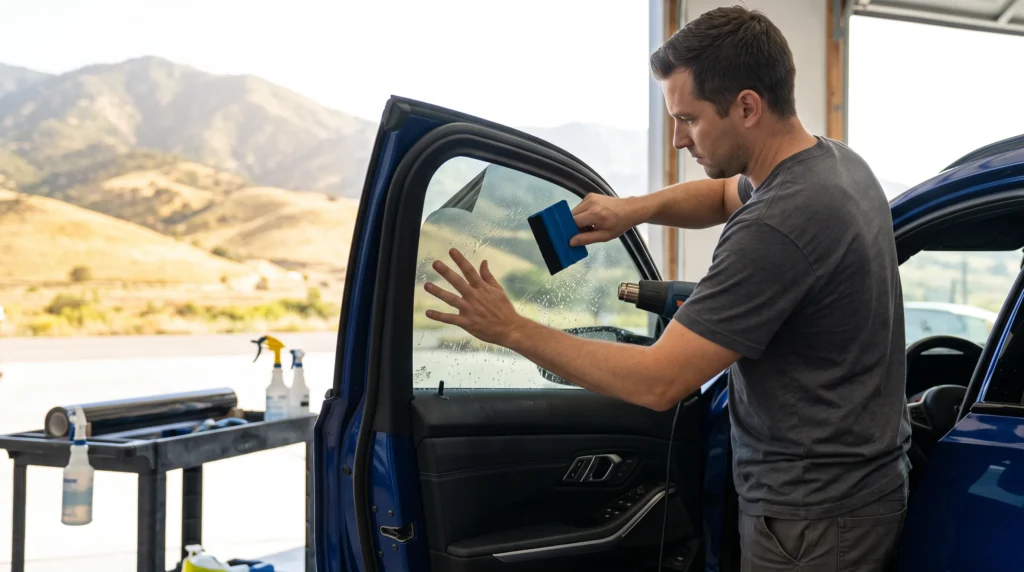
A Tehachapi, CA driver who spends a lot of time on Highway 58 may want to ask about tint for solar exposure and separate film choices for exterior road contact.
Schedule Window Tinting Near Tehachapi, CA
Window tinting in Tehachapi, CA should fit the roads you drive, the hours you travel, and what bothers you most about direct sunlight.
If mountain glare is your main concern, compare VLT and outward visibility.
If solar heat is the concern, compare IR rejection and TSER.
If UV exposure matters, ask for the manufacturer’s UV specification.
If you drive after dark, make nighttime visibility part of the shade decision.
Dynamic Window Tint can go through the available Rayno Window Film choices with you and provide a quote based on your vehicle.
Call (661) 634-5585 to talk with the shop.
You can also visit the Dynamic Window Tint contact page to schedule an appointment.
No single price applies to every tint job because cost can vary with the vehicle, number of windows, selected film, glass layout, old tint removal, and other preparation.
Call the shop or submit the contact form for a quote for your car, truck, or SUV.
Frequently Asked Questions
1. Can window tinting in Tehachapi, CA reduce mountain sun glare?
Yes. Window film reduces the amount of visible light passing through treated glass. A lower VLT normally means less visible light enters through that window. The shade should still be selected with outward visibility and California law in mind.
2. Does Tehachapi’s elevation make UV exposure stronger?
Elevation is one factor that affects UV intensity. The U.S. EPA states that UV intensity increases with elevation because less atmosphere is present to absorb UV radiation. Season, clouds, ozone, and time of day also affect UV levels.
3. Is ceramic tint good for Tehachapi, CA drivers?
Ceramic window film can be a good choice for drivers who want to address glare, solar energy, and UV without choosing film only by darkness. Rayno publishes VLT, IR-rejection, TSER, and UV-rejection figures for its Phantom ceramic films.
4. Does darker tint always cut more heat?
No. A darker appearance means less visible light is transmitted, but heat-related performance is measured separately. Compare IR rejection and Total Solar Energy Rejected along with VLT when heat is one of your concerns.
5. What tint is best for driving Highway 58?
There is no single shade that fits every Highway 58 driver. Think about how often you drive during daylight versus at night, how much glare bothers you, your desired appearance, the vehicle’s existing glass, and California tint rules. A tint installer can compare these factors with available film specifications.
6. Can I tint my front side windows for glare control?
California allows only certain materials and light-transmission levels on the front side windows. The finished result depends on both the factory glass and applied film. Ask the installer to discuss current California requirements before choosing front-window film.
7. How do I book window tinting near Tehachapi, CA?
Call Dynamic Window Tint at (661) 634-5585 or use the contact form. Tell the team your year, make, model, which windows you want tinted, and whether glare control, heat rejection, UV rejection, privacy, or appearance is your main goal.
Sources
National Weather Service, Tehachapi Point Forecast
Publisher: National Weather Service
Publication Date: Current forecast data
Information referenced: Tehachapi point forecast elevation near 4,000 feet.
Learn About the UV Index
Publisher: U.S. Environmental Protection Agency
Publication Date: Current guidance
Information referenced: UV intensity and the effect of elevation, clouds, ozone, and other conditions.
Phantom Series Automotive Window Film
Publisher: Rayno Film
Publication Date: Not listed
Information referenced: VLT, IR rejection, UV rejection, TSER, film construction, and film specifications.
Window Tint in Bakersfield, CA
Publisher: Dynamic Window Tint
Publication Date: Not listed
Information referenced: Rayno Window Film, certified installation, warranties, tint choices, location, and phone number.
California Vehicle Code Section 26708
Publisher: California Legislative Information
Publication Date: Current code database
Information referenced: California rules governing material installed on vehicle windshields and windows.
