

Which rooms need window film most in a Bakersfield home? Start with the rooms receiving the strongest direct sun, the most glare, or the least privacy. West-facing living rooms, home offices with computer screens, bedrooms that warm up in the afternoon, kitchens with large windows, and rooms with sliding glass doors are often the first places homeowners notice a problem.
Not every room needs the same film. A living room may need solar control while keeping a clear view outside. A bedroom may need more privacy. A home office may need glare reduction so a monitor is easier to see. A patio door may need help with a wide area of direct sunlight.
Window direction matters too. U.S. Department of Energy building guidance notes that controlling heat and glare can be harder on east-facing and west-facing windows. Those windows receive lower-angle sunlight during morning or afternoon hours, which can make certain rooms noticeably brighter.
Dynamic Window Tint provides residential window tint in Bakersfield, CA using Rayno Window Film. If you are trying to decide which windows to treat first, look at how each room feels during the brightest and hottest parts of the day.
Table of Contents
- Which Rooms Should You Check First?
- West-Facing Living Rooms
- Home Offices With Screen Glare
- Bedrooms That Get Afternoon Sun
- Rooms With Sliding Glass Doors
- Kitchens With Large Windows
- Family Rooms and Media Rooms
- Street-Facing Rooms That Need Privacy
- Rooms With Furniture Near the Windows
- East-Facing Rooms and Morning Sun
- South-Facing Rooms
- Do North-Facing Rooms Need Window Film?
- How Window Film Helps With Solar Heat
- How Window Film Helps With Glare
- Window Film and UV Exposure
- Privacy Film for Bakersfield Homes
- Choosing Film Without Making a Room Too Dark
- Why Your Glass Type Matters
- Which Rooms Should You Tint First on a Smaller Budget?
- Schedule Residential Window Film in Bakersfield
- Frequently Asked Questions
- Sources
Which Rooms Should You Check First?
If you are considering window film in Bakersfield, walk through your home during the afternoon before deciding which windows need attention.
Look for rooms where you notice:
- Direct sunlight across floors or furniture
- Glare on televisions or computer monitors
- Hot areas beside windows
- Bright light that causes you to close blinds
- Less privacy than you want
- Large areas of uncovered glass
- Furniture or artwork receiving direct sun
- Sliding doors facing open outdoor areas
You may find that only one side of your home has a problem.
That is normal.
The U.S. Department of Energy notes that window orientation changes the way sunlight enters a home. East-facing and west-facing windows can be harder to manage for glare and unwanted solar gain.
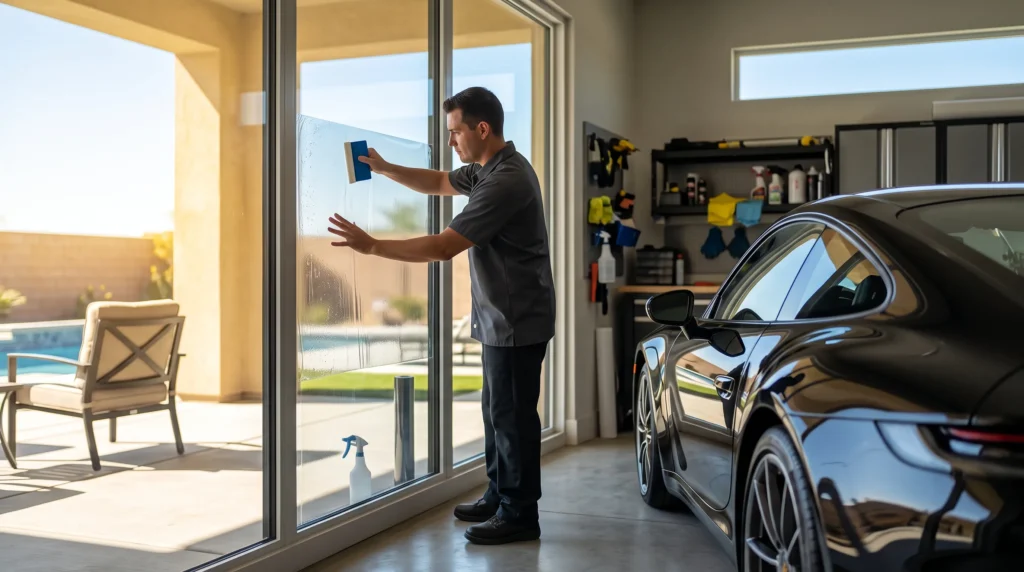
For many Bakersfield, CA homes, west-facing rooms deserve an early look because they receive direct sun later in the day.
West-Facing Living Rooms
A west-facing living room can be one of the strongest candidates for residential window film.
Afternoon sun can enter at a lower angle and reach deep into the room.
You may notice sunlight hitting:
- Sofas
- Television screens
- Flooring
- Coffee tables
- Artwork
- Window coverings
Closing blinds can solve part of the brightness problem, but it also removes the outside view and natural daylight.
Residential film gives homeowners another choice.
A suitable solar-control film can reduce part of the incoming solar energy while still allowing you to see through the glass.
For window film in Bakersfield, this can work well in living rooms where people want less afternoon glare without turning the space into a dark room.
Home Offices With Screen Glare
Home offices are another strong candidate.
Computer screens and bright windows do not always work well together.
If a window sits directly behind your monitor, the bright background can make the display feel harder to read.
If the window is behind you, light may reflect across the screen.
You may respond by:
- Closing blinds
- Moving the desk
- Turning the monitor
- Raising screen brightness
- Working in a darker room
Window film can reduce visible light entering through the problem glass.
That can make a home office easier to use without removing all natural light.
For a Bakersfield, CA home office, the film should be chosen around glare first.
A very dark film may not be necessary.
A lighter architectural film may reduce brightness while keeping the room open and allowing a clear view outside.
Bedrooms That Get Afternoon Sun
Bedrooms can become uncomfortable when direct afternoon sun reaches large windows.
This can be noticeable in upstairs rooms or bedrooms facing west.
The room may still feel warm when you are getting ready for bed.
Window film in Bakersfield can be considered when bedroom windows receive direct sun for several hours.
Homeowners may want:
- Less solar heat through the glass
- Lower brightness
- UV reduction
- More daytime privacy
- Less reliance on closed blinds
The right film depends on whether heat or privacy is the bigger concern.
A bedroom facing a backyard may not need much privacy.
A bedroom facing the street may need both solar control and less visibility from outside.
Rooms With Sliding Glass Doors
Sliding glass doors create a large opening for sunlight.
They can be found in:
- Living rooms
- Dining areas
- Family rooms
- Bedrooms
- Kitchens
Because the glass area is wide, sunlight can reach a large section of the floor.
You may notice the area close to the door feels different from the rest of the room during parts of the day.
Window film can be installed on suitable sliding-door glass after the glass type has been checked.
This is worth doing before choosing a product.
Sliding doors can use different types of architectural glazing, including insulated or coated glass.
Residential film needs to be matched to the actual glass.
Kitchens With Large Windows
Kitchens are easy to overlook when people first think about home window tint.
Yet some Bakersfield, CA kitchens have large windows or patio doors that receive direct sunlight.
The sun may hit:
- Breakfast tables
- Countertops
- Cabinets
- Flooring
- Dining areas
A kitchen that already produces heat from cooking can feel less comfortable when strong sunlight is entering through nearby glass.
Window film in Bakersfield may help reduce part of that solar load.
The film does not need to make the kitchen dark.
A lighter architectural film may be a better match when natural daylight is one of the things you like about the room.
Family Rooms and Media Rooms
A family room may have large glass surfaces and a television.
That combination can make glare one of the first problems you notice.
Bright windows can reflect across the television during daytime viewing.
Curtains can help, but they often need to stay closed while the screen is being used.
Window film can reduce visible brightness while keeping more daylight in the room.
For a media room, think about:
- Where the television sits
- Which windows reflect on the screen
- What time the glare appears
- Whether you need privacy
- Whether the room also feels warm
You may only need film on the windows causing the problem.
Treating selected glass can make more sense than applying the same film throughout the entire house.
Street-Facing Rooms That Need Privacy
Privacy can be the reason a room needs window film even when heat is not a major concern.
This often applies to:
- Front living rooms
- Bedrooms
- Home offices
- Entry doors with glass
- Bathroom windows
- Windows near sidewalks
Some architectural films can make it harder to see into the home during daylight while preserving more of the outward view.
The catch is nighttime.
Reflective privacy can behave differently after sunset when the inside of the house is brighter than outside.
If you need privacy at night too, curtains, blinds, or frosted film may still be needed.
For window film in Bakersfield, tell the installer whether privacy is needed during the day, at night, or both.
That changes the type of film worth considering.
Rooms With Furniture Near the Windows
Rooms with furniture, flooring, artwork, or other belongings close to windows may also deserve attention.
UV radiation can contribute to material fading over time.
It is not the only cause. Visible light, heat, material type, and length of exposure can also play a role.
Rayno states that its Trinity architectural film blocks 99% of UV rays.
Rayno’s Platinum architectural line also reports up to 99% UV reduction.
This can make residential film useful in rooms containing:
- Hardwood flooring
- Area rugs
- Sofas
- Artwork
- Books
- Wood furniture
- Window coverings
Film cannot promise that a material will never fade.
It can reduce one part of the solar exposure reaching items through treated glass.
East-Facing Rooms and Morning Sun
East-facing rooms get more direct sunlight earlier in the day.
A bedroom facing east may become very bright soon after sunrise.
A breakfast area may receive strong morning sun through large windows.
The Department of Energy notes that glare and solar gain can be harder to control on east-facing and west-facing glass.
If morning brightness is the problem, window film in Bakersfield may help reduce how much visible light enters while preserving natural daylight.
For bedrooms, you may also want curtains when darkness is needed for sleeping.
Film and blackout curtains do different jobs.
Film can reduce sunlight throughout the day.
Blackout curtains can block much more visible light while they are closed.
South-Facing Rooms
South-facing windows can receive substantial sun depending on the season, roof overhangs, nearby trees, and surrounding buildings.
A south-facing room with little exterior shade may need solar-control film even if it is not as harsh as a west-facing room late in the afternoon.
Look at how the room behaves throughout the day.
Do you notice:
- Warm flooring near the glass?
- Strong sunlight on furniture?
- Glare across a screen?
- Blinds staying closed most of the day?
If so, that room may belong near the top of your list.
Do North-Facing Rooms Need Window Film?
Not always.
North-facing windows often receive less direct solar exposure than other orientations.
That does not mean they never need film.
A north-facing room may still have a privacy issue.
It may also receive reflected light from nearby buildings or pavement.
If the room feels comfortable and glare is not a problem, there may be little reason to treat it first.
This is why homeowners should avoid assuming every window needs the same film package.
Window film in Bakersfield works best when it is used where there is a clear reason for it.
How Window Film Helps With Solar Heat
Windows can allow solar energy into a home.
The Department of Energy uses Solar Heat Gain Coefficient, or SHGC, as one way to describe how much solar heat passes through glazing.
A lower SHGC indicates less solar heat transmission.
Architectural films also publish solar measurements.
Rayno’s current Trinity TR-BL5099-04 film is listed with:
- 50% Visible Light Transmission
- 99% UV rejection
- 51% Total Solar Energy Rejected
- 0.49 Solar Heat Gain Coefficient
Those numbers show why shade alone does not tell the whole story.
A film can allow a fair amount of visible light through while still changing solar performance.
For Bakersfield homeowners, that can be useful when the goal is reducing solar gain without covering the windows with heavy shades all day.
How Window Film Helps With Glare
Glare is tied closely to visible light.
A bright window next to a television or computer may be uncomfortable even when the room temperature feels fine.
Visible Light Transmission tells you how much visible light passes through film.
A higher VLT means more visible light gets through.
A lower VLT means less visible light gets through.
The right level depends on the room.
A home office may need more glare reduction than a hallway.
A living room may need enough reduction to make the television easier to see while still keeping a bright interior.
This is why film selection should start with the room rather than picking one darkness level for the whole house.
Window Film and UV Exposure
UV control can matter in rooms that receive strong daylight for long periods.
Rayno currently states that its Trinity architectural film blocks 99% of UV rays.
Its Platinum architectural products are also made to reduce up to 99% of ultraviolet radiation.
That may help reduce UV exposure reaching belongings through treated windows.
Window film in Bakersfield may be worth considering in rooms with:
- Wood flooring
- Art
- Furniture
- Rugs
- Books
- Display items
Sun exposure still contains visible light and heat, so UV film should not be described as complete protection from all fading.
Think of it as reducing one part of the exposure.
Privacy Film for Bakersfield Homes
Privacy needs can be very different from room to room.
A rear-facing living room may need no privacy film.
A bathroom window facing a neighbor may need much more.
There are several ways to approach privacy.
A tinted or reflective architectural film may provide stronger daytime privacy.
Frosted film can obscure the view more fully but also removes a clear view through the glass.
Curtains and blinds can cover the window when complete privacy is needed.
Tell the installer what you want to see from inside.
That is just as useful as explaining what you want people outside to see.
Choosing Film Without Making a Room Too Dark
Homeowners sometimes assume residential tint will make the house look like a limousine.
That does not have to happen.
Architectural films come in several visible-light levels.
Rayno’s Trinity product listed above has 50% VLT, meaning it is not designed as an extremely dark blackout film.
Lighter architectural films may be suitable when homeowners want to preserve daylight and visibility.
The right choice depends on:
- Room direction
- Window size
- Existing glass
- Desired privacy
- Glare
- Solar heat
- Exterior appearance
Ask to see film samples before choosing.
Looking through the film can tell you more than looking at it from outside.
Why Your Glass Type Matters
Residential glass is not all the same.
A home may contain:
- Single-pane windows
- Dual-pane windows
- Low-e glass
- Tempered glass
- Laminated glass
- Factory-tinted glass
- Sliding-door glass
Film needs to be selected for the glazing.
Some films absorb more solar energy than others.
That makes glass-film compatibility part of the installation decision.
Do not use automotive tint on home windows simply because you like the shade.
Automotive and architectural films are made for different glass systems.
A residential installer can inspect the glass and select a suitable architectural product.
Which Rooms Should You Tint First on a Smaller Budget?
If you do not want to treat the whole home at once, start where the problem is strongest.
A practical order may be:
- West-facing rooms that become uncomfortable in the afternoon
- Home offices with recurring computer glare
- Living rooms with large windows or patio doors
- Bedrooms receiving heavy direct sun
- Street-facing rooms where privacy is a concern
- Rooms containing furnishings exposed to direct sunlight
Your home may need a different order.
Walk through each room in the morning and again late in the afternoon.
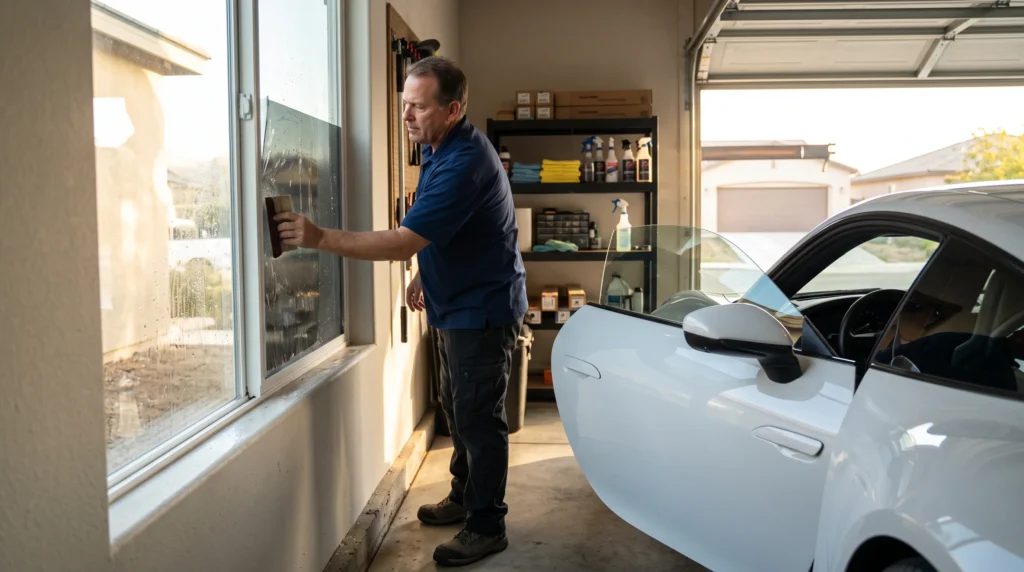
The room that causes you to close blinds, move furniture, avoid a chair, or fight screen glare is probably telling you where to begin.
Schedule Residential Window Film in Bakersfield
Window film in Bakersfield does not have to go on every piece of glass to be useful.
The rooms that usually deserve attention first are the ones receiving the strongest sunlight, the most glare, or the least privacy.
West-facing living rooms are often high on the list.
Home offices can benefit when bright windows interfere with screens.
Bedrooms may need help with afternoon solar exposure.
Sliding glass doors can create a large area for sunlight to enter.
Street-facing rooms may need privacy more than heat control.
Dynamic Window Tint provides residential window tint in Bakersfield, CA using Rayno Window Film.
Dynamic Window Tint is located at:
4609 New Horizon Blvd Suite #10 Bakersfield, CA 93313
Call (661) 634-5585 to discuss your home and the rooms causing problems.
You can also visit the Dynamic Window Tint contact page to schedule an appointment.
The team serves Bakersfield, CA and nearby communities including Rosedale, CA, Oildale, CA, Shafter, CA, Lamont, CA, Arvin, CA, Wasco, CA, Greenacres, CA, and surrounding Kern County areas.
When contacting the shop, tell them:
- Which rooms feel hottest
- Which direction the windows face if known
- Where glare occurs
- Whether privacy matters
- Whether you have sliding glass doors
- What type of windows you have if known
- Whether you want to preserve a bright interior
The installer can then discuss film choices based on the glass and the way each room is used.
Call (661) 634-5585 or use the contact form for a quote based on your Bakersfield, CA home.
Frequently Asked Questions
1. Which room usually needs window film most in a Bakersfield home?
West-facing living rooms are often among the first rooms worth checking because they can receive strong afternoon sunlight. Home offices, bedrooms, and rooms with sliding glass doors are also common candidates. The best place to start is whichever room has the strongest glare, solar heat, or privacy problem.
2. Is window film good for a Bakersfield home office?
Yes. Residential window film can reduce visible light through treated glass, which may help with glare on computer screens. A lighter architectural film can sometimes reduce brightness while keeping natural daylight and an outside view.
3. Should I put window film on bedroom windows?
Bedroom film can make sense when the room receives direct sun, feels warm near the glass, or needs more daytime privacy. Film does not replace blackout curtains when you want a very dark room for sleep.
4. Can residential window film help rooms with sliding glass doors?
Yes, suitable architectural film can be installed on compatible sliding-door glass. Because sliding doors may use insulated, tempered, coated, or other glazing types, the glass should be checked before choosing a film.
5. Does home window film block UV rays?
Some architectural films provide high UV rejection. Rayno states that its Trinity film blocks 99% of UV rays, while its Platinum line reduces up to 99% of ultraviolet radiation. UV is only one contributor to fading, so film cannot guarantee that furnishings will never change color.
6. Will residential window film make my house too dark?
Not necessarily. Architectural films are available in different Visible Light Transmission levels. Homeowners can select lighter products when they want solar or glare control while retaining natural light and visibility.
7. Where can I schedule home window tint in Bakersfield, CA?
Dynamic Window Tint provides residential window film in Bakersfield, CA. Call (661) 634-5585 or visit the contact page. Tell the team which rooms have heat, glare, UV, or privacy concerns so they can discuss suitable film and provide a quote.
Sources
Natural Light and Daylighting
Publisher: U.S. Department of Energy, Building Science Education
Publication Date: Current guidance
Accessed: August 28, 2026
Information referenced: Window direction, natural light, solar gain, glare, and the added difficulty of managing heat and glare on east-facing and west-facing windows.
Purchasing Energy-Efficient Residential Windows, Doors, and Skylights
Publisher: U.S. Department of Energy
Publication Date: Current guidance
Accessed: August 28, 2026
Information referenced: Solar Heat Gain Coefficient, visible transmittance, solar heat through glazing, hot-climate window considerations, glare, and window coverings.
Trinity Architectural Window Film
Publisher: Rayno Film
Publication Date: Not listed
Accessed: August 28, 2026
Information referenced: Residential applications, 50% VLT, 99% UV rejection, 51% TSER, 0.49 SHGC, solar heat reduction, privacy, and architectural-film specifications.
Platinum Architectural Window Film
Publisher: Rayno Film
Publication Date: Not listed
Accessed: August 28, 2026
Information referenced: Residential applications, UV reduction, glare reduction, solar heat control, privacy, and visibility.
Window Tint in Bakersfield: The Complete 2026 Guide
Publisher: Dynamic Window Tint
Publication Date: 2026
Information referenced: Bakersfield residential film applications, west-facing living rooms, bedrooms, home offices, sliding glass doors, glare, heat, privacy, and UV exposure.
Residential Window Tint in Bakersfield, CA
Publisher: Dynamic Window Tint
Publication Date: Not listed
Accessed: August 28, 2026
Information referenced: Residential window-film service, Rayno Window Film, Bakersfield location, warranty-backed work, and contact information.
