

Does window tint affect your rear defroster? Under normal conditions, properly installed automotive window film should not stop a working rear defroster from doing its job. The tint is applied over the inside surface of the rear glass and over the existing heating lines. The bigger risk comes from rough preparation, old tint removal, sharp tools, or already-damaged defroster lines.
This is especially worth knowing if your car already has bubbling or faded tint on the back window.
Removing old rear-window film takes more care than removing film from an ordinary side window. The thin heating grid on the rear glass can be scraped, lifted, or broken if someone attacks old adhesive with a razor blade or pulls aged film away too aggressively.
For Bakersfield, CA drivers, the main point is straightforward: tint and a rear defroster can normally work together. The condition of the defroster and the way the film is installed or removed matter far more than the presence of the film itself.
Here is what happens when tint goes over defroster lines, how to spot grid damage, and what to know before replacing old rear-window tint.
Table of Contents
- How Does a Rear Window Defroster Work?
- Does Window Tint Affect Your Rear Defroster During Normal Use?
- Does Tint Go Directly Over Defroster Lines?
- Can Window Tint Make a Defroster Work Slower?
- Where Does Defroster Damage Usually Happen?
- Why Old Tint Removal Is the Bigger Risk
- Why Razor Blades and Defroster Lines Do Not Mix
- How Can You Tell if a Defroster Line Is Broken?
- Does Bubbling Around a Defroster Line Mean It Is Broken?
- Can You Tint a Rear Window With Damaged Defroster Lines?
- Can Window Tint Repair a Broken Rear Defroster?
- What About Rear Glass With Antenna Lines?
- How to Care for Tinted Rear Glass
- What to Know Before Removing Old Rear Tint
- Rear Window Tint in Bakersfield, CA
- FAQs About Window Tint and Rear Defrosters
How Does a Rear Window Defroster Work?
Look closely at the rear glass on many cars, trucks, and SUVs and you will see thin horizontal lines running across it.
Those lines form the rear defroster grid.
Electrical current passes through the conductive grid when you turn on the rear defroster. The resistance in the lines creates heat, which warms the glass and helps clear moisture, condensation, frost, or light ice.
The lines are usually located on the inside surface of the rear glass.
That happens to be the same side where automotive window film is installed.
This is why drivers sometimes worry that putting film over those lines will interfere with them.
The film does not need to connect electrically to the grid. It is installed over the glass surface while the heating system continues to work through its own electrical connections.
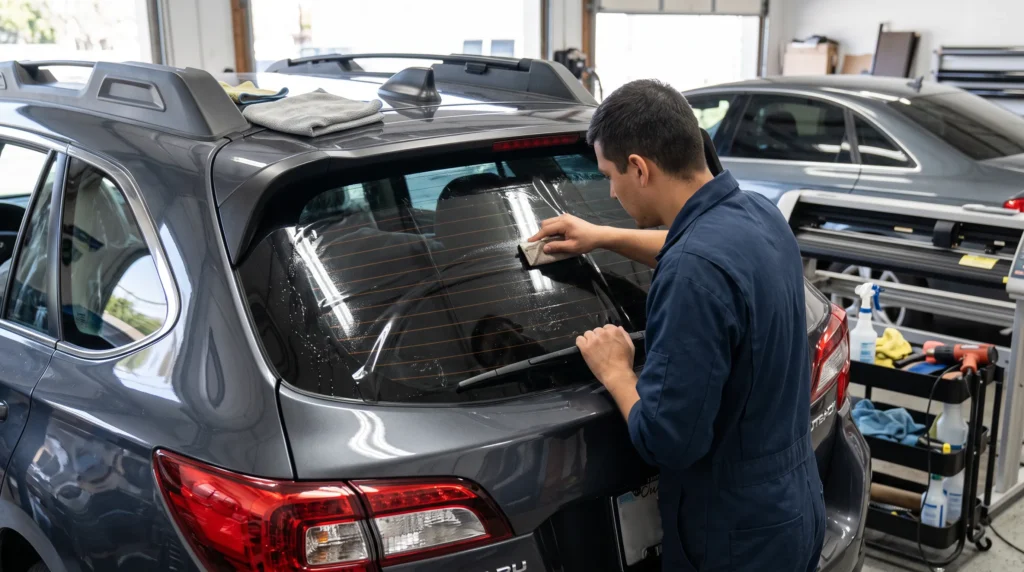
A properly functioning grid should remain usable after the window is tinted.
Does Window Tint Affect Your Rear Defroster During Normal Use?
Properly installed tint normally does not stop the rear defroster from working.
Automotive tint shops routinely install film over rear glass containing heating grids.
The film itself is not cutting the electrical path.
It is sitting over the glass and heating lines.
A working grid can continue warming the glass underneath the film.
This is why a rear defroster should not suddenly stop working merely because automotive film was installed over intact lines.
Problems are more likely when:
- A grid line was already damaged
- The glass had old tint removed before installation
- A sharp tool scraped across a line
- Old adhesive was removed aggressively
- A connector at the edge of the glass was damaged
- The defroster had an electrical fault unrelated to the tint
If part of the defroster was not working before tint installation, adding film will not fix it.
That is one reason checking the rear glass before installation is useful.
Does Tint Go Directly Over Defroster Lines?
Yes.
Automotive window film is normally applied across the inside surface of the rear glass, including directly over the defroster grid.
The installer does not cut a gap around every horizontal heating line.
Doing that would leave dozens of visible strips across the rear window.
Instead, the film lies over the grid.
Because the lines sit slightly above the surrounding glass on some vehicles, you may notice a small visual difference where film crosses them.
This does not automatically mean something is wrong.
The rear glass also tends to be curved, which means the film usually needs to be shaped carefully before it is installed.
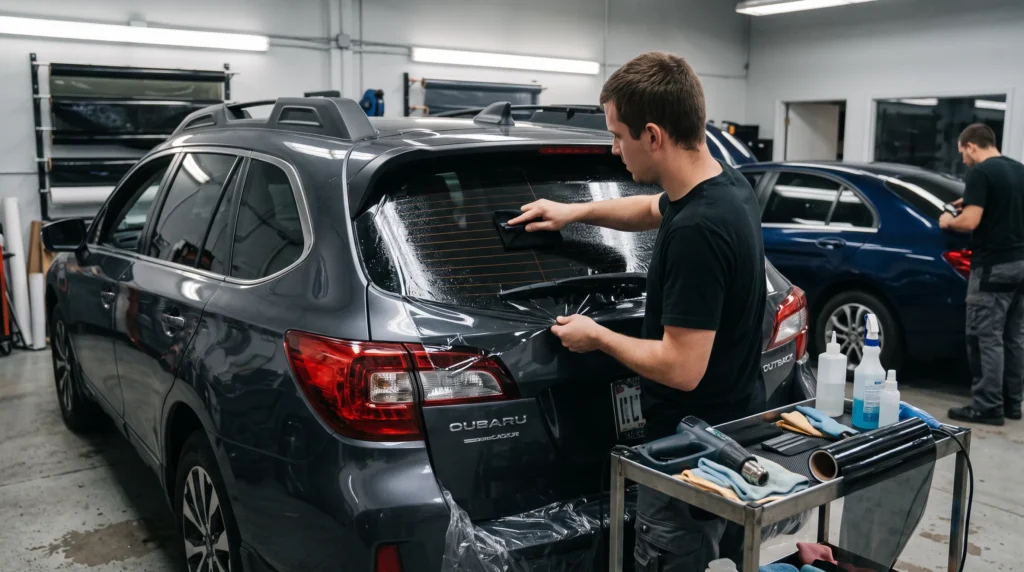
A clean rear-window tint job depends on good glass preparation, controlled shaping, and careful work around the grid.
Can Window Tint Make a Defroster Work Slower?
Properly installed automotive film should not stop a functioning defroster from heating the rear glass.
The heating lines are creating heat directly at the glass surface.
Window film is very thin and is not normally installed as a thick insulating barrier between the grid and the glass.
If the defroster seems dramatically different after tinting, it is worth checking the grid rather than assuming the film is blocking the heat.
Look for sections of glass that stay fogged while neighboring sections clear.
That can point to a damaged individual grid line.
If the entire rear defroster stops working, the problem may involve:
- A fuse
- Wiring
- A connector tab
- The switch
- The rear grid
- Another electrical part of the system
The tint film itself should not disconnect the rear defroster circuit.
Where Does Defroster Damage Usually Happen?
The film sitting on the glass is usually not the problem.
Physical contact with the grid is where trouble can start.
Rear defroster damage can happen when someone:
- Scrapes the lines with a razor
- Uses a harsh abrasive pad
- Pulls old film away too aggressively
- Scrapes dried adhesive from the glass
- Damages an electrical connector near the edge
- Cleans the rear glass with rough tools
- Works on old tint without accounting for the heating grid
The thin conductive lines can be damaged if they are cut or scraped.
Once continuity is broken in one line, that portion of the grid may stop heating correctly.
This is why the rear glass deserves different treatment from ordinary side windows during old film removal.
Why Old Tint Removal Is the Bigger Risk
Removing old tint is where rear defroster concerns become much more serious.
New film is installed onto a prepared surface.
Old film may have been stuck to the rear window for many years.
That adhesive has spent years exposed to:
- Sunlight
- Cabin heat
- Rear defroster cycles
- Temperature changes
- Moisture
- Cleaning products
When the film ages, it may become brittle.
The adhesive may also stay on the glass after the film begins coming off.
Someone performing a rushed DIY removal may pull the film hard or start scraping the remaining adhesive.
That is where a defroster grid can be damaged.
Dynamic Window Tint discusses this issue in its guide to window tint removal in Bakersfield.
If your rear tint is bubbling, purple, peeling, or cloudy, do not start cutting at it without thinking about the grid underneath.
Why Razor Blades and Defroster Lines Do Not Mix
A razor can cut or scrape a printed rear defroster line.
Once part of the conductive material is removed, electrical continuity through that line may be lost.
This is different from ordinary side glass, which usually does not have a heating grid printed across the interior surface.
A sharp blade may seem like the fastest way to remove stubborn adhesive, but speed is not worth cutting through a working defroster.
Old rear tint needs a removal method that accounts for the grid.
That may include controlled heat, steam, suitable adhesive-removal methods, and tools that reduce the chance of scratching or cutting across the lines.
A technician should also inspect the condition of the grid before removing old film.
If a line was already damaged, that should be identified before work begins.
How Can You Tell if a Defroster Line Is Broken?
One clue is uneven clearing.
Turn on the rear defroster when the window is fogged or has light condensation.
Watch how the glass clears.
If most of the rear window begins clearing but one horizontal strip stays fogged, the grid line running through that area may not be heating.
You may also be able to see a physical gap in a defroster line.
Look for:
- A break in the line
- A scraped section
- A faded-looking section
- A section that appears darker than the surrounding line
- A line interrupted where old tint was removed
A visual inspection does not always find every problem.
Electrical testing may be needed when the cause is unclear.
If several lines stop working at once, the problem could also involve a connection rather than several individual breaks.
Does Bubbling Around a Defroster Line Mean It Is Broken?
Not necessarily.
Window film can sometimes show a small raised area along a defroster line.
The tint industry may refer to some of these raised areas as “peanuts.”
The film has to lie across a line that sits above the surrounding glass surface.
If adhesion around that raised area is imperfect, you may see a small bubble-like shape.
That is a film adhesion issue.
It does not automatically mean the electrical heating line has stopped working.
You can have:
- A visible film issue with a working defroster
- A broken defroster line with film that looks fine
- Both problems at the same time
Test the defroster itself before deciding that a bubble means electrical damage.
Can You Tint a Rear Window With Damaged Defroster Lines?
In many cases, rear glass can still be tinted even if one or more defroster lines are already damaged.
The film does not depend on the heating grid to stay on the window.
You should know about the damaged grid before installation, though.
If two lines were not working before the tint job, they should not be expected to begin working afterward.
A good pre-installation inspection helps avoid confusion.
You and the installer can document visible grid damage before film goes onto the glass.
If the rear defroster is something you use often, you may also want to have the grid repaired before tinting.
Can Window Tint Repair a Broken Rear Defroster?
No.
Window tint does not restore electrical continuity to a damaged defroster line.
Film can cover the glass and damaged line, but it does not reconnect the heating circuit.
Defroster repair products exist for certain types of grid damage.
Whether repair is practical depends on:
- Where the break is located
- How many lines are damaged
- Whether the connector tabs are intact
- The condition of the rear glass
- The vehicle
If the defroster already has a problem, address that separately from the tint.
What About Rear Glass With Antenna Lines?
Some rear windows contain more than defroster lines.
Vehicles may also use glass-integrated antenna elements.
Those lines can look similar to defroster elements.
That makes careful work on the rear glass even more useful.
Do not assume every visible line is only part of the heating system.
The vehicle may use the rear glass for radio reception or other electrical functions.
Tell your tint installer if your vehicle has:
- Integrated glass antennas
- A rear-window radio antenna
- A powered rear slider
- Special rear camera equipment
- Existing damage in the glass
Knowing the rear-glass layout helps the installer plan the work.
How to Care for Tinted Rear Glass
After the film cures, clean it gently.
Avoid abrasive scrub pads and rough tools.
Use a window-film-safe cleaner and a soft microfiber cloth.
When cleaning over the rear defroster grid, wiping in the same direction as the lines can reduce unnecessary contact across them.
Do not pick at the film around the grid.
If you see a small area lifting around a defroster line, have the tint checked rather than trying to press, scrape, or cut it yourself.
You can also ask the installer when the film has cured enough for normal cleaning.
Cure time can vary with temperature, humidity, film, and glass.
What to Know Before Removing Old Rear Tint
Tell the tint shop that the vehicle already has rear film before your appointment.
Old tint removal can change the amount of labor because the shop may need to deal with:
- Brittle film
- Heavy adhesive
- Defroster lines
- Antenna lines
- Curved rear glass
- Existing bubbles
- Previous tint layers
- Old scratches
- Previous grid damage
This is also a good time to test your defroster.
Turn it on before bringing the vehicle in.
If a section does not clear correctly, mention it.
That creates a clearer picture of the rear glass condition before removal starts.
Dynamic Window Tint’s Bakersfield window tint removal guide also explains why rear-window removal calls for extra care around the defroster grid.
Rear Window Tint in Bakersfield, CA
Does window tint affect your rear defroster?
Properly installed film normally does not stop intact rear defroster lines from working.
The greater concern is physical damage to the grid during preparation or old tint removal.
If your rear tint is bubbling, peeling, faded, or turning purple, do not attack the glass with a razor.
Have the condition of the film and defroster grid checked first.
Dynamic Window Tint provides vehicle window tint in Bakersfield, CA using Rayno Window Film.
The shop can help with:
- New rear-window tint
- Replacement of old tint
- Tint removal
- Ceramic window film
- Truck and SUV window tint
- Tesla window tint
- Cybertruck window tint
- Rear privacy film
Dynamic Window Tint is located at:
4609 New Horizon Blvd Suite #10 Bakersfield, CA 93313
The shop serves drivers in Bakersfield, CA and nearby communities including Rosedale, CA, Oildale, CA, Greenfield, CA, Shafter, CA, Lamont, CA, Arvin, CA, Wasco, CA, and surrounding Kern County areas.
If you already have old rear tint, mention that when scheduling so the glass and defroster grid can be considered before new film is installed.
Call (661) 634-5585 or visit the Dynamic Window Tint contact page to schedule an appointment.
FAQs About Window Tint and Rear Defrosters
1. Does window tint stop a rear defroster from working?
Properly installed window film should not stop an intact rear defroster from working. The film is applied over the inside of the glass and defroster grid while the electrical heating system continues operating through the conductive lines.
2. Can window tint be installed directly over defroster lines?
Yes. Rear-window tint is normally installed directly over the defroster grid. The installer does not need to cut around every heating line.
3. Can removing old tint damage rear defroster lines?
Yes. Old film removal can damage defroster lines if the film is pulled too aggressively or adhesive is scraped from the glass with unsuitable tools. Rear glass needs extra care during tint removal.
4. Can you use a razor blade on rear defroster lines?
A razor blade can cut or scrape printed defroster lines. Avoid scraping across the grid. Old adhesive around the lines should be removed using methods that account for the conductive surface.
5. How do I know if a rear defroster line is broken?
Turn on the defroster while the glass is fogged. If most of the rear window clears but one horizontal strip remains fogged, the corresponding grid line may be damaged. A visible break in the conductive line can also point to damage.
6. Can you tint a rear window if the defroster is already broken?
The glass can often still be tinted, but tint will not repair the broken grid. Tell the installer about existing damage before film is installed.
7. Where can I get rear window tint in Bakersfield, CA?
Dynamic Window Tint installs Rayno automotive window film and removes old vehicle tint at 4609 New Horizon Blvd Suite #10, Bakersfield, CA 93313. Call (661) 634-5585 or visit the contact page to schedule an appointment and mention any existing rear defroster concerns.
Sources
- Window Tint Removal in Bakersfield: Why Old Tint Bubbles & Fades
Publisher: Dynamic Window Tint
Publication Date: Not listed
Information referenced: Rear-window tint removal, old adhesive, bubbling tint, razor damage, and the risk of damaging rear defroster lines during removal. - Can Window Tint Damage Rear Defroster Lines?
Publisher: Dope Tintings
Publication Date: September 2, 2026
Information referenced: Film installation over defroster lines, normal defroster operation, old tint removal, razor-blade risks, existing grid damage, and film lifting around raised lines. - Window Tint Care Guide
Publisher: Auto Trim Design
Publication Date: Not listed
Information referenced: Normal use of defroster units with tint, rear defroster-grid placement, film removal concerns, chemicals, and removal tools. - Window Tint in Bakersfield, CA
Publisher: Dynamic Window Tint
Publication Date: Not listed
Information referenced: Rayno automotive window film, vehicle window tint services, certified installation, and warranty-backed work. - How to Choose a Window Tint Shop in Bakersfield
Publisher: Dynamic Window Tint
Publication Date: Not listed
Information referenced: Film brand, installation quality, old tint removal, ceramic film, warranty support, and local Bakersfield service. - Contact Dynamic Window Tint
Publisher: Dynamic Window Tint
Publication Date: Not listed
Information referenced: Bakersfield address, phone number, and appointment information.
