

Table of Contents
- Ceramic Window Tint vs Regular Tint: Which Wins in Bakersfield Heat?
- What Ceramic Window Tint Means
- What Regular Tint Means
- Ceramic Window Tint vs Regular Tint for Heat Rejection
- Ceramic Window Tint vs Regular Tint for Glare
- Ceramic Window Tint vs Regular Tint for UV Protection
- Ceramic Window Tint vs Regular Tint for Looks and Privacy
- Ceramic Window Tint vs Regular Tint for Daily Bakersfield Driving
- What About California Tint Laws?
- Which Tint Wins in Bakersfield Heat?
- Get Ceramic Window Tint in Bakersfield, CA
- FAQs About Ceramic Window Tint vs Regular Tint
- Sources
Ceramic Window Tint vs Regular Tint: Which Wins in Bakersfield Heat?
Ceramic window tint vs regular tint is one of the most common questions Bakersfield drivers ask when they want a cooler, cleaner, and more comfortable vehicle. The short answer is that ceramic window tint usually wins in Bakersfield heat because it is built to reject more infrared heat while still keeping a clear view.
Bakersfield, CA is not gentle on vehicles. The hot season lasts for months, the sun can feel harsh through the glass, and parked cars can heat up fast. That is why the type of tint you choose matters. A film that looks dark is not always the same as a film that blocks heat well.
At Dynamic Window Tint, we help drivers compare film choices before installation. Our shop is located at 4609 New Horizon Blvd Suite #10, Bakersfield, CA 93313, and we serve customers from Bakersfield, CA, Lamont, CA, Shafter, CA, Arvin, CA, Rosedale, CA, Oildale, CA, and nearby Kern County areas.
Here is why ceramic window tint vs regular tint matters: regular tint can help with appearance and privacy, but ceramic tint is often the better fit when the goal is heat control, glare reduction, and comfort in daily driving.
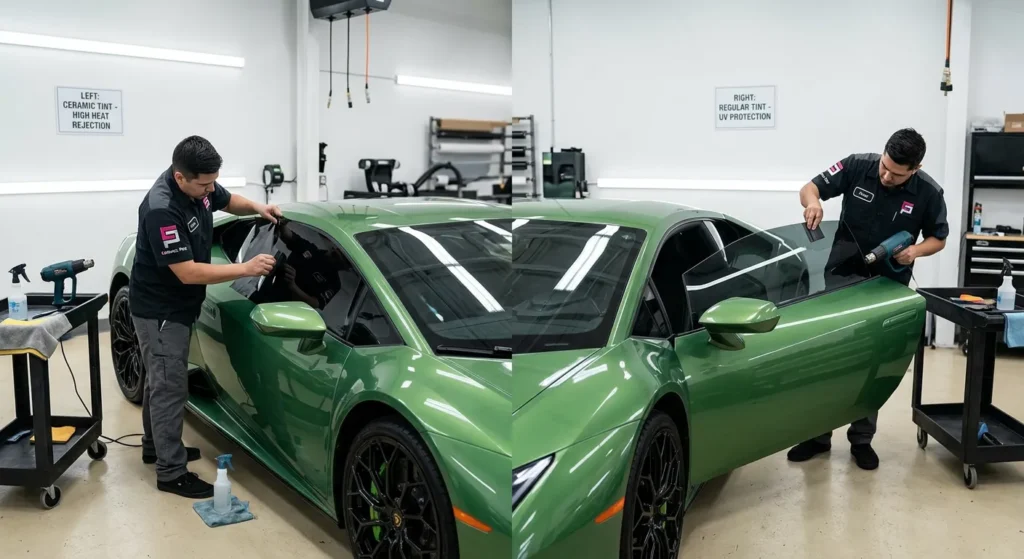
If you want help choosing the right film, call (661) 634-5585 or visit https://dynamicwindowtintca.com/contact-us.
What Ceramic Window Tint Means
Ceramic window tint is a higher-grade window film made with ceramic particles instead of standard dye alone. It is designed to reject heat while keeping the glass clear and clean-looking.
The biggest reason drivers ask about ceramic window tint vs regular tint is heat. Ceramic film targets infrared rays, which are a major part of the heat you feel through glass. That means ceramic tint can feel more comfortable even when the shade is not extremely dark.
Dynamic Window Tint carries Rayno Window Film. Rayno’s Phantom II ceramic window film is described by Rayno as a nano carbon ceramic film that can block up to 97% of infrared rays, depending on the film option. That makes it a strong choice for drivers who want heat rejection without relying only on a dark shade.
Let’s break it down. Ceramic window tint can help with:
- Heat rejection
- Glare control
- UV protection
- Clear visibility
- A cleaner vehicle look
- Interior comfort
- Better driving feel during hot days
Ceramic window tint vs regular tint is not only about shade. It is about what the film does while it is on the glass.
What Regular Tint Means
Regular tint often refers to standard dyed window film. In some cases, people also use the term to describe basic entry-level film. Regular tint can darken the glass, cut glare, and add privacy, but it may not handle heat as well as ceramic film.
Regular tint can still be useful. Some drivers mainly want a darker look. Others want a simple way to cut brightness in the cabin. For those goals, regular tint may work.
The catch is that Bakersfield heat can expose the limits of lower-grade film. A dark regular tint can look good, but still let more heat pass through than a lighter ceramic film. That surprises many drivers because they expect darker film to feel cooler.
Ceramic window tint vs regular tint comes down to what you want most. If you want privacy and a darker look, regular tint may be enough. If you want better heat rejection for daily drives in Bakersfield, CA, ceramic film is usually the better pick.
Ceramic Window Tint vs Regular Tint for Heat Rejection
Heat rejection is where ceramic window tint vs regular tint becomes a clear comparison.
Bakersfield gets hot enough that tint choice can affect how your car feels when you get in, drive across town, or sit in traffic. According to WeatherSpark, Bakersfield’s hot season runs from June 8 through September 20, with average daily high temperatures above 91°F. July is listed as the hottest month, with an average high of 98°F.
What this means for drivers is simple. Heat control is not a small detail here. It is part of everyday comfort.
Regular tint can help reduce some heat, but it is usually more focused on shade and privacy. Ceramic window tint is made to reject infrared heat more directly. That is why a ceramic film can often feel better than regular tint, even when both films look similar from the outside.
Here’s what matters. A dark film and a heat-rejecting film are not always the same thing. Some standard dyed films get their look from darkness, while ceramic films are built to fight heat with film technology.
Ceramic window tint vs regular tint in Bakersfield heat usually favors ceramic because:
- Ceramic film can reject more infrared heat
- Ceramic film can work well in lighter shades
- Ceramic film can help reduce the hot feeling near side glass
- Ceramic film can make long drives more comfortable
- Ceramic film can help the cabin feel less harsh after sitting in the sun
A good tint choice will not turn a parked car into a cool room. It can still make a real difference in comfort when paired with smart parking, working air conditioning, and proper film selection.
Ceramic Window Tint vs Regular Tint for Glare
Glare is another reason drivers compare ceramic window tint vs regular tint. Bakersfield roads can be bright, especially during morning and late afternoon drives. Light bouncing off windshields, pavement, and nearby vehicles can make driving uncomfortable.
Regular tint can cut glare by darkening the glass. That can help, but going too dark on the front side windows can create legal and visibility issues.
Ceramic window tint can also reduce glare, but with better heat performance. This matters because some drivers want comfort without choosing the darkest film possible.
Now here’s the thing. Glare control should not make night driving harder. A film that feels great at noon may feel too dark after sunset. This is why shade choice matters just as much as film type.
For drivers in Bakersfield, CA, Lamont, CA, and Shafter, CA, a balanced setup often works best. That may mean a lighter legal film on the front side windows and a darker film behind the driver. A trained installer can help match the shade to the vehicle and California rules.
Ceramic Window Tint vs Regular Tint for UV Protection
UV protection is another part of the ceramic window tint vs regular tint discussion. UV rays can affect skin, upholstery, dashboards, and trim over time.
The International Window Film Association says window films are designed to block up to 99% of harmful UV rays. That makes window film useful for cars, homes, and buildings.
Both regular tint and ceramic tint may offer UV protection, depending on the film. The difference is that ceramic tint can often combine UV protection with stronger heat rejection and clear visibility.
Here is why that matters for Bakersfield drivers. If your vehicle sits outside at work, school, home, or while shopping, sunlight can hit the cabin day after day. Tint can help reduce that exposure.
Ceramic window tint vs regular tint is not only about feeling cooler. It is also about protecting the inside of your vehicle from daily sun exposure.
Drivers who care about the look and condition of their vehicle may also ask about ceramic coating and paint protection film along with tint. Window film helps with glass and cabin comfort, while exterior protection services help with paint, road wear, and surface care.
Ceramic Window Tint vs Regular Tint for Looks and Privacy
Looks matter. Many drivers search for ceramic window tint vs regular tint because they want their vehicle to look better while staying comfortable.
Regular tint can give a darker appearance. That is one reason it has been popular for years. It can make a car, truck, SUV, Tesla, RV, or boat look cleaner and more private.
Ceramic tint can also look great. The difference is that ceramic tint does not depend only on darkness to deliver comfort. You can choose a film that looks clean while still getting strong heat rejection.
For privacy, rear windows usually offer more flexibility than front side windows under California law. Many drivers choose a darker rear film and a lighter front film. This can give the vehicle a balanced look while keeping the front side windows in a more legal range.
Bottom line, regular tint may win for drivers who only care about a darker look. Ceramic tint wins for drivers who want looks plus better heat rejection.
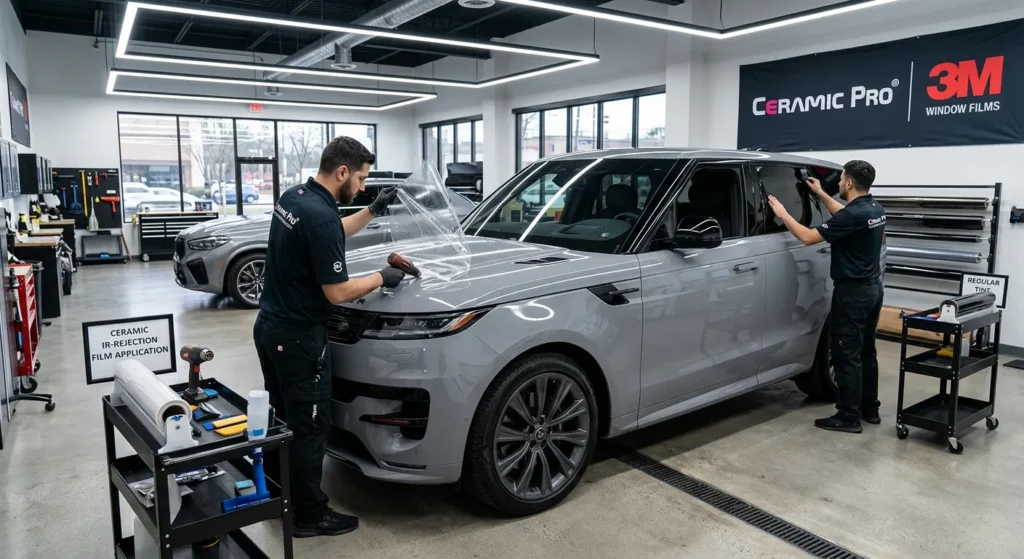
At Dynamic Window Tint, we work on vehicle window tint, Tesla window tint, Cybertruck window tint, RV tint, boat tint, residential tint, and commercial tint.
Ceramic Window Tint vs Regular Tint for Daily Bakersfield Driving
Daily driving in Bakersfield is where ceramic window tint vs regular tint becomes easy to feel. If you drive to work, school, job sites, errands, or weekend plans, your car may spend hours in direct sun.
Think about a parked truck at a job site, an SUV waiting in a school pickup line, a commuter car on Highway 99, or a family vehicle parked outside a store. In each case, heat and glare can make the ride less comfortable.
Regular tint can make the cabin darker. Ceramic tint can make the cabin feel less harsh by targeting more heat. That is the main reason many drivers choose ceramic film after comparing both options.
What this means is that ceramic window tint vs regular tint is not only a one-time choice at the shop. It affects how the vehicle feels every day.
Ceramic film can be a strong fit for:
- Daily commuters
- Parents driving kids around town
- Work trucks
- Rideshare vehicles
- Fleet vehicles
- SUVs with large glass
- Teslas and EVs with large glass areas
- RVs
- Boats
- Drivers who park outside often
If you spend a lot of time in your vehicle, ceramic tint is usually worth asking about.
What About California Tint Laws?
Ceramic window tint vs regular tint should always include California tint law questions. The film type does not cancel the law. A ceramic film can still be illegal if it is too dark in the wrong place.
California law treats front side windows differently than rear side windows and rear glass. Front side windows must stay much lighter. Rear windows usually allow more shade when the vehicle has proper side mirrors.
This is why a legal film plan matters. A trained shop can help you choose a setup that works with the vehicle, the glass, and your goals.
Here is a simple way to think about it:
- Front side windows need legal film choices
- Rear side windows allow more shade options
- Rear glass depends on mirror setup
- Windshield tint has strict placement rules
- Film paperwork may matter for certain front side window installations
A lighter ceramic film can be a smart choice on front side windows because it can help with heat while keeping a clearer look. A darker film may be used behind the driver for privacy and style, depending on the vehicle.
Before choosing a shade, call Dynamic Window Tint at (661) 634-5585 or visit https://dynamicwindowtintca.com/contact-us.
Which Tint Wins in Bakersfield Heat?
Ceramic window tint vs regular tint has a clear winner for most Bakersfield drivers who care about heat: ceramic window tint.
Regular tint can still work if your main goal is a darker look or simple glare control. It can be a fit for certain vehicles and certain needs.
Ceramic tint is usually the better choice when you want:
- Better heat rejection
- Less harsh sunlight through side glass
- Strong UV protection
- A clear view
- Comfort in hot weather
- Better performance in lighter shades
- A film choice that fits daily driving in Bakersfield, CA
The real question is not, “Which tint is darkest?” The better question is, “Which tint gives me the comfort, look, and legal fit I want?”
For many local drivers, ceramic tint is the answer.
Get Ceramic Window Tint in Bakersfield, CA
If you are comparing ceramic window tint vs regular tint, Dynamic Window Tint can help you choose the right film for your vehicle, home, or business.
We are located at:
Dynamic Window Tint
4609 New Horizon Blvd Suite #10
Bakersfield, CA 93313
Phone: (661) 634-5585
Business hours:
- Monday through Wednesday: 8 AM to 5 PM
- Friday through Saturday: 8 AM to 5 PM
- Sunday: 8 AM to 2 PM
Dynamic Window Tint has 225 reviews and a 5-star rating. We are certified and carry warranties on all products and services.
Our services include:
- Window tinting
- Vehicle window tint
- Commercial window tint
- Residential window tint
- Windshield protection film
- Windshield chip repair
- Ceramic coating
- PPF and paint protection film
We serve Bakersfield, CA, Lamont, CA, Shafter, CA, Arvin, CA, Rosedale, CA, Oildale, CA, Wasco, CA, and nearby areas.
Call (661) 634-5585 or visit https://dynamicwindowtintca.com/contact-us to schedule an appointment.
FAQs About Ceramic Window Tint vs Regular Tint
1. Is ceramic window tint better than regular tint in Bakersfield heat?
Yes, ceramic window tint is usually better than regular tint for Bakersfield heat because it is made to reject more infrared heat. Regular tint can darken the glass, but ceramic tint often gives better comfort.
2. Does ceramic window tint have to be dark to work?
No. Ceramic window tint can reject heat even in lighter shades. That makes it a good option for drivers who want comfort without choosing a very dark film.
3. Does regular tint block heat?
Regular tint can block some heat, but it is usually not as strong as ceramic tint for heat rejection. It may help with shade, privacy, and glare, but ceramic film is usually better for hot weather.
4. Is ceramic window tint legal in California?
Ceramic window tint can be legal in California if the shade and placement follow state rules. The film type is not the issue by itself. The final light transmission and window location matter.
5. Does ceramic tint help protect my interior?
Ceramic tint can help reduce UV exposure, depending on the film. Window films can block up to 99% of harmful UV rays, which may help protect upholstery, dashboards, and trim from sun exposure.
6. Should I choose ceramic tint for a Tesla or EV?
Many Tesla and EV owners choose ceramic tint because large glass areas can let in a lot of sun. Ceramic tint can help with heat and glare while keeping a clean look.
7. Where can I get ceramic window tint in Bakersfield, CA?
Call Dynamic Window Tint at (661) 634-5585 or visit https://dynamicwindowtintca.com/contact-us. The shop is located at 4609 New Horizon Blvd Suite #10, Bakersfield, CA 93313.
Sources
- Rayno Phantom II Nano Ceramic Window Film, Rayno Window Film, Publication Date: Not listed, accessed July 22, 2026.
- Rayno Window Film, Rayno Window Film, Publication Date: Not listed, accessed July 22, 2026.
- UV Protection, International Window Film Association, Publication Date: Not listed, accessed July 22, 2026.
- Energy Savings, International Window Film Association, Publication Date: Not listed, accessed July 22, 2026.
- Average Weather in Bakersfield, California, WeatherSpark, Publication Date: Not listed, accessed July 22, 2026.
- Bakersfield Climate, National Weather Service, Publication Date: Not listed, accessed July 22, 2026.
- Dynamic Window Tint, Dynamic Window Tint, Publication Date: Not listed, accessed July 22, 2026.
- Window Tint in Bakersfield, CA, Dynamic Window Tint, Publication Date: Not listed, accessed July 22, 2026.
- Contact Dynamic Window Tint, Dynamic Window Tint, Publication Date: Not listed, accessed July 22, 2026.
