

Privacy window tint for cars in Bakersfield, CA can give your vehicle a darker look and make the cabin feel less exposed, but California law places very different rules on the front and rear glass. If privacy is your goal, knowing where darker film can legally go makes a big difference.
California gives drivers much more freedom on windows behind the driver than it does on the windshield and front side windows. That means you can still build a privacy-focused tint setup without treating every piece of glass the same way.
For many Bakersfield, CA drivers, a practical setup means keeping the front glass within California requirements while using darker film on the rear side windows and rear window where the law allows it.
This guide breaks down privacy window tint for cars, the California rules that apply, and the film choices worth discussing before your appointment.
Table of Contents
- What Is Privacy Window Tint for Cars?
- Is Privacy Window Tint Legal in Bakersfield, CA?
- California Front Side Window Tint Rules
- Can You Use Dark Tint on Rear Side Windows?
- Can You Tint the Rear Window Dark?
- What About Privacy Tint on the Windshield?
- Legal Privacy Window Tint Setups That Still Work
- Does Darker Tint Always Give Better Privacy?
- Privacy Tint vs Factory Privacy Glass
- Privacy Window Tint for Cars and Night Driving
- Choosing Rayno Window Film for Privacy
- Privacy Window Tint in Bakersfield, CA
- FAQs About Privacy Window Tint for Cars
What Is Privacy Window Tint for Cars?
Privacy window tint for cars usually refers to window film selected to make it harder to see into the passenger compartment from outside.
The darker the glass appears, the more visual privacy it can often provide during daylight.
Privacy tint can be useful for people who carry personal items, drive children or passengers regularly, spend time parked in busy areas, or simply prefer a darker appearance.
Yet privacy is only one part of window tint.
Depending on the film, window tint may also provide:
- Glare reduction
- UV rejection
- Infrared rejection
- Solar energy rejection
- A darker exterior appearance
The amount of privacy you get depends on the tint shade, existing factory glass, outside lighting, interior lighting, and viewing angle.
A dark rear window may be difficult to see through from outside during a bright afternoon. The same window may provide less privacy at night if the interior lights are turned on.
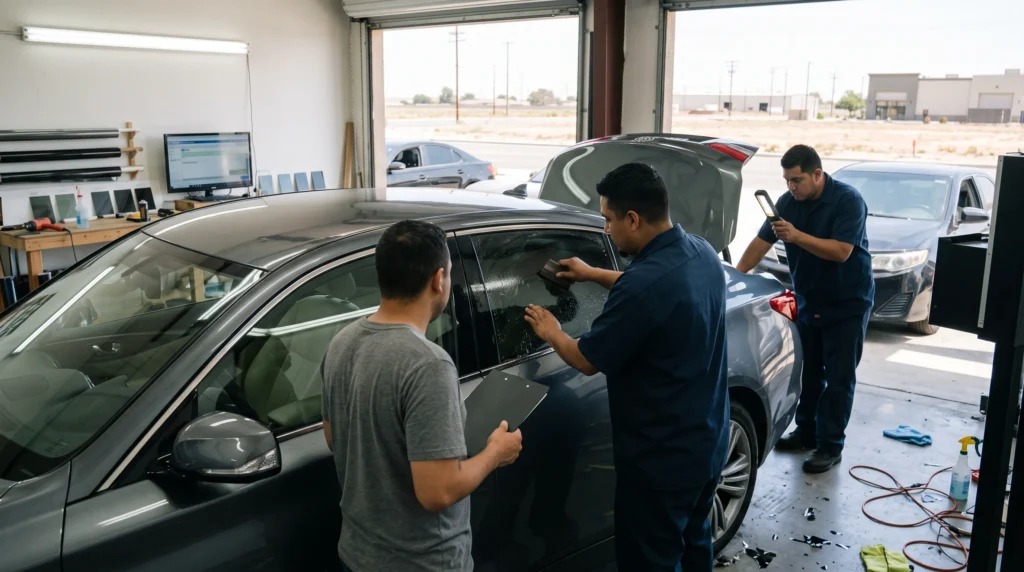
No automotive tint makes the inside of a vehicle invisible under every lighting condition.
Is Privacy Window Tint Legal in Bakersfield, CA?
Yes, privacy window tint for cars can be legal in Bakersfield, CA, but placement matters.
Bakersfield follows California vehicle law.
California Vehicle Code Section 26708 restricts material placed on the windshield and windows, then lists exceptions for certain areas and types of film.
The biggest difference for privacy tint is between the glass in front of the driver and the glass behind the driver.
California law gives drivers much more room to use dark tint on side windows behind the driver.
The rear window also receives broader treatment when the vehicle has qualifying outside mirrors on both sides.
The front side windows are much more restricted.
That means a legal privacy-oriented setup often uses darker film behind the driver while keeping the front side windows much lighter.
If you have already read our guide to California window tint laws for Bakersfield drivers, this article takes the next step by looking at those rules from a privacy standpoint.
California Front Side Window Tint Rules
The front side windows are the windows immediately to the left and right of the front seats.
These windows are where many California tint misunderstandings happen.
California Vehicle Code Section 26708 allows qualifying clear, colorless, transparent material on these windows when several conditions are met.
Under the current statute, the film itself must have at least 88% visible light transmittance.
The glass and film together must also meet Federal Motor Vehicle Safety Standard No. 205, including its 70% minimum light transmittance requirement.
The material must be made to help the existing glass block UVA radiation.
The driver must also have the required certificate identifying the installer and film manufacturer.
This does not mean that any product sold as “70% tint” can automatically be installed on California front side windows.
The statute separately refers to the film’s 88% minimum VLT and the finished glazing requirement.
For someone looking for strong privacy window tint for cars, this creates a limit.
Your front side windows generally cannot be treated like the rear passenger glass.
A very dark privacy shade on the front doors can put you outside the normal front-window exception.
Can You Use Dark Tint on Rear Side Windows?
California Vehicle Code Section 26708 lists side windows behind the driver as an exception to the general restriction.
This gives Bakersfield drivers far more flexibility when choosing privacy tint for rear passenger windows.
That is where darker shades often make the most sense for someone whose main goal is privacy.
A sedan may have darker film applied to its rear door windows.
An SUV may use darker film across its second-row, third-row, and cargo-area side glass.
A crew-cab truck may use darker film on the rear doors and rear cab glass.
This type of setup can give the passenger area a much more private appearance without putting the same darkness on the front doors.
It is one of the more practical ways to approach privacy window tint for cars in California.
Why the Rear Glass Is the Natural Privacy Zone
Most personal belongings in a vehicle are kept behind the front seats.
That may include:
- Bags
- Backpacks
- Child seats
- Work gear
- Shopping bags
- Luggage
- Passenger belongings
Darker rear tint can make these areas less visible from casual outside viewing.
Window tint should never replace locking your vehicle or keeping high-value belongings out of sight.
Privacy film can reduce visibility into the cabin, but it cannot prevent someone from breaking glass or accessing a vehicle.
Can You Tint the Rear Window Dark?
California Vehicle Code Section 26708 also provides an exception for the rear window when the vehicle has outside mirrors on both the left and right sides positioned to give the driver the required rearward view.
The statute refers to each mirror providing a view of the highway for at least 200 feet behind the vehicle.
For most modern passenger vehicles with working mirrors on both sides, this can give drivers substantial flexibility for the rear window.
That makes the back glass another useful area for privacy window tint for cars.
A darker rear window can reduce the direct view into:
- Cargo areas
- Rear seats
- Hatchback storage areas
- SUV cargo compartments
- Truck cab interiors
Before choosing a very dark shade, think about nighttime visibility through the rear glass.
You may legally have more tint freedom on the rear window, but that does not mean the darkest film is automatically the right choice for the way you drive.
What About Privacy Tint on the Windshield?
The windshield is much more restricted.
California Vehicle Code Section 26708 allows transparent material on the topmost portion of the windshield when it follows several conditions.
One detail often gets repeated incorrectly.
California does not describe the normal legal windshield strip as simply “the top four inches.”
The law says the bottom edge of the material must be at least 29 inches above the undepressed driver’s seat, using the measurement method stated in the statute.
The transparent material also:
- Cannot be red
- Cannot be amber
- Cannot contain opaque lettering
- Cannot distort the driver’s view
- Cannot cause more reflected sunlight or headlight glare toward other drivers than the untreated windshield
This upper strip may help with overhead sun and glare.
It is not the same thing as installing dark privacy film across the entire windshield.
A full dark windshield should not be treated as a privacy option for a normal California installation.
For more detail, read our guide to windshield tint strips in California.
Legal Privacy Window Tint Setups That Still Work
California’s front-window restrictions do not mean you have to give up on privacy.
You simply need to think about the vehicle by glass position.
Option 1: Light Front Windows With Darker Rear Windows
This is one of the most straightforward privacy-focused layouts.
The front side glass stays within the applicable California requirements.
The rear passenger windows receive a darker shade.
The rear window can also use a darker shade when the vehicle meets the mirror requirement.
From outside, the rear half of the vehicle appears much more private than the front.
This setup can work well on:
- Sedans
- SUVs
- Crossovers
- Pickup trucks
- Vans
Option 2: Match Film Over Factory Rear Privacy Glass
Many SUVs and trucks leave the factory with darkened rear glass.
That glass is often called factory privacy glass.
A window film can sometimes be applied over that glass for drivers who want solar-control properties along with the existing dark appearance.
Remember that factory privacy glass and aftermarket window film are not the same product.
We will cover that difference in more detail below.
Option 3: Moderate Rear Tint Instead of the Darkest Shade
You do not have to choose the darkest available film to gain more privacy.
A moderate rear tint can reduce visibility into the vehicle while making it easier for the driver to see through the glass at night.
This can be a good approach for people who regularly drive through poorly lit streets or rural areas around Kern County.
Option 4: Dark Rear Cabin With Compliant Front Glass
Some owners prefer a clear visual split.
The front cabin remains relatively open and light.
The passenger and cargo areas use darker film.
This layout is common on SUVs, family vehicles, and work trucks because the rear portion is where privacy is often wanted most.
Does Darker Tint Always Give Better Privacy?
During daylight, darker film generally makes the cabin harder to see from outside.
Yet privacy is affected by light on both sides of the glass.
Imagine a dark rear window in a bright parking lot.
If the outside is bright and the cabin is dark, seeing into the car can be difficult.
Now picture the same vehicle at night with its interior dome light turned on.
The inside of the vehicle becomes brighter than the surroundings.
People outside may be able to see much more through the tinted glass.
This means privacy window tint for cars is not a one-way privacy wall.
The darker shade changes visibility, but lighting conditions still matter.
Privacy Tint vs Factory Privacy Glass
Factory privacy glass and window tint film can look similar, but they are not necessarily doing the same job.
Factory privacy glass is usually darkened during glass manufacturing.
It can provide a darker appearance and reduce visibility into the rear cabin.
Aftermarket film is a separate layer installed onto the glass.
Depending on the product, film may carry published specifications for:
- VLT
- Infrared rejection
- UV rejection
- Total Solar Energy Rejected
- Visible light reflection
This matters for SUVs and trucks that already have dark rear windows.
The rear glass may already look private, yet a driver might still choose a ceramic window film because they want a certain level of solar performance.
If your vehicle has factory privacy glass, tell your installer before choosing a shade.
Adding film over already-dark glass can make the finished result considerably darker.
Privacy Window Tint for Cars and Night Driving
Privacy feels good until you cannot see well enough through your own glass.
This is especially worth thinking about in Bakersfield, CA and nearby communities where drivers may travel through areas with less street lighting.
A very dark rear shade can change how much detail you see through the glass after sunset.
Consider your regular driving before choosing a VLT.
Ask yourself:
- Do I back into dark driveways?
- Do I regularly drive at night?
- Do I depend heavily on seeing through the rear window?
- Does my vehicle have a backup camera?
- Do I drive rural roads outside Bakersfield?
- Is rear-seat privacy more important to me than maximum nighttime visibility?
The right answer will be different from one driver to another.
Darkest is not always the right choice.
Choosing Rayno Window Film for Privacy
Dynamic Window Tint carries Rayno Window Film for vehicle tint installations in Bakersfield, CA.
Rayno offers multiple film shades, which means you can compare how dark you want the rear glass with other film specifications.
A privacy-focused driver may want to compare:
Visible Light Transmission
VLT tells you how much visible light passes through the film.
Lower VLT generally creates a darker appearance.
If privacy is your main goal for the rear cabin, VLT is one of the first numbers to check.
Infrared Rejection
If you also want heat-related performance, compare the film’s published IR rejection figures.
Privacy and infrared rejection are separate measurements.
A dark film does not automatically have the strongest IR performance.
Total Solar Energy Rejected
TSER measures a broader portion of the solar energy rejected by the filmed glass.
Drivers who want both a private appearance and solar control should compare TSER along with VLT.
UV Rejection
Film manufacturers may also publish UV-rejection figures.
Check the specifications for the exact film being installed rather than assuming every dark film has the same UV rating.
You can review current choices on the Dynamic Window Tint vehicle window tint page.
Privacy Window Tint in Bakersfield, CA
Privacy window tint for cars in Bakersfield, CA still gives drivers useful choices under California law.
The biggest idea is simple.
Do not treat all of your vehicle’s windows the same.
The front side windows have strict requirements.
The windshield has its own placement rules.
The rear side windows provide much more freedom for darker privacy film.
The rear window can also offer more tint flexibility when the vehicle meets California’s outside-mirror requirement.
For many vehicle owners, that means the strongest privacy effect belongs on the rear half of the vehicle.
Drivers in Bakersfield, CA, Greenfield, CA, Oildale, CA, Rosedale, CA, and nearby Kern County communities can discuss shade choices with Dynamic Window Tint before deciding how dark to go.
Dynamic Window Tint is located at 4609 New Horizon Blvd Suite #10, Bakersfield, CA 93313.
The shop carries Rayno Window Film and provides certified, warranty-backed vehicle window tint installation.
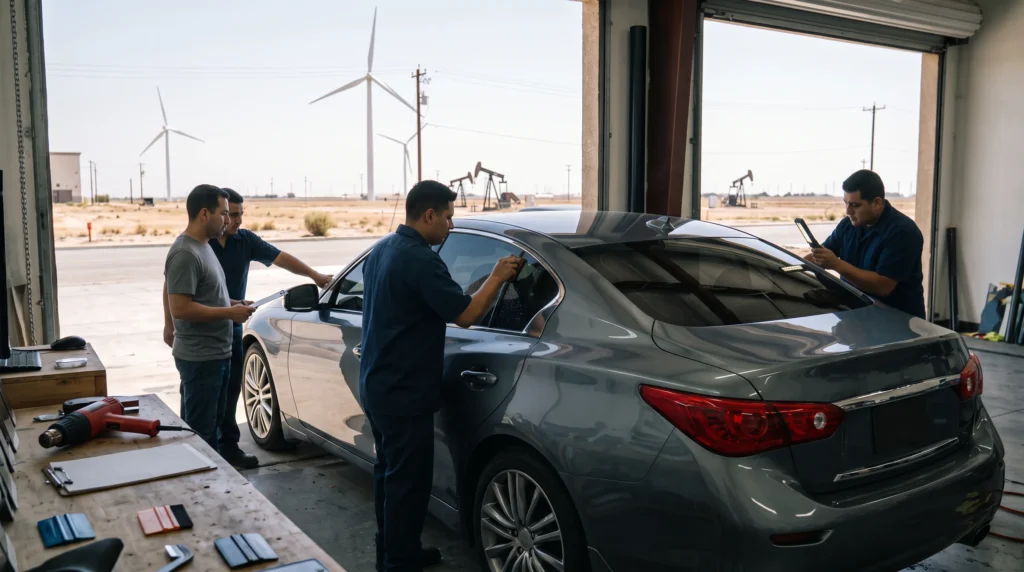
Call (661) 634-5585 or visit the Dynamic Window Tint contact page to schedule an appointment.
FAQs About Privacy Window Tint for Cars
1. What is the darkest legal privacy tint in California?
California does not use one darkness percentage for every window. The front side windows are tightly restricted, while side windows behind the driver are exempt from the general prohibition in Vehicle Code Section 26708. Rear windows also receive an exception when the vehicle has qualifying outside mirrors on both sides. Ask an installer to review the exact glass position before choosing a shade.
2. Can I put 5% tint on my rear windows in California?
California gives much more freedom to side windows behind the driver than to the front side windows. Very dark rear film may be possible depending on the window location and vehicle setup. Nighttime visibility should still be considered before choosing an extremely dark shade.
3. Can I use dark privacy tint on my front side windows in Bakersfield?
California’s normal front-side-window exception requires clear, colorless, transparent material with at least 88% VLT in the film itself, along with the other requirements in Vehicle Code Section 26708(d). A dark privacy shade does not fit that normal exception simply because the finished glass is described as “70%.”
4. Can I tint my rear windshield for privacy?
California provides an exception for the rear window when the vehicle has outside mirrors on both the left and right sides that meet the rear-view requirement stated in Vehicle Code Section 26708. This makes the rear glass one of the areas drivers often use for privacy-focused tint.
5. Is factory privacy glass the same as window tint?
No. Factory privacy glass is darkened glass made as part of the vehicle’s glazing, while aftermarket window tint is film applied to the glass. The two may look similar, but aftermarket film can carry separate VLT, IR, UV, and TSER specifications.
6. Does privacy tint work at night?
It can still reduce visibility through the glass, but lighting makes a big difference. If the cabin is brightly lit while the area outside is dark, people outside may be able to see through tinted windows more easily. No normal automotive tint provides complete privacy under every lighting condition.
7. Where can I get privacy window tint for cars in Bakersfield, CA?
Dynamic Window Tint installs Rayno automotive window film at 4609 New Horizon Blvd Suite #10, Bakersfield, CA 93313. Call (661) 634-5585 or visit the contact page to discuss a California-compliant privacy tint setup for your vehicle.
Sources
- California Vehicle Code Section 26708
Publisher: California Legislative Information
Publication Date: Current statute, amended effective January 1, 2026
Information referenced: Windshield material rules, front side window requirements, rear side window exception, rear window exception, VLT requirements, certification requirements, and medical provisions. - California Driver Handbook: Laws and Rules of the Road
Publisher: California Department of Motor Vehicles
Publication Date: Current online handbook
Information referenced: California windshield and window visibility rules. - Window Tint in Bakersfield, CA
Publisher: Dynamic Window Tint
Publication Date: Not listed
Information referenced: Vehicle window tint services, Rayno Window Film, certified installation, and warranty-backed work. - California Window Tint Laws: What Bakersfield Drivers Need to Know
Publisher: Dynamic Window Tint
Publication Date: Not listed
Information referenced: California tint rules as they relate to Bakersfield drivers and internal reading for customers researching legal tint. - Windshield Tint Strips in California: What’s Legal & What’s Not
Publisher: Dynamic Window Tint
Publication Date: Not listed
Information referenced: Windshield-strip placement and California Vehicle Code Section 26708(c). - Contact Dynamic Window Tint
Publisher: Dynamic Window Tint
Publication Date: Not listed
Information referenced: Bakersfield address, phone number, and appointment page.
