

Windshield tint strips in California can help reduce bright sunlight near the top of a vehicle’s windshield, but state law places clear limits on where the material can sit and what type of material can be used. One of the biggest mistakes drivers make is assuming California follows a simple “top four inches” rule. California Vehicle Code Section 26708 does not describe the legal windshield strip that way.
Instead, California uses a measurement tied to the driver’s seat. The bottom edge of transparent material installed on the topmost portion of the windshield must sit at least 29 inches above the undepressed driver’s seat, using the measurement method written into the statute.
There are rules beyond placement. The strip cannot be red or amber. It cannot contain opaque lettering, and other lettering cannot alter the driver’s view of colors or distort vision. The material also cannot reflect sunlight or headlights toward other drivers more than the untreated windshield would.
For drivers in Bakersfield, CA and nearby Kern County communities, understanding these rules before installing a windshield strip can save the trouble of having film removed later.
Dynamic Window Tint installs vehicle window tint using Rayno Window Film at its Bakersfield, CA shop. The team is certified and carries warranties on its products and services. If you are thinking about a windshield tint strip, the first step is choosing a setup that fits both your vehicle and California law.
Table of Contents
- Are Windshield Tint Strips Legal in California?
- What California Vehicle Code Section 26708 Says
- California Does Not Use a Simple Top Four Inches Rule
- How the 29-Inch Windshield Strip Rule Works
- What Colors Are Not Allowed?
- Can a Windshield Tint Strip Have Lettering?
- Reflective Windshield Tint Strips
- Why Drivers Choose Windshield Tint Strips
- Windshield Tint Strips and Glare
- Does the AS-1 Line Decide What’s Legal in California?
- Can You Tint the Whole Windshield in California?
- Medical Rules for Clear Windshield Film
- Windshield Tint Versus Windshield Protection Film
- Why Professional Measurement Matters
- Window Tint Services in Bakersfield, CA
- Schedule a Windshield Tint Consultation
- Frequently Asked Questions
- Sources
Are Windshield Tint Strips Legal in California?
Yes, windshield tint strips in California can be legal when they meet the conditions in California Vehicle Code Section 26708.
The statute starts with a broad rule against placing material on a windshield when it interferes with the driver’s clear view. It then gives an exception for transparent material installed on the topmost portion of the windshield when stated conditions are met.
That exception is what allows a properly placed windshield tint strip.
The placement rule is not based on a fixed number of inches measured down from the top of the windshield.
California instead measures from the driver’s seat.
That distinction matters because windshields and seating positions differ from one vehicle to another.
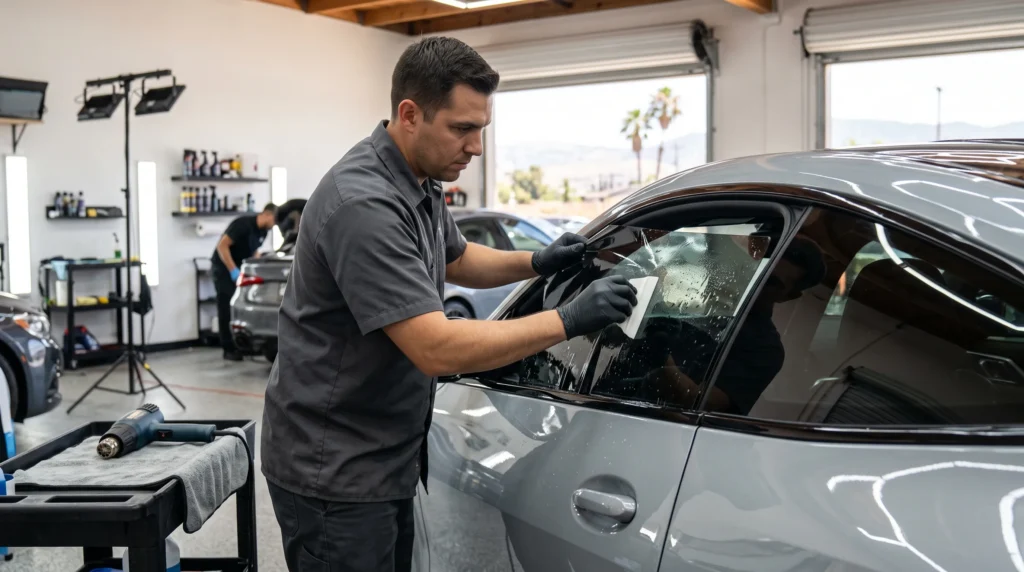
A strip that fits one car may not have the same legal placement on a pickup, SUV, sports car, or van.
What California Vehicle Code Section 26708 Says
California Vehicle Code Section 26708(c) allows transparent material on the topmost portion of the windshield when four conditions are met.
The current statute says:
- The bottom edge must be at least 29 inches above the undepressed driver’s seat using the state’s stated measurement method.
- The material cannot be red or amber.
- The strip cannot contain opaque lettering, and other lettering cannot affect color recognition or distort vision.
- The material cannot reflect sunlight or headlight glare toward occupants of other vehicles more than the windshield would without the material.
These rules apply across California, including Bakersfield, CA and the surrounding Kern County area.
The law is written around driver visibility, placement, color, and reflected glare rather than giving drivers a simple tint percentage for the strip.
That is why windshield tint strips in California deserve separate attention from rear-window tint or side-window tint.
California Does Not Use a Simple Top Four Inches Rule
You may have heard that California allows tint on the “top four inches” of a windshield.
That wording does not appear in the current California Vehicle Code rule for windshield tint strips.
Section 26708(c) uses the 29-inch seat-based measurement instead.
That difference can cause confusion because tint laws in other states may refer to a number of inches from the top of the glass or to an AS-1 marking.
California’s statute uses its own measurement.
Here is why that matters.
Imagine two vehicles with windshields of different heights and different seating positions. Measuring four inches down from the top could produce a different viewing area in each vehicle.
California’s rule focuses on where the bottom edge sits in relation to the driver’s seating position.
For drivers asking about windshield tint strips in California, the safer approach is to have the vehicle measured rather than assume an online “four-inch rule” applies.
How the 29-Inch Windshield Strip Rule Works
The wording in Vehicle Code Section 26708 is detailed.
The bottom edge of the transparent material must be at least 29 inches above the undepressed driver’s seat.
The statute says the measurement is taken from a point five inches in front of the bottom of the backrest.
The driver’s seat must be:
- In its rearmost position
- In its lowermost position
- Undepressed
- Inside a vehicle sitting on a level surface
That is more specific than simply holding a tape measure against the windshield.
The measurement begins with the driver’s seat and the position described by law.
Because seat heights and windshield shapes differ, windshield tint strips in California should be planned for the actual vehicle.
A sports coupe with a low seating position will not have the same geometry as a full-size pickup.
A crossover may also produce a different strip depth than a sedan.
This is one reason having a tint shop look at the vehicle can help before film is cut.
What Colors Are Not Allowed?
California Vehicle Code Section 26708 says windshield strip material cannot be red or amber.
That rule is straightforward.
A driver considering a colored sun strip should not assume that every color sold online is permitted for California road use.
Many vehicle owners choose neutral shades because they want the strip to reduce visible brightness without introducing unusual color into the driver’s field of view.
Film color can also affect how the strip looks from inside the vehicle.
If you are considering windshield tint strips in California, ask to see the actual film before installation.
Look through the material from inside rather than judging it only from outside the car.
Can a Windshield Tint Strip Have Lettering?
California places restrictions on lettering within windshield strip material.
Section 26708 says there can be no opaque lettering on the strip.
Other lettering must not affect recognition of the main colors or distort vision through the windshield.
That means a windshield banner and a legal transparent sun strip should not automatically be treated as the same thing.
Large opaque words, logos, club names, or decorative graphics can raise a different issue than transparent tint material.
A driver may like the appearance of a windshield banner, but the law is concerned with whether material reduces the driver’s clear view.
If your goal is glare reduction, a straightforward transparent strip is easier to evaluate under the windshield-strip portion of the law.
Reflective Windshield Tint Strips
Reflectivity is another part of California’s rule.
Vehicle Code Section 26708 says the strip cannot reflect sunlight or headlight glare into the eyes of people in oncoming or following vehicles to a greater degree than the windshield would without the material.
That means a highly mirrored or reflective strip can present a legal concern even when it sits near the top of the windshield.
For windshield tint strips in California, appearance should not be the only factor considered.
Film needs to fit the restrictions on reflected glare too.
If you like a metallic or mirrored look, speak with the installer before choosing it for the windshield.
Why Drivers Choose Windshield Tint Strips
Drivers consider windshield strips mainly because the sun can sit low enough to enter the upper part of the windshield.
Morning and late-afternoon driving can make this noticeable.
Bakersfield, CA drivers may deal with bright sunlight during commutes across town, drives on Highway 99, trips on Highway 58, or travel through open areas of Kern County.
A windshield strip can reduce some visible light near the top of the driver’s view.
Drivers may ask about strips because they want:
- Less brightness near the top of the windshield
- Less direct sun near eye level
- A darker appearance across the windshield header
- Help with daytime glare
- A film shade that matches the rest of the vehicle
A strip is not a replacement for a sun visor in every situation, but it can change how much visible light enters through the upper glass.
Windshield Tint Strips and Glare
Glare is one of the main reasons drivers ask about windshield tint strips in California.
Bright sunlight can make it harder to see comfortably, especially when the sun is low.
Tint reduces visible light passing through treated glass.
The amount of reduction depends on the film selected.
A darker strip normally transmits less visible light than a lighter strip.
The strip still has to fit the placement and material conditions in California law.
This is where tint selection and legal placement need to work together.
Installing a strip farther down the windshield because the driver wants more shade can create a problem if the bottom edge no longer meets the 29-inch requirement.
The better approach is to measure first, then decide whether the resulting strip gives you the amount of coverage you want.
Does the AS-1 Line Decide What’s Legal in California?
Many windshields have an AS-1 marking near the upper portion of the glass.
Drivers often hear that tint can legally extend to that line.
California Vehicle Code Section 26708(c) does not use the AS-1 line as the test for the windshield tint-strip exception.
It uses the 29-inch measurement tied to the driver’s seat.
That means you should not assume an AS-1 mark automatically tells you where the legal strip must end in California.
The AS-1 line can still appear on the windshield because it relates to automotive glazing standards, but California’s windshield-strip placement language is written differently.
For windshield tint strips in California, follow the state statute rather than a rule copied from another state.
Can You Tint the Whole Windshield in California?
For ordinary aftermarket dark tint, the windshield strip exception does not give drivers permission to tint the entire windshield.
Section 26708(c) is limited to transparent material on the topmost portion of the windshield when its conditions are met.
California law contains another pathway for clear, colorless, transparent material on the windshield in a medical situation, but it has a different set of requirements.
That medical provision should not be confused with the ordinary windshield strip rule.
If you want less heat or UV exposure through a windshield, do not assume a lightly shaded full-windshield film is allowed simply because it looks nearly clear.
Ask the tint shop how the current statute applies before installing film across the main viewing area.
Medical Rules for Clear Windshield Film
California Vehicle Code Section 26708(e) contains a separate medical provision for clear, colorless, transparent material on the windshield, side windows, or rear windows.
Under the current statute, the material must have at least 88% visible light transmittance.
The glazing with the material applied must meet Federal Motor Vehicle Safety Standard No. 205, including the referenced 70% minimum light-transmission requirement.
The material must be made to help the existing glass block ultraviolet A rays.
The driver must also carry or keep inside the vehicle a certificate signed by a licensed dermatologist stating that the person should not be exposed to ultraviolet rays because of a medical condition that calls for the clear film.
The statute also says material under this medical provision must be removed or replaced if it tears, bubbles, or becomes worn in a way that prevents clear vision.
This is a narrow medical route. It is not permission to install any tint shade a driver wants.
Windshield Tint Versus Windshield Protection Film
Windshield tint and windshield protection film are not the same service.
A windshield tint strip is installed near the upper portion of the glass to change light transmission and help with glare.
Windshield protection film is made for a different purpose.
Dynamic Window Tint offers clear windshield protection film aimed at helping shield the exterior glass from road debris, chips, and surface damage.
A driver may want one service, the other, or may want to ask how each applies to the vehicle.
If you already have a chip in your windshield, Dynamic Window Tint also offers windshield chip repair.
The right choice depends on whether your concern is sunlight through the glass or physical damage to the glass itself.
Why Professional Measurement Matters
Windshield tint strips in California are a good case for measuring before installing.
A driver can easily misunderstand the rule by reading a short chart online.
Some charts say “top four inches.”
Others say “to the AS-1 line.”
California Vehicle Code Section 26708 uses neither of those descriptions for the windshield-strip exception.
It uses a seat-based measurement.
Professional installation also helps with:
- Clean film placement
- Straight edges
- Film selection
- Matching the strip to other tinted glass
- Checking for windshield sensors or cameras
- Reviewing California placement rules
- Avoiding unnecessary obstruction
Many newer vehicles have cameras, sensor housings, rearview-mirror equipment, or other hardware near the top center of the windshield.
The installer needs to work around the actual vehicle rather than treat every windshield the same.
Window Tint Services in Bakersfield, CA
Dynamic Window Tint provides window tint services at:
4609 New Horizon Blvd Suite #10 Bakersfield, CA 93313
The shop carries Rayno Window Film and provides certified installation with warranty coverage on products and services.
Drivers come to the shop from Bakersfield, CA and nearby Kern County communities such as:
- Shafter, CA
- Wasco, CA
- McFarland, CA
- Rosedale, CA
- Oildale, CA
- Lamont, CA
- Arvin, CA
- Buttonwillow, CA
If you want a windshield strip, tell the installer what you want from it.
Are you mainly dealing with morning glare?
Does afternoon sun come through the upper windshield during your commute?
Do you want the strip to match rear-window tint?
Do you care more about appearance or glare reduction?
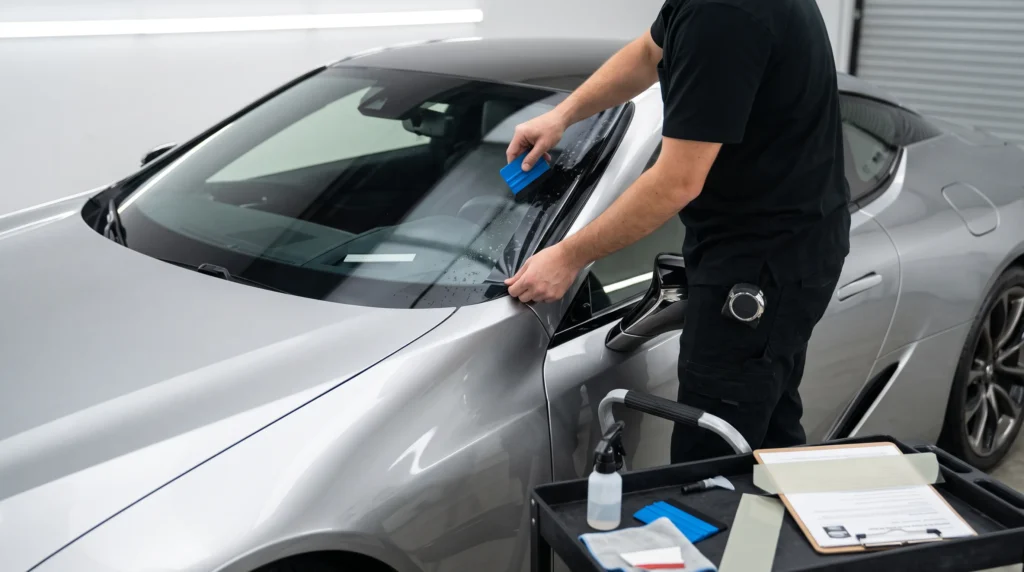
Those details can help narrow down the film choice while keeping California placement rules in view.
Schedule a Windshield Tint Consultation
Windshield tint strips in California are not governed by a simple guess about how far the tint can extend down the glass.
The current law allows transparent material on the topmost portion of the windshield when the bottom edge meets the 29-inch seat-based measurement and the film follows California’s rules on color, lettering, and reflected glare.
If you are unsure where that line falls on your car, truck, or SUV, have the windshield and seat position checked before installation.
Dynamic Window Tint can talk with you about Rayno Window Film, windshield strips, vehicle window tint, windshield protection film, and other glass services.
Call (661) 634-5585 to discuss your vehicle.
You can also visit the Dynamic Window Tint contact page to schedule an appointment.
Pricing can depend on the vehicle, film choice, windshield design, existing film, and preparation needed. Call the shop or use the contact form for a quote based on your vehicle.
Frequently Asked Questions
1. Are windshield tint strips legal in California?
Yes, transparent material can be installed on the topmost portion of the windshield when it meets California Vehicle Code Section 26708(c). The bottom edge must meet the state’s 29-inch seat-based measurement, and the material must follow the color, lettering, and reflection rules in the statute.
2. How far down can a windshield tint strip go in California?
California does not state a simple number of inches measured down from the top of the windshield. The law says the bottom edge must be at least 29 inches above the undepressed driver’s seat using the seat position and measurement method described in Vehicle Code Section 26708(c).
3. Is the top four inches of a windshield legal to tint in California?
The current California statute does not use a “top four inches” rule for windshield tint strips. It uses a measurement based on the driver’s seat. A strip should be measured for the vehicle rather than installed according to a generic four-inch guideline.
4. Can a California windshield tint strip go below the AS-1 line?
California Vehicle Code Section 26708(c) does not use the AS-1 line to define the windshield-strip area. It uses the 29-inch measurement described in the statute. Drivers should follow the California measurement rather than assume the AS-1 marking decides legality.
5. Can a windshield tint strip be red or amber in California?
No. California Vehicle Code Section 26708(c) says the transparent material used on the topmost portion of the windshield cannot be red or amber.
6. Can I tint my entire windshield in California?
The ordinary windshield-strip exception applies only to the topmost portion of the windshield. California has a separate medical provision for clear, colorless, transparent material when detailed conditions and dermatologist documentation are met. That provision does not permit any tint shade a driver wants.
7. Where can I get a windshield tint strip in Bakersfield, CA?
Dynamic Window Tint provides vehicle window tint services at 4609 New Horizon Blvd Suite #10 in Bakersfield, CA. Call (661) 634-5585 or visit the contact page to discuss a windshield strip and schedule an appointment.
Sources
California Vehicle Code Section 26708
Publisher: California Legislative Information
Publication Date: Current code database
Information referenced: Windshield material restrictions, windshield-strip placement, prohibited strip colors, lettering rules, reflected-glare rules, front-window requirements, and medical clear-film provisions.
California Driver’s Handbook, Laws and Rules of the Road
Publisher: California Department of Motor Vehicles
Publication Date: Current handbook
Information referenced: California driver-view rules and restrictions on material or objects that block windshield visibility.
Window Tint in Bakersfield, CA
Publisher: Dynamic Window Tint
Publication Date: Not listed
Information referenced: Rayno Window Film, certified installation, warranty-backed services, shop location, phone number, and service information.
Windshield Protection Film
Publisher: Dynamic Window Tint
Publication Date: Not listed
Information referenced: Windshield protection film service and its difference from automotive window tint.
