

Window tinting in Wasco & McFarland, CA can help drivers deal with strong Central Valley sunlight, hot vehicle interiors, daytime glare, UV exposure, and unwanted visibility through side and rear glass. For people who spend time driving between Wasco, CA, McFarland, CA, Shafter, CA, Delano, CA, and Bakersfield, CA, choosing the right automotive film can make everyday driving more comfortable.
The right tint is not always the darkest film available. Film construction, Visible Light Transmission, infrared rejection, Total Solar Energy Rejected, UV rejection, nighttime visibility, and California vehicle law should all be considered.
Drivers also use their vehicles differently. A work truck that sits outdoors for most of the day may need a different tint setup than a family SUV. A commuter who returns home after sunset may want a lighter shade than someone who mainly drives during daylight.
Dynamic Window Tint installs automotive window tint using Rayno Window Film at its Bakersfield, CA shop. The team is certified and carries warranties on its products and services.
If you are considering window tinting in Wasco & McFarland, CA, this guide explains what to compare before you choose a film.
Table of Contents
- Why Drivers Choose Window Tinting in Wasco & McFarland, CA
- Window Tint for Central Valley Heat
- How Ceramic Window Tint Handles Solar Energy
- Why Tint Darkness and Heat Rejection Are Different
- What VLT Means for Your Vehicle
- What IR Rejection Means
- What TSER Means
- Window Tint for Glare Control
- Window Tint for Privacy
- Window Tint for Trucks in Wasco & McFarland, CA
- Window Tint for SUVs and Family Vehicles
- Rayno Window Film Options
- California Window Tint Rules
- Night Driving and Tint Shade
- Why Professional Installation Matters
- Other Vehicle Protection Services
- Schedule Window Tinting Near Wasco & McFarland, CA
- Frequently Asked Questions
- Sources
Why Drivers Choose Window Tinting in Wasco & McFarland, CA
Window tinting in Wasco & McFarland, CA can address several things drivers notice during daily trips through Kern County.
Sunlight enters a vehicle through the windshield, side windows, quarter glass, and rear window. Interior surfaces absorb some of that solar energy and become warmer.
Seats, steering wheels, dashboards, door panels, and center consoles can all become hot when a vehicle spends hours in direct sunlight.
Automotive film can reduce part of the solar energy entering through treated glass.
Drivers may choose tint because they want:
- Less solar heat entering through vehicle glass
- Reduced glare during daytime driving
- UV rejection
- More privacy
- Less direct sunlight on passengers
- A darker appearance
- Better rear-seat comfort
- Film that matches factory privacy glass
Here is why film selection matters.
Two films can look similar from outside while performing differently when it comes to infrared rejection and total solar energy rejection.
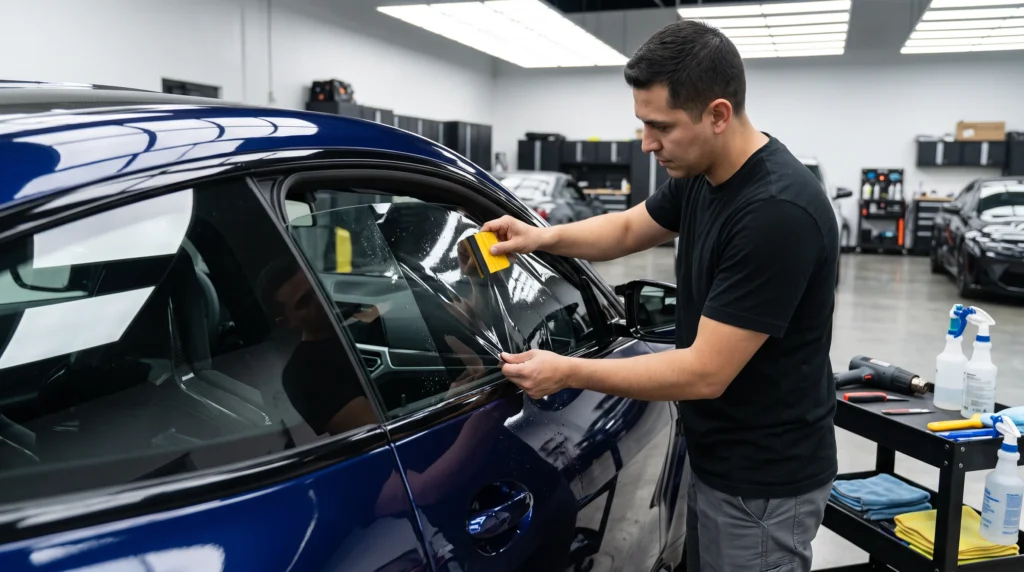
That is why shopping only by shade can leave out information that matters for Wasco, CA and McFarland, CA drivers.
Window Tint for Central Valley Heat
Heat is one of the biggest reasons people consider window tinting in Wasco & McFarland, CA.
Vehicles in this part of Kern County often spend a lot of time in direct sun. A work vehicle may sit outside during an entire shift. A commuter may park in an open lot before heading home in the afternoon.
Window film cannot keep a parked car cold forever.
It can reduce how much solar energy passes through the treated glass.
That difference matters because the glass surrounding the cabin gives sunlight several paths into the vehicle.
A driver who cares mainly about heat should compare film specifications instead of automatically choosing the darkest shade.
Ask about:
- Infrared rejection
- Total Solar Energy Rejected
- Visible Light Transmission
- UV rejection
- Film construction
- Warranty coverage
These figures tell you more than appearance alone.
How Ceramic Window Tint Handles Solar Energy
Ceramic tint is a popular option for drivers who care about solar performance.
Dynamic Window Tint carries Rayno Window Film, including Rayno Phantom ceramic films.
Rayno describes its Phantom Series as a carbon ceramic automotive film. The manufacturer publishes separate specifications for Visible Light Transmission, infrared rejection, UV rejection, Total Solar Energy Rejected, and visible-light reflection.
Those numbers make it easier to compare films based on what you want them to do.
A Wasco, CA commuter may choose ceramic tint because heat rejection matters during trips toward Bakersfield, CA.
A McFarland, CA driver may want a lighter film that still provides strong infrared rejection.
A truck owner may choose a darker rear shade for privacy while using a different film on other windows.
The right combination depends on the vehicle and how it is used.
Why Tint Darkness and Heat Rejection Are Different
One common misunderstanding about window tint is that darker always means cooler.
That is not necessarily true.
Darkness is mainly tied to how much visible light passes through the film.
Heat-related performance is measured separately.
Rayno’s current Phantom specifications make that difference easy to see.
Rayno lists its Phantom S9 50 film at 50% VLT with 92% infrared rejection and 53% Total Solar Energy Rejected.
Its Phantom S5 20 film is much darker at 20% VLT, yet Rayno lists that film at 53% infrared rejection and 51% Total Solar Energy Rejected.
The lighter S9 film has much stronger published infrared rejection in that comparison.
For window tinting in Wasco & McFarland, CA, this means drivers should not judge heat performance by looking at tint darkness alone.
What VLT Means for Your Vehicle
VLT stands for Visible Light Transmission.
It describes how much visible light passes through a film.
A higher VLT means more visible light passes through.
A lower VLT means less visible light passes through, so the film normally looks darker.
A 50% film is lighter than a 20% film.
A 5% film is very dark.
There is another part to remember.
The final VLT of the installed window can be different from the film’s listed VLT because factory automotive glass already affects light transmission.
That means a film marked with one percentage does not always produce that exact final reading once installed.
If you are choosing window tinting in Wasco & McFarland, CA, ask the installer how the film and your existing glass will work together.
What IR Rejection Means
IR stands for infrared.
Infrared radiation makes up part of the solar energy people associate with heat.
An automotive film with higher infrared rejection can reject more of that measured infrared energy.
Rayno publishes IR-rejection figures for each Phantom film and shade.
Its current Phantom S9 line lists IR-rejection figures between 91% and 93% across the available shades shown on Rayno’s specifications page.
The Phantom S7 line ranges from 70% to 81% on the current chart.
The Phantom S5 line ranges from 53% to 72%.
These numbers give drivers another way to compare window tinting in Wasco & McFarland, CA.
Do not compare IR rejection without also considering TSER, VLT, the film shade, and your driving habits.
What TSER Means
TSER stands for Total Solar Energy Rejected.
It measures the percentage of total solar energy rejected by a film and glass system.
This gives drivers a broader look at solar control than infrared rejection alone.
Rayno publishes TSER figures alongside VLT and IR rejection for its Phantom films.
Its current Phantom S9 specifications range from 53% TSER for the 50% VLT film to 70% TSER for the 5% VLT film.
That gives a Wasco, CA or McFarland, CA driver a way to compare lighter and darker films within the same product family.
Here is what matters.
If heat is one of the main reasons you want tint, look at TSER and IR rejection rather than relying only on shade.
Window Tint for Glare Control
Glare is another reason drivers choose window tinting in Wasco & McFarland, CA.
Open roads and bright skies can put sunlight directly through the side glass.
Low morning or afternoon sun can also make glare more noticeable.
Tint reduces the amount of visible light coming through treated windows.
A darker film generally blocks more visible light than a lighter film.
That can make daytime sunlight feel less harsh.
The catch is nighttime visibility.
A film that looks comfortable during a bright afternoon may feel much darker on an unlit road after sunset.
Drivers who spend time on rural roads should think carefully about that balance.
Window Tint for Privacy
Some drivers care more about privacy than heat or glare.
Darker rear tint can make it harder to see passengers and belongings from outside the vehicle.
This can appeal to:
- Pickup owners
- SUV drivers
- Families
- Work-vehicle owners
- Drivers carrying equipment
- People who prefer a darker exterior appearance
California treats front and rear windows differently, so there may be more shade choices available for rear glass when the vehicle meets the required conditions.
Ask the installer what is suitable for your vehicle before choosing a shade.
Window Tint for Trucks in Wasco & McFarland, CA
Trucks are used for work, commuting, family transportation, and recreation throughout Kern County.
Many trucks spend hours outside.
That makes solar heat rejection worth considering.
Some pickups also have factory privacy glass behind the front doors.
Factory privacy glass and aftermarket ceramic film do not perform the same job.
Privacy glass gets its darker color from the glass itself.
Adding automotive film can provide another layer with published solar and UV specifications.
A truck owner considering window tinting in Wasco & McFarland, CA may want film on:
- Front side windows
- Rear side windows
- Rear cab glass
- Quarter glass
- Sunroof glass when suitable
Your installer can look at the existing glass and explain which shades fit your goals.
Window Tint for SUVs and Family Vehicles
SUVs can have a lot of glass.
That means sunlight can reach passengers from several directions.
Children sitting in rear seats may spend long trips beside large side windows.
Drivers may want to reduce:
- Direct sunlight
- Rear-seat glare
- Solar heat
- UV exposure
- Visibility into the rear cabin
Many SUVs already have dark privacy glass behind the front doors.
Adding ceramic film over that glass may give the rear windows added solar properties, but the final shade can become darker.
If you regularly travel between McFarland, CA, Wasco, CA, Shafter, CA, Delano, CA, and Bakersfield, CA, tell the installer how the vehicle is used before deciding on film.
Rayno Window Film Options
Dynamic Window Tint carries Rayno Window Film.
Rayno’s Phantom Series includes S5, S7, and S9 automotive films.
Rayno Phantom S5
Rayno Phantom S5 is available in several VLT levels from 5% through 50%.
Rayno currently lists 99.9% UV rejection across its S5 shades.
IR rejection varies depending on shade.
Rayno Phantom S7
Phantom S7 is also available across several shades.
Rayno’s current specifications list IR rejection between 70% and 81% and UV rejection of 99.9% across the listed S7 films.
Rayno Phantom S9
Phantom S9 provides the strongest published IR rejection among the three current Phantom groups.
Rayno lists between 91% and 93% IR rejection across the available S9 shades, along with 99.9% UV rejection.
For drivers comparing window tinting in Wasco & McFarland, CA, these specifications allow you to compare film performance before deciding how dark you want the finished glass to appear.
California Window Tint Rules
Window tinting in Wasco & McFarland, CA must follow California law.
California Vehicle Code Section 26708 regulates materials placed on vehicle windshields and windows.
Rules change depending on which glass is being treated.
The windshield and front side windows have tighter restrictions than many rear-window applications.
California law also includes conditions related to rear-window material and outside mirrors.
This is why you should not assume that a shade you see on one part of another vehicle can legally be used on every window of your own car or truck.
Factory glass also affects the final light transmission.
Before choosing a tint setup, ask about current California requirements for:
- Driver-side front glass
- Passenger-side front glass
- Rear door glass
- Rear quarter glass
- Rear window
- Windshield film
- Windshield sun strips
You can review the current law through California Legislative Information.
Night Driving and Tint Shade
Nighttime driving needs to be part of the tint decision.
Roads outside larger cities can have far less surrounding light.
If you commute before sunrise or return home after dark, a very dark shade may affect how easily you see through the side or rear glass.
Ask yourself:
- Do I regularly drive at night?
- Do I use rural roads?
- Is my driveway poorly lit?
- Do I back up in dark areas?
- Do I drive before sunrise?
- Is glare or privacy more important to me?
Your answers can help narrow down a shade.
A lighter ceramic film may be a better fit for a driver who wants solar performance while keeping more visible light through the glass.
Why Professional Installation Matters
Film choice is only one part of window tinting in Wasco & McFarland, CA.
Installation quality also affects how the tint looks and lasts.
The glass needs to be cleaned and prepared before the film is applied.
Poor installation can leave:
- Dirt under the film
- Creases
- Uneven edges
- Gaps
- Peeling corners
- Contamination
- Bubbles that remain after curing
A certified installer can also help compare the existing glass, desired shade, Rayno film specifications, and California rules.
Dynamic Window Tint carries warranties on its products and services, giving customers a shop to contact if questions come up after installation.
Other Vehicle Protection Services
Drivers making the trip from Wasco, CA or McFarland, CA can also ask about other vehicle services.
Dynamic Window Tint provides paint protection film, ceramic coating, windshield protection film, windshield chip repair, and windshield replacement.
These services address different vehicle surfaces.
Paint protection film is placed over selected painted areas to help protect them from road contact.
Ceramic coating is applied to exterior surfaces and can make washing easier while giving the finish a slick appearance.
Windshield protection film is used on the windshield surface and serves a different purpose from automotive tint.
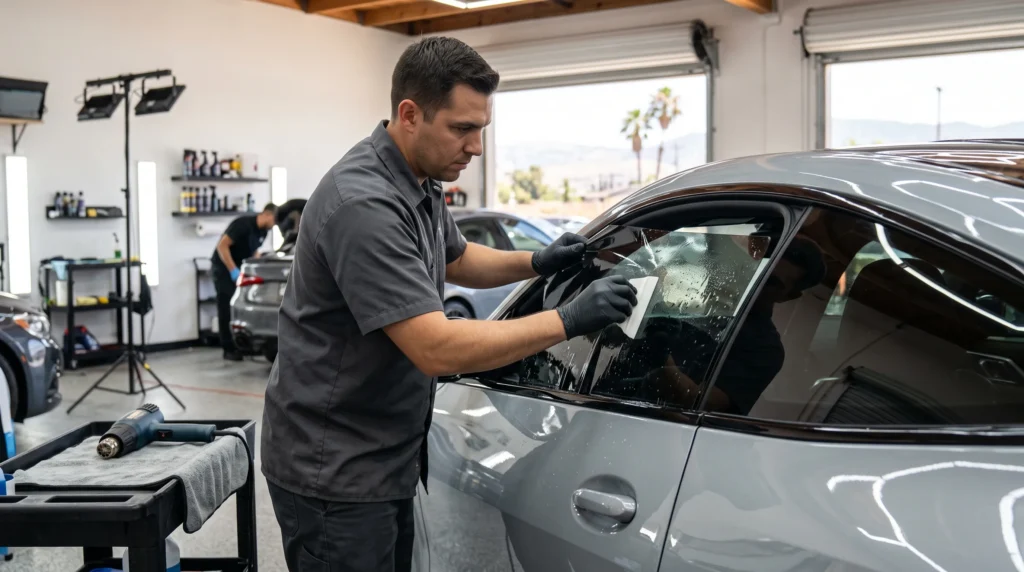
If you are already traveling to Bakersfield, CA, ask which services can be discussed during the same visit.
Schedule Window Tinting Near Wasco & McFarland, CA
Window tinting in Wasco & McFarland, CA starts with your vehicle and what you want the film to do.
If heat is your main concern, compare TSER and infrared rejection.
If glare bothers you, compare VLT choices.
If privacy matters most, ask about rear-window shades.
If you drive at night, think carefully about outward visibility.
If your truck or SUV already has factory privacy glass, ask how new film will change the final appearance.
Dynamic Window Tint is located at:
4609 New Horizon Blvd Suite #10 Bakersfield, CA 93313
Call (661) 634-5585 to discuss Rayno Window Film and tint options for your car, truck, or SUV.
You can also use the Dynamic Window Tint contact page to schedule an appointment.
Pricing depends on the vehicle, number of windows, selected film, old tint removal, glass shape, and preparation needed.
Call the shop or submit the contact form for a quote based on your vehicle.
Frequently Asked Questions
1. Is window tinting useful for drivers in Wasco, CA?
Yes. Window tint can reduce visible glare, reject part of the solar energy entering through treated glass, provide UV rejection, and give drivers more privacy. The results depend on the film selected and the shade.
2. What type of window tint works well in McFarland, CA?
Drivers who care about heat may want to compare ceramic films based on IR rejection and TSER. Rayno Phantom films offer several VLT levels and solar-performance specifications, giving drivers choices based on heat, glare, privacy, and appearance.
3. Does darker window tint reject more heat?
Not always. VLT measures visible-light transmission, while IR rejection and TSER measure different parts of solar performance. A lighter ceramic film can have stronger published infrared rejection than a darker film from another series.
4. What is VLT on window tint?
VLT means Visible Light Transmission. A higher VLT lets more visible light through, while a lower VLT usually produces a darker appearance. The factory glass also affects the final amount of visible light passing through an installed window.
5. Can ceramic film be installed over factory privacy glass?
Film can often be installed over suitable factory privacy glass. The existing glass affects the finished shade, so ask the installer to look at the vehicle before selecting a film.
6. Is window tint legal in Wasco, CA and McFarland, CA?
California vehicle tint rules apply in both communities. California Vehicle Code Section 26708 places different restrictions on windshields, front side windows, and rear glass. Ask about current requirements before deciding on a shade.
7. How do I schedule window tinting near Wasco, CA or McFarland, CA?
Call Dynamic Window Tint at (661) 634-5585 or visit the contact page. Provide your vehicle year, make, model, which windows you want tinted, and whether heat rejection, glare control, privacy, or appearance is your main concern.
Sources
Phantom Series Automotive Window Film
Publisher: Rayno Film
Publication Date: Not listed
Accessed: August 28, 2026
Information referenced: Phantom S5, S7, and S9 VLT, IR rejection, UV rejection, TSER, film construction, and product specifications.
California Vehicle Code Section 26708
Publisher: California Legislative Information
Publication Date: Current code database
Accessed: August 28, 2026
Information referenced: California rules governing material installed on vehicle windshields and windows.
Window Tint in Bakersfield, CA
Publisher: Dynamic Window Tint
Publication Date: Not listed
Accessed: August 28, 2026
Information referenced: Automotive tint services, Rayno Window Film, and shop service information.
Dynamic Window Tint Contact Page
Publisher: Dynamic Window Tint
Publication Date: Not listed
Accessed: August 28, 2026
Information referenced: Appointment and contact information.
