

Table of Contents
- Best Window Tint Percentage for Central Valley Sun
- What Window Tint Percentage Means
- Why Central Valley Sun Changes the Tint Conversation
- Best Window Tint Percentage for Front Side Windows
- Best Window Tint Percentage for Rear Side Windows
- Best Window Tint Percentage for Rear Windshields
- Best Window Tint Percentage for Windshield Strips
- Ceramic Tint vs Dark Tint for Central Valley Heat
- Best Window Tint Percentage by Driver Type
- Common Tint Percentage Mistakes
- Get Window Tint Help in Bakersfield, CA
- FAQs About the Best Window Tint Percentage for Central Valley Sun
- Sources
Best Window Tint Percentage for Central Valley Sun
Best window tint percentage for Central Valley sun depends on your vehicle, your daily drive, your heat goals, and California window tint rules. For many Bakersfield drivers, the best setup is a lighter legal film on the front side windows and a darker film behind the driver.
That usually means front side windows should stay in the legal range, while rear side windows and rear glass can often be darker when the vehicle has the right mirror setup. Many drivers ask about 70%, 50%, 35%, 20%, and 5% tint, but the best window tint percentage for Central Valley sun is not always the darkest one.
Here is why: tint percentage only tells you how much visible light passes through the glass. It does not tell the full story on heat rejection. A lighter ceramic film can reject more heat than a darker regular film, depending on the product.
At Dynamic Window Tint, we help drivers in Bakersfield, CA, Lamont, CA, Shafter, CA, Arvin, CA, Rosedale, CA, Oildale, CA, and nearby Kern County areas choose window tint that fits local heat, daily comfort, and California rules.
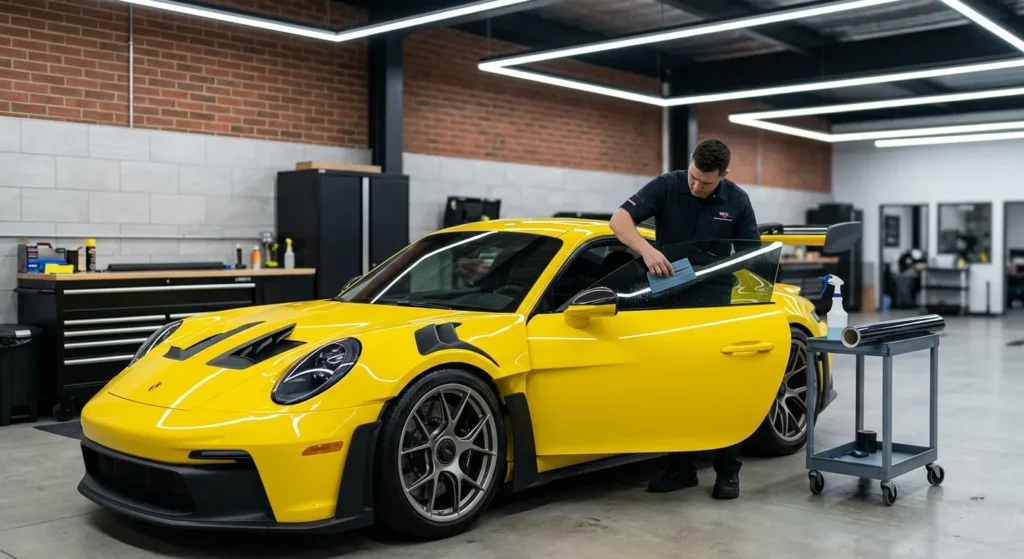
If you want help choosing the best window tint percentage for Central Valley sun, call (661) 634-5585 or visit https://dynamicwindowtintca.com/contact-us.
What Window Tint Percentage Means
Window tint percentage is usually shown as VLT, which means visible light transmission. VLT tells you how much visible light can pass through the glass.
A higher number means a lighter window. A lower number means a darker window.
Here is a simple way to read tint percentages:
- 70% tint lets in a lot of visible light and has a lighter look.
- 50% tint gives a mild shaded look.
- 35% tint gives a balanced darker look.
- 20% tint gives more privacy and a darker style.
- 5% tint is very dark and is often called limo tint.
The catch is that the final number can change after film is installed. Factory vehicle glass may already have some tint in it. When new film goes on top, the glass and film together may test darker than the film label.
What this means: you should not choose film by the box number alone. A trained shop should help match the film to your vehicle glass, California rules, and your goals.
The best window tint percentage for Central Valley sun is the one that gives heat control, glare control, safe visibility, and a clean look without creating legal problems.
Why Central Valley Sun Changes the Tint Conversation
Central Valley sun can be harsh on drivers. Bakersfield summers bring hot air, bright roads, and long days of strong sunlight. The National Weather Service has a Bakersfield climate page for local climate records, and WeatherSpark lists Bakersfield’s hot season as lasting from June 8 to September 20, with average daily highs above 91°F.
For local drivers, this means window tint is not only about style. It is also about comfort.
The best window tint percentage for Central Valley sun should help with:
- Heat through side glass
- Glare on bright roads
- Privacy for rear seats
- Better cabin comfort
- UV protection, depending on film type
- A cleaner vehicle look
- Safe night visibility
- California window tint rules
Now here’s the thing. Darker tint can cut visible light, but darkness alone does not always mean better heat rejection. Film type matters.
Ceramic window film can help reject infrared heat, which is a large part of the hot feeling you get through glass. Rayno Phantom II ceramic window film lists up to 97% infrared rejection, depending on the film option.
That is why a 50% ceramic film may feel better than a darker standard film in some cases. For Bakersfield, CA drivers, film technology can matter as much as tint percentage.
Best Window Tint Percentage for Front Side Windows
For front side windows in California, drivers need to be careful. The front side windows are the driver and front passenger windows. These windows have stricter rules because the driver needs a clear side view.
California Vehicle Code Section 26708 allows clear, colorless, transparent material on front side windows only when it meets set conditions. The law includes at least 88% visible light transmittance for the material and a 70% minimum light transmittance standard for the glass with the material applied.
Because factory glass affects the final number, many drivers use a lighter film on the front side windows.
For many Bakersfield drivers, the safer front-window range is:
- 70% ceramic film for a lighter legal look and heat help
- 80% or lighter clear ceramic film for drivers who want less visible change
- 50% film only when the final glass and film setup stays within California rules
The best window tint percentage for Central Valley sun on front side windows is usually not a very dark shade. It is usually a lighter ceramic film that helps with heat while keeping visibility and legal fit in mind.
Here’s what matters. A 20% or 5% front side window may look private, but it can lead to a stop, a fix-it ticket, poor night visibility, and removal costs. It is better to choose a film that fits the law before it goes on the glass.
Ask Dynamic Window Tint about legal front side window film options before choosing a shade.
Best Window Tint Percentage for Rear Side Windows
Rear side windows sit behind the driver. California gives drivers more room with these windows than it does with front side windows.
For the best window tint percentage for Central Valley sun, rear side windows are where many drivers choose more shade. This can help passengers, kids, pets, tools, bags, sports gear, and rear seats feel less exposed.
Common rear side window choices include:
- 35% tint for a clean, balanced look
- 20% tint for more privacy and stronger shade
- 5% tint for a very dark rear-seat look
For many daily drivers in Bakersfield, CA, 20% rear side window tint is a common choice when privacy and shade are top goals. For drivers who want a lighter look with good visibility, 35% rear tint may feel better.
The best window tint percentage for Central Valley sun on rear side windows depends on how you use the vehicle.
A family SUV may benefit from darker rear film. A commuter sedan may feel better with a balanced 35% rear setup. A work truck may need privacy for tools or gear. A Tesla or EV with large glass may benefit from ceramic film on multiple windows.
If you drive often at night, think carefully before going very dark. A dark rear cabin may look good during the day but feel too dim after sunset.
Best Window Tint Percentage for Rear Windshields
The rear windshield, also called the back glass, can often be tinted darker than front side windows in California when the vehicle has the correct side mirrors.
California Vehicle Code Section 26708 allows material on the rear window if the vehicle has left and right outside mirrors that give the driver a highway view of at least 200 feet to the rear.
For Bakersfield drivers, common rear windshield choices include:
- 35% tint for a medium shaded look
- 20% tint for stronger privacy and heat help
- 5% tint for a very dark look
The best window tint percentage for Central Valley sun on rear glass is often 20% for drivers who want privacy and shade without going to the darkest possible choice. Some drivers prefer 35% because it feels easier to see through at night.
Bottom line, rear glass should be chosen for both daytime comfort and nighttime safety. If you use your rearview mirror often, park in dark areas, or back into tight driveways, choose a shade you can live with every day.
For trucks, SUVs, vans, and RVs, rear glass size also matters. Larger glass lets in more sun, so film choice can have a big effect on cabin comfort.
Best Window Tint Percentage for Windshield Strips
California windshield rules are strict. A full dark windshield tint is not the same as a legal top strip.
A windshield strip, sometimes called an eyebrow or visor strip, is placed near the top of the windshield. This can help reduce glare from overhead sun, which matters in the Central Valley.
The best window tint percentage for Central Valley sun on a windshield strip depends on the legal placement and the driver’s comfort. Many drivers choose a darker strip because it only sits at the top portion of the windshield.
The strip must follow California rules for placement, color, and glare. It cannot block the driver’s clear view.
A legal windshield strip may help with:
- Low-angle sun
- Bright afternoon glare
- Overhead light through the windshield
- Driving comfort
- A cleaner front-end look
If your main concern is windshield damage from rocks or road wear, ask about windshield protection film. If your windshield already has a chip, ask about windshield chip repair.
Ceramic Tint vs Dark Tint for Central Valley Heat
Many drivers think the best window tint percentage for Central Valley sun is simply the darkest percentage they can get. That is not always true.
Ceramic tint can reject heat better than many regular films, even when it is not as dark. This matters because heat rejection and darkness are not the same thing.
A 70% ceramic film can look light but still help with heat. A 5% regular film can look very dark but may not reject heat as well as a better ceramic film. The product line matters.
Dynamic Window Tint carries Rayno Window Film. Rayno makes automotive, home, commercial, paint protection, security, and switchable films. Rayno Phantom II ceramic film is listed as a nano carbon ceramic film with up to 97% infrared rejection.
What this means for local drivers is simple: ask about film type before asking only about tint percentage.
A smart Central Valley setup might look like this:
- Legal lighter ceramic film on front side windows
- 35% or 20% ceramic film on rear side windows
- 35% or 20% ceramic film on rear glass
- Legal windshield strip for glare
- Clear or light ceramic film where heat matters but darkness does not
The best window tint percentage for Central Valley sun is often a mix of legal front film and stronger rear shade, using ceramic film when heat is the main goal.
Best Window Tint Percentage by Driver Type
The best window tint percentage for Central Valley sun changes based on how you drive and what you need.
Daily Commuters
Daily commuters usually need heat help, glare control, and clear visibility. A common setup is lighter ceramic film on the front side windows with 35% or 20% ceramic film behind the driver.
This gives a clean look without making every window too dark.
Family SUVs
Family SUVs often need shade for rear passengers. Many parents want rear-seat privacy, less glare for kids, and a cooler cabin.
A common setup is legal front side film with 20% rear side and rear glass film. Ceramic film can help if the SUV has large windows.
Work Trucks
Work trucks may need privacy for gear and tools. A legal front side film with 20% rear film may be a good fit.
If the truck is parked outside all day, ceramic tint can help with heat.
Tesla and EV Drivers
Tesla and EV drivers often ask about heat because many models have large glass areas. Ceramic film is a strong option for this type of vehicle.
Dynamic Window Tint offers Tesla window tint and Cybertruck window tint for owners who want a clean vehicle-specific install.
Privacy-Focused Drivers
Drivers who want more privacy may choose 20% or 5% behind the driver. Front side windows still need to follow California rules.
Night Drivers
Drivers who spend a lot of time on the road after dark should avoid going too dark. A 35% rear setup may feel better than 5% if night visibility matters.
Common Tint Percentage Mistakes
Choosing the best window tint percentage for Central Valley sun is easier when you avoid common mistakes.
Mistake 1: Picking tint only by darkness
Darkness does not equal heat rejection. Film type matters. A lighter ceramic film can feel better than darker regular tint.
Mistake 2: Going too dark on front side windows
California front side window rules are strict. Dark front tint can lead to legal trouble and poor visibility.
Mistake 3: Ignoring factory glass
Your vehicle glass may already be tinted from the factory. New film can make the final VLT darker than expected.
Mistake 4: Choosing 5% tint without thinking about night driving
A 5% tint can be very hard to see through at night. It may work for some rear glass needs, but it is not right for every driver.
Mistake 5: Using the same shade on every window
A mixed setup often works better. Lighter front film and darker rear film can give comfort, privacy, and a more legal fit.
Mistake 6: Skipping ceramic film when heat is the main issue
Central Valley heat can be intense. If heat is the main concern, ceramic film is worth asking about.
Mistake 7: Choosing film without warranty support
A good tint job should come from a shop that stands behind the work. Dynamic Window Tint is certified and carries warranties on products and services.
Get Window Tint Help in Bakersfield, CA
If you are searching for the best window tint percentage for Central Valley sun, Dynamic Window Tint can help you compare shade, film type, legal rules, and daily comfort.
Our shop is located at:
Dynamic Window Tint
4609 New Horizon Blvd Suite #10
Bakersfield, CA 93313
Phone: (661) 634-5585
Business hours:
- Monday through Wednesday: 8 AM to 5 PM
- Friday through Saturday: 8 AM to 5 PM
- Sunday: 8 AM to 2 PM
We serve Bakersfield, CA and nearby areas, including Lamont, CA, Shafter, CA, Arvin, CA, Rosedale, CA, Oildale, CA, Wasco, CA, and other Kern County communities.
Our services include:
- Window tinting
- Vehicle window tint
- Residential window tint
- Commercial window tint
- Windshield protection film
- Windshield chip repair
- Ceramic coating
- Paint protection film
Dynamic Window Tint has 225 reviews and a 5-star rating. We are certified and carry warranties on all products and services.
Call (661) 634-5585 or visit https://dynamicwindowtintca.com/contact-us to schedule an appointment.
FAQs About the Best Window Tint Percentage for Central Valley Sun
1. What is the best window tint percentage for Central Valley sun?
The best window tint percentage for Central Valley sun is often a legal lighter film on the front side windows with 35% or 20% tint behind the driver. Ceramic film is a strong choice when heat rejection matters most.
2. Is 20% tint good for Bakersfield heat?
Yes, 20% tint can be a good rear-window option for Bakersfield heat and privacy. Front side windows must stay within California rules, so ask a shop before choosing 20% for the front.
3. Is 35% tint dark enough for Central Valley sun?
35% tint can be a good balanced choice. It gives more shade than lighter film while keeping better visibility than very dark tint. Ceramic 35% film can be a strong pick for many drivers.
4. Is 5% tint too dark?
5% tint is very dark. It may work for some rear glass needs, but it can make night driving and backing up harder. It is not legal for front side windows in California.
5. Does ceramic tint work better than darker regular tint?
Often, yes. Ceramic tint can reject more infrared heat than many regular films, even in lighter shades. That makes it a strong choice for Central Valley heat.
6. What tint percentage is legal on front windows in California?
California front side window rules are strict and are based on visible light transmission. The final glass and film setup must meet California requirements. Ask Dynamic Window Tint which legal front side window options fit your vehicle.
7. Where can I get help choosing window tint percentage in Bakersfield, CA?
Call Dynamic Window Tint at (661) 634-5585 or visit https://dynamicwindowtintca.com/contact-us. The shop can help you choose the best window tint percentage for Central Valley sun based on your vehicle, goals, and California rules.
Sources
- California Vehicle Code Section 26708, California.Public.Law, Published July 21, 2026, accessed July 22, 2026.
- Rayno Phantom II Nano Ceramic Window Film, Rayno Window Film, Publication Date: Not listed, accessed July 22, 2026.
- Rayno Window Film, Rayno Window Film, Publication Date: Not listed, accessed July 22, 2026.
- Bakersfield Climate, National Weather Service, Publication Date: Not listed, accessed July 22, 2026.
- Average Weather in Bakersfield, California, WeatherSpark, Publication Date: Not listed, accessed July 22, 2026.
- Dynamic Window Tint, Dynamic Window Tint, Publication Date: Not listed, accessed July 22, 2026.
- Window Tint in Bakersfield, CA, Dynamic Window Tint, Publication Date: Not listed, accessed July 22, 2026.
- Residential Window Tint in Bakersfield, CA, Dynamic Window Tint, Publication Date: Not listed, accessed July 22, 2026.
- Commercial Window Tint in Bakersfield, CA, Dynamic Window Tint, Publication Date: Not listed, accessed July 22, 2026.
- Contact Dynamic Window Tint, Dynamic Window Tint, Publication Date: Not listed, accessed July 22, 2026.
