

Table of Contents
- California Window Tint Laws: Legal Limits for Bakersfield Drivers
- What VLT Means Under California Window Tint Laws
- California Window Tint Laws for Front Side Windows
- California Window Tint Laws for Rear Side Windows
- California Window Tint Laws for Rear Windows
- California Window Tint Laws for Windshields
- Medical Sun Screening Rules in California
- Why Legal Window Tint Still Matters in Bakersfield, CA
- How Film Choice Affects California Window Tint Laws
- Common Window Tint Mistakes Bakersfield Drivers Should Avoid
- Get Legal Window Tint Help in Bakersfield, CA
- FAQs About California Window Tint Laws
- Sources
California Window Tint Laws: Legal Limits for Bakersfield Drivers
California window tint laws matter for Bakersfield drivers because the wrong film or shade can lead to a ticket, removal, or a failed inspection during a traffic stop. Window tint can make your car look cleaner, cut glare, and help with comfort in Bakersfield, CA heat, but it still needs to stay within California rules.
At Dynamic Window Tint, our team helps local drivers choose window tint that fits their vehicle, their goals, and California window tint laws. We serve drivers from Bakersfield, CA, Lamont, CA, Shafter, CA, and nearby Kern County areas.
Here is why this matters. California does not treat every window the same. The front side windows, rear side windows, rear window, and windshield each have different rules. The law also talks about light transmission, clear view, mirror setup, medical sun screening, and paperwork from the installer.
This guide breaks down California window tint laws in plain English so Bakersfield drivers know what to ask before booking vehicle window tint.
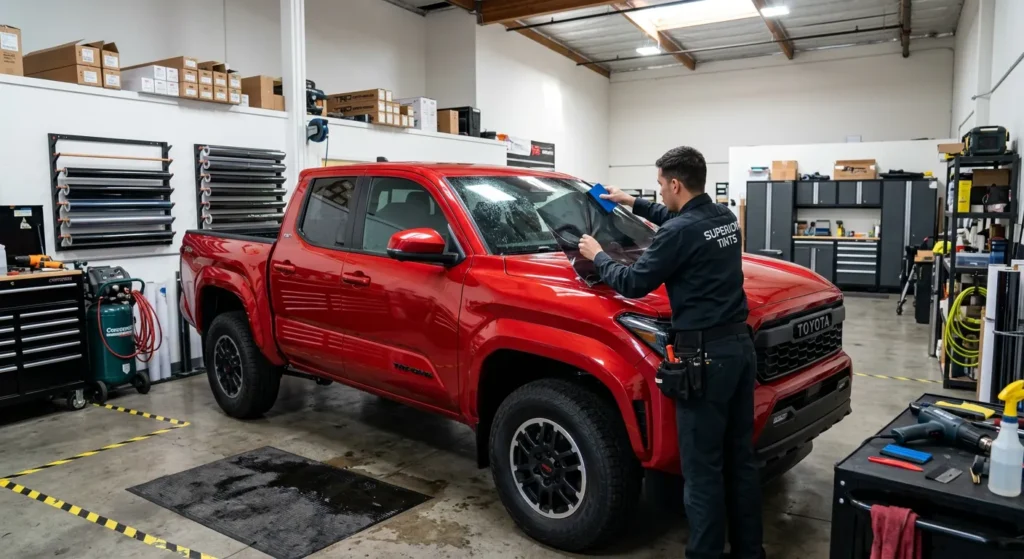
For help choosing a legal window tint setup, call (661) 634-5585 or visit https://dynamicwindowtintca.com/contact-us.
What VLT Means Under California Window Tint Laws
VLT stands for visible light transmission. It means how much visible light can pass through the window.
A higher VLT number means the window is lighter. A lower VLT number means the window is darker.
So, 70% VLT lets more light through than 20% VLT. A 5% film, often called limo tint, is very dark. That may be allowed on some rear glass setups, but it is not the right choice for the front side windows in California.
The real question is: what does the law measure?
For front side windows, California rules are not only about the film by itself. The law also looks at the glass and film together. California Vehicle Code Section 26708 says clear, colorless, transparent material on the front side windows must have at least 88% visible light transmittance, and the window glass with that material applied must meet the federal 70% minimum light transmittance rule.
That means factory glass matters. Many vehicle windows already have some level of tint from the factory. If film gets added on top, the final combined VLT may be lower than expected. That is why guessing based on shade alone is risky.
Bottom line, California window tint laws are about both what you install and how that film works with the glass already on the vehicle.
California Window Tint Laws for Front Side Windows
The front side windows are the driver and passenger windows next to the front seats. These are the windows most likely to draw attention if they are too dark.
Under California window tint laws, front side windows must stay clear enough for safe visibility. California Vehicle Code Section 26708 allows clear, colorless, transparent material on the front side windows only when set conditions are met. The film must have at least 88% visible light transmittance, and the glass with the film applied must meet the 70% light transmittance requirement.
What this means for Bakersfield drivers is simple: dark film on the front two windows can be a problem. A film that looks mild may still fall outside the law once it is placed over factory glass.
This is one reason many drivers ask for a legal front-window option that still helps with heat and glare. A lighter film with strong heat rejection can be a better fit than choosing the darkest shade possible.
Drivers should also keep installer paperwork in the vehicle when required. California Vehicle Code Section 26708 says the driver must have a certificate from the installing company, or from the manufacturer if owner-installed, showing that the windows meet the rule. The certificate must identify the installing company and film manufacturer by full name and street address.
Here’s what matters: if you want front side window tint, do not pick a shade from online photos alone. Ask a trained installer what option works with your exact glass, vehicle, and California window tint laws.
California Window Tint Laws for Rear Side Windows
Rear side windows sit behind the driver. California gives drivers more room on these windows than it does on the front side windows.
California Vehicle Code Section 26708 lists side windows to the rear of the driver as one of the exceptions to the general rule against material on vehicle windows. In plain English, this is why drivers often use darker film behind the front seats.
For a sedan, SUV, truck, van, or crossover, this can mean the rear side windows may be darker than the front side windows. Many Bakersfield, CA drivers choose darker rear tint for privacy, glare reduction, and passenger comfort.
Let’s break it down. Even if the rear side windows have more shade options, the installation still matters. The film should not bubble, peel, distort the view, or create a messy edge. Poor film can age badly in Kern County sun and may need replacement sooner.
If you drive with kids, pets, tools, sports gear, or work equipment in the back, rear side window tint can help make the vehicle feel more private. It can also make the vehicle look more balanced when paired with a legal front-window film.
Dynamic Window Tint offers window tint in Bakersfield, CA for cars, trucks, SUVs, RVs, boats, and specialty vehicles.
California Window Tint Laws for Rear Windows
The rear window is the back glass of the vehicle. California window tint laws allow more options here, but there is one big rule drivers need to know.
California Vehicle Code Section 26708 allows material on the rear window if the motor vehicle has outside mirrors on both the left and right sides. Those mirrors must give the driver a view of the highway for at least 200 feet to the rear.
Most modern cars, trucks, and SUVs already have left and right side mirrors. Still, the mirror rule matters if you are tinting the rear window very dark, replacing glass, modifying a vehicle, or working on an older vehicle.
Now here’s the thing. Just because rear glass can be darker does not mean every driver should choose the darkest film. Bakersfield drivers should think about nighttime driving, backing up, parking lots, rear camera visibility, and personal comfort.
A dark rear window may look good during the day, but it can feel too dark at night for some drivers. A trained tint shop can help you compare shade levels before installation.
If you are tinting an SUV, van, RV, or work truck, ask about rear visibility, side mirrors, and how the tint will feel in daily use. Legal is one part of the choice. Safe and comfortable is the other part.
California Window Tint Laws for Windshields
Windshields have the strictest rules because the driver must have a clear forward view.
California Vehicle Code Section 26708 allows transparent material on the topmost portion of the windshield only if certain conditions are met. The law includes rules for placement, color, lettering, and glare.
For Bakersfield drivers, this often applies to a windshield strip or visor strip near the top of the windshield. The strip cannot be red or amber. It also cannot reflect sunlight or headlight glare into the eyes of drivers in oncoming or following vehicles.
The bottom edge of the material must be at least 29 inches above the undepressed driver’s seat when measured from a set point described in the law. Because that measurement is technical, it is smarter to have a trained shop handle the placement instead of guessing.
Full windshield tint is not the same as a legal top strip. Drivers should be careful with online claims that make full windshield tint sound legal for every vehicle. California window tint laws are strict when it comes to anything that affects the driver’s forward view.
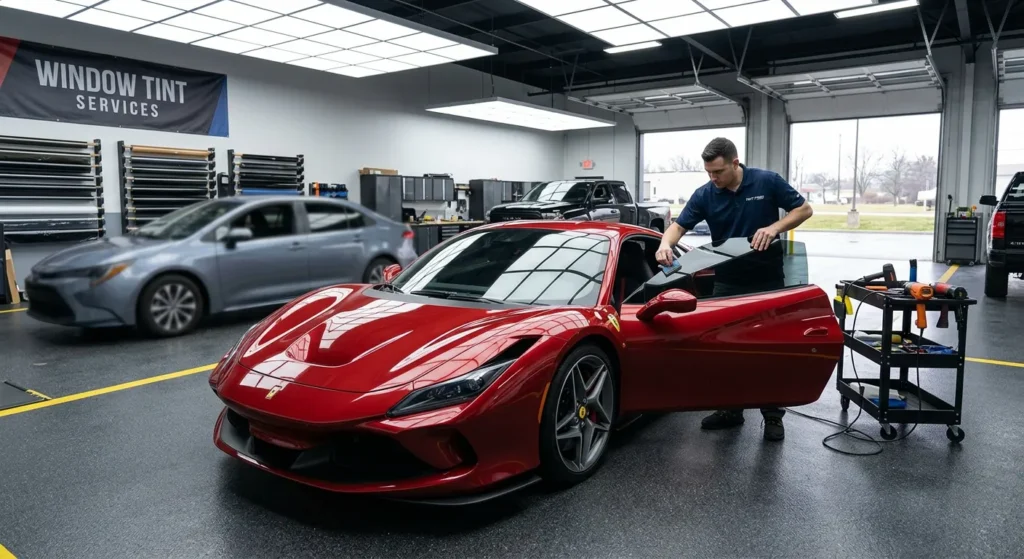
If your goal is glare control near the top of the windshield, ask about legal windshield strip options. If your goal is protecting the windshield from chips or road wear, ask about windshield protection film instead of assuming tint is the answer.
Medical Sun Screening Rules in California
California window tint laws include medical sun screening rules, but drivers should not assume a doctor note gives unlimited permission for dark tint.
California Vehicle Code Section 26708 allows certain sun screening devices on the side windows on either side of the front seat when the driver or front-seat passenger has documentation from a licensed physician and surgeon or licensed optometrist showing that the person must be shaded from the sun due to a medical or visual condition. The law also says those devices may not be used during darkness.
The same code section also discusses clear, colorless, transparent material for medical needs. Under that part of the law, the material must have at least 88% visible light transmittance, and the glass with the material must meet the 70% light transmittance rule. It also requires a certificate from a licensed dermatologist stating the person should not be exposed to ultraviolet rays due to a medical condition.
What this means: medical rules are narrow. They do not give every driver permission to blackout the front windows. If you believe you qualify for a medical window tint option, speak with a medical professional and ask a qualified installer what paperwork and film type are allowed.
Dynamic Window Tint can talk with you about film choices, but legal and medical paperwork should be handled with the right professional.
Why Legal Window Tint Still Matters in Bakersfield, CA
Bakersfield drivers deal with strong sun, long commutes, bright roads, and hot parked cars. It makes sense that window tint is popular here.
Still, California window tint laws matter because illegal front window tint can lead to problems. A police officer may stop a vehicle if the tint appears too dark. If the tint is not legal, the driver may need to remove it, correct the issue, and show proof after the correction.
The real question is not, “How dark can I go?” The better question is, “Which film gives me the look and comfort I want while staying within California rules?”
Legal window tint can still help with:
- Glare on bright roads
- Interior comfort
- UV protection, depending on film type
- Privacy behind the driver
- Cleaner vehicle appearance
- Less eye strain during daily drives
- A better feel for passengers
Drivers from Bakersfield, CA, Lamont, CA, Shafter, CA, Arvin, CA, Rosedale, CA, and Oildale, CA often want tint that looks good without causing legal stress. That is where a local tint shop helps.
Dynamic Window Tint is certified and carries warranties on products and services. The shop also carries Rayno Window Film, a brand that offers automotive, architectural, paint protection, safety, and security film options.
How Film Choice Affects California Window Tint Laws
Film choice matters as much as shade.
Many drivers think a darker film always means better heat rejection. That is not always true. Some lighter films can offer strong heat rejection while keeping a legal look on front side windows.
Rayno Window Film offers several automotive film options, including ceramic film lines. Ceramic film is often chosen by drivers who want better comfort and a lighter shade option that still performs well in the sun.
Here is why this matters for California window tint laws. A driver may want the darkest legal setup, but the best choice may be a lighter, higher-grade film on the front side windows and darker film behind the driver.
That setup can give the vehicle a clean look while keeping the front windows closer to the legal range. It can also help drivers avoid the poor visibility that comes with very dark front film at night.
A legal tint plan may include:
- Lighter film on front side windows
- Darker film on rear side windows
- Darker film on rear glass if mirrors meet the rule
- A legal windshield strip
- Ceramic film for better heat control
- Removal of old film before new film is installed
For drivers who want more than tint, Dynamic Window Tint also offers paint protection film, ceramic coating, windshield chip repair, and windshield protection film.
Common Window Tint Mistakes Bakersfield Drivers Should Avoid
California window tint laws can be confusing if you are only looking at photos online. Many drivers run into problems because they choose film based on looks alone.
Mistake 1: Choosing front window tint that is too dark
The front side windows have strict rules. A film that looks light in one photo may still be too dark after it is installed on your glass.
Mistake 2: Ignoring factory glass tint
Factory glass already has some light reduction. When new film is added, the final VLT changes. This is why the combined glass-and-film number matters.
Mistake 3: Assuming rear tint rules apply to all windows
Rear side windows and rear glass get more shade options than front side windows. That does not mean the same shade can go on every window.
Mistake 4: Forgetting the side mirror rule
If the rear window is tinted, California law requires left and right outside mirrors that give the driver a rear highway view for at least 200 feet.
Mistake 5: Using low-grade film
Low-grade film can bubble, fade, scratch, or turn purple over time. A poor install can also leave dirt, gaps, or rough edges.
Mistake 6: Not asking about paperwork
California Vehicle Code Section 26708 requires certification paperwork for certain front side window film installations. Ask your installer what paperwork should stay in the vehicle.
Mistake 7: Waiting until after a ticket
It is easier to plan legal window tint before installation than to remove illegal tint after a stop.
Next steps are simple. Work with a local shop that knows California window tint laws and can help you choose the right film before the work begins.
Get Legal Window Tint Help in Bakersfield, CA
If you are trying to understand California window tint laws before booking tint, Dynamic Window Tint can help. Our shop is located at:
4609 New Horizon Blvd Suite #10, Bakersfield, CA 93313
We serve Bakersfield, CA and nearby areas, including Lamont, CA, Shafter, CA, Arvin, CA, Rosedale, CA, Oildale, CA, Wasco, CA, and other Kern County communities.
Our team offers:
- Vehicle window tint
- Commercial window tint
- Residential window tint
- RV window tint
- Boat window tint
- Windshield protection film
- Windshield chip repair
- Ceramic coating
- PPF and paint protection film
Dynamic Window Tint has 225 reviews and a 5-star rating. We are certified and carry warranties on all products and services.
If you want window tint that looks good and fits California window tint laws, call (661) 634-5585 or visit https://dynamicwindowtintca.com/contact-us to schedule an appointment.
Business hours are Monday through Wednesday from 8 AM to 5 PM, Friday through Saturday from 8 AM to 5 PM, and Sunday from 8 AM to 2 PM.
FAQs About California Window Tint Laws
1. What are California window tint laws for front side windows?
California window tint laws require front side windows to stay much lighter than rear windows. California Vehicle Code Section 26708 allows clear, colorless, transparent material on front side windows when the film has at least 88% visible light transmittance and the glass with film meets the 70% light transmittance rule.
2. Can I put 5% tint on my front windows in California?
No. A 5% film is far too dark for front side windows under California window tint laws. It may be used on some rear glass setups, but the front side windows need to stay within California’s light transmission rules.
3. Is rear window tint legal in California?
Rear window tint can be legal in California if the vehicle has left and right outside mirrors that give the driver a highway view at least 200 feet behind the vehicle. Most modern vehicles have both mirrors, but the rule still matters.
4. Can I tint my windshield in California?
California allows transparent material on the topmost portion of the windshield only when it meets legal placement, color, lettering, and glare rules. Full windshield tint is not the same as a legal top strip.
5. Do California window tint laws allow medical exemptions?
California has medical sun screening rules, but they are limited. Some front-seat sun screening devices may be allowed with proper documentation, and clear, colorless, transparent film may be allowed under set medical conditions. Drivers should review the law and speak with the right medical professional.
6. Do I need paperwork for legal window tint in California?
For certain front side window film installations, California Vehicle Code Section 26708 requires a certificate from the installing company or film manufacturer. The certificate should show that the window and film meet the rule and identify the company and manufacturer.
7. Where can I get legal window tint in Bakersfield, CA?
Call Dynamic Window Tint at (661) 634-5585 or visit https://dynamicwindowtintca.com/contact-us. The shop can help Bakersfield drivers choose film that fits their vehicle, their goals, and California window tint laws.
Sources
- California Vehicle Code Section 26708, Justia, 2025 California Code, accessed July 22, 2026.
- Vehicle Code Section 26708, California.Public.Law, verified December 29, 2025, accessed July 22, 2026.
- Vehicle Code Section 26708.5, California.Public.Law, verified December 29, 2025, accessed July 22, 2026.
- California Window Tinting Laws, California Car Laws, publication date not listed, accessed July 22, 2026.
- California Window Tint Laws, TintLaws, last reviewed January 15, 2026, accessed July 22, 2026.
- Rayno Window Film, Rayno Window Film, publication date not listed, accessed July 22, 2026.
- Dynamic Window Tint, Dynamic Window Tint, publication date not listed, accessed July 22, 2026.
- Window Tint in Bakersfield, CA, Dynamic Window Tint, publication date not listed, accessed July 22, 2026.
- Contact Dynamic Window Tint, Dynamic Window Tint, publication date not listed, accessed July 22, 2026.
