

California window tint laws can be confusing for Bakersfield drivers because the rules are not the same for every window. Front side windows, rear side windows, back glass, and windshield tint are treated differently under California law. That means the shade that looks great on one part of your vehicle may not be allowed on another part.
For drivers in Bakersfield, CA, tint is more than a style choice. Long drives on Highway 99, hot parking lots, bright afternoons, and daily glare can make window tint feel like a must-have. Still, the right tint should look good, fit your needs, and stay within California window tint laws.
At Dynamic Window Tint, drivers can get window tint from a certified shop that carries Rayno Window Film and backs products and services with warranties. The team also offers windshield protection film, windshield chip repair, paint protection film, and ceramic coating.
Here is why this matters. Choosing tint only by darkness can lead to problems. A good tint shop should explain visible light rules, windshield placement, certificate needs, and the difference between legal rear tint and front-window limits.
Table of Contents
- What Are California Window Tint Laws?
- What Does VLT Mean for California Window Tint Laws?
- Front Side Window Tint Rules in California
- Rear Side Window and Back Window Tint Rules
- Windshield Tint Rules for Bakersfield Drivers
- Medical Sun Screening Rules in California
- Why a Tint Certificate Matters
- Common Window Tint Mistakes Drivers Should Avoid
- How to Choose Legal Window Tint in Bakersfield, CA
- Book Window Tint in Bakersfield, CA
- FAQs
- Sources
What Are California Window Tint Laws?
California window tint laws are the rules that control what can be installed on a vehicle’s glass. These rules are found mainly in California Vehicle Code Section 26708. The law covers objects, materials, and films placed on windshields, side windows, and rear windows when they affect the driver’s view.
The short version is this: California gives drivers more room to tint rear windows, but front side windows and windshields have stricter limits. That is the part many drivers miss.
California window tint laws focus on clear driver vision. Police officers need to see inside the vehicle during stops, and drivers need a clear view of traffic, pedestrians, cyclists, signs, and road hazards. This is why front glass rules are more strict than rear glass rules.
For Bakersfield drivers, this comes up often. A driver may want a darker front side window because the sun is harsh. Another driver may want a full windshield tint for heat and glare. The problem is that California window tint laws do not treat those choices the same way as rear window tint.
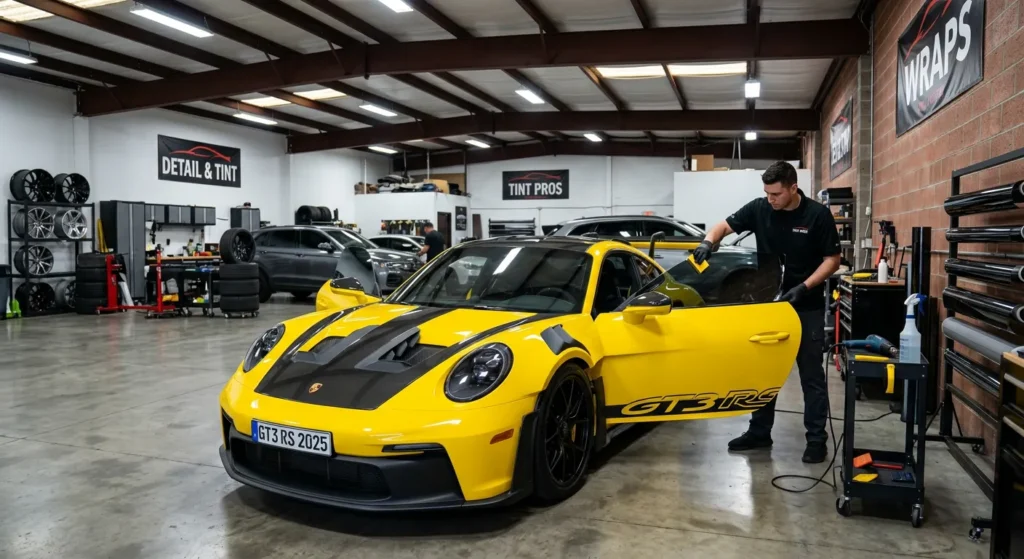
The right shop should explain this before film goes on the glass.
What Does VLT Mean for California Window Tint Laws?
California window tint laws often refer to visible light transmittance, also called VLT. VLT means how much visible light passes through the glass and film together.
A higher VLT number means more light passes through. A lower VLT number means the glass looks darker.
For example, a very dark tint has a low VLT. A clear or nearly clear film has a high VLT. California window tint laws use VLT because the law is not based only on how dark the tint looks in a photo. It is based on the amount of light that can pass through.
This matters because factory glass may already have some tint. If a vehicle already has lightly tinted glass, adding film can lower the final VLT. That is why front side windows need careful planning.
Here’s what matters. A legal-looking shade online might not be legal once it is installed on your vehicle. The final result depends on your factory glass, the film, and the combined light reading.
A trained tint shop can help you understand these limits before installation.
Front Side Window Tint Rules in California
California window tint laws are strict for the front side windows. These are the driver-side and passenger-side windows next to the front seats.
Under California Vehicle Code Section 26708, clear, colorless, and transparent material may be installed on front side windows when it meets the state conditions. The material must have at least 88% visible light transmittance. The glass with the material applied must also meet the federal 70% light transmittance requirement.
What this means is that front side windows cannot just be tinted as dark as the rear windows. If a driver wants front side window film, the film needs to be chosen with the law in mind.
The law also says the material must be made to help the existing glass block harmful UVA rays. The driver must have a certificate from the installing company in the vehicle or in their possession. That certificate must identify the installing company and the film manufacturer.
The catch is simple. If the tint tears, bubbles, or becomes worn enough to block clear vision, it must be removed or replaced.
For drivers in Bakersfield, CA, this is one of the biggest reasons to work with a certified tint shop. Front side window rules are not just about shade. They also involve film type, visible light, UVA blocking, and paperwork.
Rear Side Window and Back Window Tint Rules
California window tint laws are more flexible for windows behind the driver. California Vehicle Code Section 26708 lists side windows to the rear of the driver as an exception. The law also allows rear windows when the vehicle has outside mirrors on both the left and right sides that give the driver a rear view for at least 200 feet.
Bottom line, this is why many vehicles in California can have darker rear side windows and rear glass than front side windows.
That said, rear tint still needs to be installed cleanly. Poor film, peeling film, heavy bubbles, or damage can still affect visibility and the look of the vehicle. A tint job should not make the glass unsafe or messy.
Many Bakersfield drivers choose darker rear tint for privacy, glare control, and style. This can be a smart choice for SUVs, trucks, family vehicles, and daily drivers. It may also help reduce harsh sunlight in the back seat, which can matter for passengers and cargo.
California window tint laws still make it wise to ask questions before choosing a shade. A good installer can help you select a rear-window film that works well with your front-window choice, vehicle color, and visibility needs.
Windshield Tint Rules for Bakersfield Drivers
California window tint laws also limit what can be placed on the windshield. The windshield is one of the most sensitive areas because it affects the driver’s forward view.
California Vehicle Code Section 26708 allows transparent material on the topmost portion of the windshield when certain conditions are met. The bottom edge of the material must be at least 29 inches above the undepressed driver’s seat, measured from the point described in the law. The material also cannot be red or amber, cannot have opaque lettering, and cannot reflect sunlight or headlight glare into other drivers’ eyes more than the windshield would without the material.
Let’s break it down. A small top windshield strip may be allowed when it follows the law. A full dark windshield tint is not treated the same way.
For Bakersfield drivers, a top strip can help with bright sun during parts of the day. Still, the placement and material matter. The goal is to cut overhead glare without blocking the driver’s view.
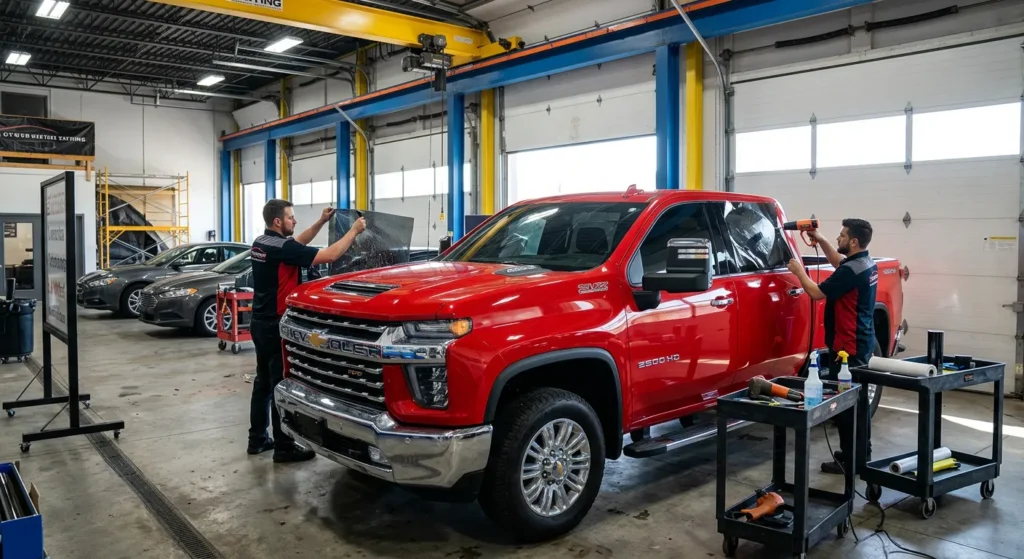
Drivers who spend a lot of time on highways may also ask about windshield protection film. This service is different from dark tint. Windshield protection film adds a clear layer to the front glass for daily road use. If your windshield already has a chip, ask about windshield chip repair before planning any glass service.
Medical Sun Screening Rules in California
California window tint laws include medical-related rules, but they are not a free pass to install any tint shade anywhere.
California Vehicle Code Section 26708 allows sun screening devices on the side windows on either side of the front seat when the driver or front passenger has a signed letter or document from a licensed physician and surgeon, or a licensed optometrist, saying the person must be shaded from the sun due to a medical or visual condition. The law also says those devices may not be used during darkness.
California Vehicle Code Section 26708.2 explains requirements for permitted sun screening devices. Devices using transparent material must be green, gray, or neutral smoke in color and have luminous transmittance of not less than 35%. The rules also cover removable mounting, open-area requirements for certain louvered devices, and reflectivity limits.
There is another medical rule in Section 26708 for clear, colorless, and transparent film when a licensed dermatologist certifies that the person should not be exposed to ultraviolet rays because of a medical condition. That material must meet the light transmittance rules and be made to help block UVA rays.
The real question is not, “Can I get any tint with a doctor’s note?” The better question is, “Which medical sun screening option fits the law and my condition?”
Talk with a qualified medical provider and a tint shop before making that choice.
Why a Tint Certificate Matters
California window tint laws require a certificate for certain clear, transparent film installed on front side windows. The driver must have the certificate in the vehicle or in their possession.
That certificate should be signed by the installing company and should state that the windows with the material installed meet the legal requirements. It should also identify the installing company and the material manufacturer by full name and street address.
If the vehicle owner installs the material, the certificate must come from the manufacturer and state that the windows meet the requirements when installed according to the manufacturer’s instructions.
Here’s what matters for Bakersfield drivers. The film itself is only part of the job. Paperwork can matter too. A shop that understands California window tint laws should be able to explain what documentation may be needed for your front side window film.
Dynamic Window Tint is a certified shop, offers Rayno Window Film, and backs products and services with warranties. That gives drivers a better place to start when they want tint that is selected and installed with care.
Common Window Tint Mistakes Drivers Should Avoid
California window tint laws are easy to misunderstand. Many drivers choose a shade based on what looks good on social media or what a friend has on their vehicle. That can lead to trouble.
Here are common mistakes to avoid:
- Choosing front side tint based only on looks
- Assuming rear window rules are the same as front window rules
- Adding film without checking factory glass tint
- Installing full windshield tint without understanding the law
- Forgetting about certificate requirements
- Ignoring torn, bubbled, or worn tint
- Picking a shop that cannot explain California window tint laws
- Choosing the cheapest option without asking about film brand or warranty
What this means is simple. The best tint is not always the darkest tint. A lighter, higher-grade film can still help with UV rays, glare, and comfort while keeping better visibility.
The International Window Film Association says automotive window films can block up to 99% of harmful UV rays and help reduce heat and glare. The Skin Cancer Foundation says UV window film can block more than 99% of UVA and UVB rays when installed on vehicles, homes, and offices.
So, drivers do not always need very dark film to get useful benefits. That is why product choice matters.
How to Choose Legal Window Tint in Bakersfield, CA
California window tint laws should be part of your tint appointment from the start. A good shop should ask what you want from the tint and then explain which options fit the vehicle and the law.
Before you book, ask:
- What film can I use on my front side windows?
- What rear window shade options make sense for my vehicle?
- Can I add a legal windshield strip?
- Will I need a certificate for front side window film?
- Does the film help block UVA rays?
- What warranty comes with the film and installation?
- How long should I wait before rolling windows down?
- What should I use to clean the glass after installation?
Drivers in Bakersfield, CA, Greenfield, CA, Lamont, CA, Arvin, CA, and Oildale, CA can call Dynamic Window Tint for help choosing the right window tint option.
The shop also offers commercial window tint and residential window tint for property owners who want better glare control, privacy, and a cleaner glass appearance. California vehicle tint laws do not apply the same way to home and business tint, so ask the team which film works best for your space.
Book Window Tint in Bakersfield, CA
California window tint laws do not have to be hard to understand. The simple path is to work with a local tint shop that can explain the rules, help you pick the right film, and install it cleanly.
Dynamic Window Tint is located at 4609 New Horizon Blvd Suite #10, Bakersfield, CA 93313. The shop has 225 reviews and a 5 star rating. Business hours are Monday through Wednesday from 8 AM to 5 PM, Friday through Saturday from 8 AM to 5 PM, and Sunday from 8 AM to 2 PM.
Call (661) 634-5585 or visit https://dynamicwindowtintca.com/contact-us to schedule an appointment.
Whether you need vehicle window tint, windshield protection film, windshield chip repair, paint protection film, ceramic coating, residential tint, or commercial tint, the team can help you choose the right service for your vehicle or property.
FAQs
What are California window tint laws for front side windows?
California window tint laws allow clear, colorless, and transparent material on front side windows when it meets the state conditions. The material must have at least 88% visible light transmittance, and the glass with film must meet the federal 70% light transmittance rule.
Can I tint my rear windows darker in California?
Yes. California law is more flexible for side windows behind the driver. Rear windows are also allowed when the vehicle has outside mirrors on both sides that give the driver a rear view for at least 200 feet.
Is full windshield tint legal in California?
Full dark windshield tint is not allowed under the usual rule. California allows transparent material on the topmost portion of the windshield when it meets the placement, color, lettering, and reflection conditions in Vehicle Code Section 26708.
What does VLT mean for window tint?
VLT means visible light transmittance. It tells you how much visible light passes through the glass and film. A higher VLT means more light passes through. A lower VLT means the tint is darker.
Do I need a certificate for window tint in California?
For certain clear, transparent film on front side windows, California law requires the driver to have a certificate from the installing company or film manufacturer. The certificate must identify the installer and manufacturer.
Can medical needs allow darker tint in California?
California has medical sun screening rules, but they are limited. Some devices require a signed document from a licensed physician and surgeon or optometrist. Some clear film options require dermatologist certification. These rules do not mean any dark tint is allowed anywhere.
Where can I get legal window tint in Bakersfield, CA?
Call Dynamic Window Tint at (661) 634-5585 or visit https://dynamicwindowtintca.com/contact-us. The shop can explain California window tint laws and help you choose film for your vehicle.
Sources
- California Vehicle Code Section 26708, California Legislative Information, amended by Stats. 2025, Ch. 417, Sec. 5, effective January 1, 2026, https://leginfo.legislature.ca.gov/faces/codes_displaySection.xhtml?lawCode=VEH§ionNum=26708
- California Vehicle Code Section 26708.2, California Legislative Information, added by Stats. 1984, Ch. 74, Sec. 2, https://leginfo.legislature.ca.gov/faces/codes_displaySection.xhtml?lawCode=VEH§ionNum=26708.2
- Automotive Window Film, International Window Film Association, no publication date listed, https://iwfa.com/automotive/
- UV Protection, International Window Film Association, no publication date listed, https://iwfa.com/benefits-of-window-film/uv-protection/
- UV Window Film and Tint, The Skin Cancer Foundation, last updated December 2025, https://www.skincancer.org/skin-cancer-prevention/sun-protection/uv-window-film/
- Window Tint In Bakersfield, CA, Dynamic Window Tint, no publication date listed, https://dynamicwindowtintca.com/services/window-tint/
- Windshield Protection Film In Bakersfield, CA, Dynamic Window Tint, no publication date listed, https://dynamicwindowtintca.com/services/windshield-protection-film/
- Contact Us, Dynamic Window Tint, no publication date listed, https://dynamicwindowtintca.com/contact-us
